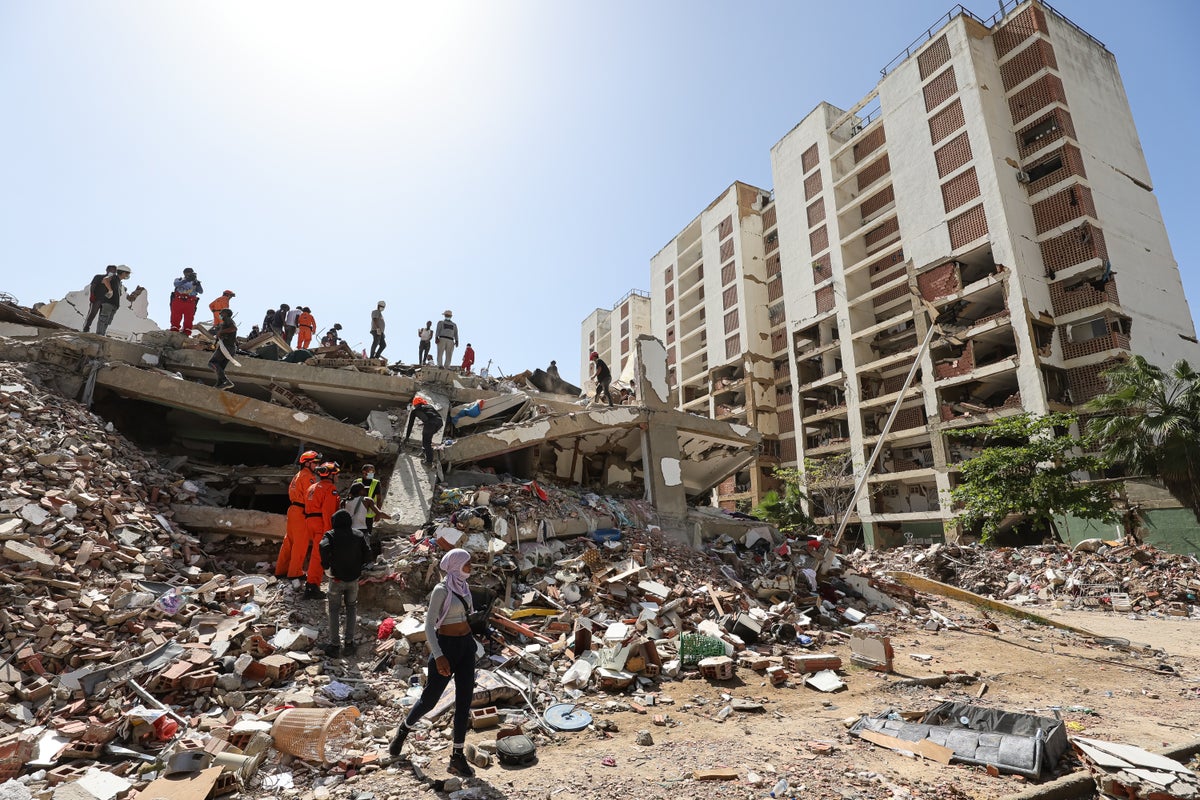
The mainstream defense establishment is panicking again. Every time a Russian missile strikes an apartment block or a power grid in Ukraine, Western analysts churn out the exact same thesis: Europe is next, its defenses are a hollow shell, and Putin is preparing to march on Warsaw.
It is a terrifying narrative. It is also completely wrong.
The lazy consensus dominating the security discussion conflates a tragedy with a systemic capability. The truth about European security is far uglier than the fearmongering headlines suggest. Europe does not have a vulnerability problem. It has a political willpower problem. By treating its security as an existential crisis driven by external monsters, Europe avoids facing the mirror. The continent is over fifty times the economic size of Russia and possesses twice the active military personnel.
Stop asking when Europe will be ready to defend itself. Start asking why it refuses to use the massive power it already holds.
The Myth of the Unstoppable Russian War Machine
To understand why the conventional wisdom is flawed, we have to look at the actual mechanics of the war in Ukraine, not just the sensationalized casualty counts.
For years, the Stockholm International Peace Research Institute (SIPRI) has tracked global military expenditures. Before its 2022 invasion, Russia’s defense budget hovered around $60 billion to $75 billion annually. By contrast, European NATO members collectively spent over $300 billion a year. Even with Russia shifting to a total war economy—consuming roughly 6% to 7% of its GDP—its total output is fundamentally constrained. Russia’s economy is roughly the size of Italy's.
The defense establishment looks at Russia’s mobilization and sees a juggernaut. They miss the structural decay.
- Mass is not modernization: Russia is pulling T-62 tanks out of deep Siberian storage. These are vehicles designed during the Khrushchev era.
- The artillery delusion: While Russia can fire tens of thousands of shells a day, its barrel wear is catastrophic. Manufacturing new artillery barrels requires specialized machine tools that Russia cannot easily import due to Western sanctions.
- Logistical paralysis: Russia’s military is tethered to rail lines. The moment they move 30 miles past a railhead, their logistics collapse.
Imagine a scenario where Russia attempts a conventional thrust into the Baltic states. To do so, it would have to mass troops along a heavily monitored border, exposed to modern Western intelligence, surveillance, and reconnaissance (ISR) platforms. In Ukraine, Russia has struggled to achieve air superiority against a fragmented, Soviet-legacy air defense network. The idea that this same military could execute a multi-domain combined arms operation against integrated European air defense and fifth-generation stealth fighters is a fantasy.
The Fraud of the "European Vulnerability" Narrative
If Russia is structurally weak, why does the media keep insisting Europe is a sitting duck? Because vulnerability is a lucrative industry.
Defense contractors want bigger budgets. Military bureaucracies want more relevance. Politicians want a distraction from domestic economic failures. By painting Russia as an existential threat capable of swallowing Western Europe, everyone gets what they want—except the taxpayer.
I have spent years analyzing defense procurement cycles. I have seen European ministries throw billions of euros at prestige projects while failing to stock basic munitions. The problem is not a lack of cash; it is the fragmentation of spending.
| Region / Alliance | Annual Defense Spending (Approx.) | Active Personnel | Main Battle Tanks |
|---|---|---|---|
| European NATO Members | ~$380 Billion | ~1.9 Million | ~6,500 |
| Russian Federation | ~$120 Billion (War Footing) | ~1.3 Million | ~2,000 (Active/Modern) |
Look at those numbers. Europe does not need to spend more. It needs to stop burning its money on redundant national industries.
Europe operates multiple distinct types of main battle tanks, fighter jets, and naval frigates. The United States and Russia streamline their logistics by choosing a few platforms and mass-producing them. Europe treats defense spending as a jobs program for domestic aerospace and automotive firms. Germany wants its own tank; France wants its own jet; Sweden insists on its own fighter ecosystem.
This is not a vulnerability caused by Russian aggression. This is a self-inflicted wound caused by industrial protectionism.
Dismantling the "People Also Ask" Delusions
The public debate around this issue is warped by fundamental misunderstandings of how modern warfare works. Let's address the flawed premises driving the conversation right now.
"Can NATO survive without the United States?"
This question assumes that the US provides the raw muscle and Europe provides nothing. In reality, Europe possesses the conventional forces required to deter Russia on its own. What Europe lacks is the "connective tissue" that the US military provides: strategic airlift, satellite constellation networks, refueling tankers, and high-end electronic warfare assets.
If the US pulled out of NATO tomorrow, Europe wouldn't lose the ability to fight because it lacks infantry or tanks. It would lose the ability to coordinate them. Fixing this doesn't require matching the US budget; it requires investing in mundane, unsexy logistics assets instead of buying shiny new fighter wings.
"Will Russia attack Poland next?"
This is the ultimate clickbait question. An attack on Poland would require Russia to willingly engage a country that has spent the last four years transforming itself into the most formidable land power in Europe. Warsaw is purchasing hundreds of K2 tanks from South Korea and M1A2 Abrams from the US.
Russia cannot even secure the Donbas without losing hundreds of thousands of men. The premise that Moscow would open a front against a highly motivated, heavily armed Polish military backed by Article 5 is a strategic absurdity. Putin is a gambler, but he is not suicidal.
The Danger of the Wrong Solution
The current consensus argues that Europe must rapidly remilitarize by recreating the massive conscript armies of the Cold War. This is an obsolete approach to a modern problem.
If Europe builds massive, slow-moving armies, it plays right into Russia's hands. Russia excels at meat-grinder attrition warfare. They have a higher tolerance for casualties and a political system that suffocates dissent. If you try to beat Russia at an attrition game on the plains of Eastern Europe, you are fighting on their terms.
Europe’s actual advantage lies in high-end technological asymmetry. Precision strikes, autonomous systems, deep interdiction, and total economic isolation.
The downside to this contrarian view is obvious: it requires admitting that European security strategy for the last thirty years has been an absolute farce. It requires telling voters that their governments wasted billions on unusable, fragmented military hardware while ignoring the basic realities of supply chain security and industrial readiness. It requires confronting corporate lobbies in Paris, Berlin, and Rome that fight tooth and nail to protect their domestic defense monopolies.
The Actionable Order
Stop panicking about Russian troop movements and start fixing the bureaucratic rot inside European procurement agencies.
Security is won through standardization, not sanctimonious press releases. If European leaders actually believed Russia was an imminent threat to their survival, they would standardize their ammunition calibers tomorrow. They would merge their defense contractors. They would eliminate the redundant production lines that exist solely to appease local labor unions.
They haven't done any of that.
Until Germany, France, and the UK stop treating defense as an industrial handout program, their warnings about Western vulnerability are entirely hollow. They don't fear a Russian invasion. They fear the political cost of fixing their own broken systems. Total victory does not require matching Russia’s madness; it requires Europe growing up. Turn off the news, ignore the threat inflation, and demand that your government stops buying weapons to create jobs and starts buying them to win wars.