Heat. That is the first thing you remember if you have ever stood near an industrial forging press while cold steel turns orange, soft, and obedient. It rises through the soles of your boots. It dries the back of your throat. Outside the tall windows of a southern French town, the Pyrenees rise like pale teeth against the sky, cool and quiet, while inside the factory floor a hundred-ton hammer shakes dust from the rafters.
Now imagine the presses slowing down, not because the steel ran out of heat, but because a balance sheet ran out of air.
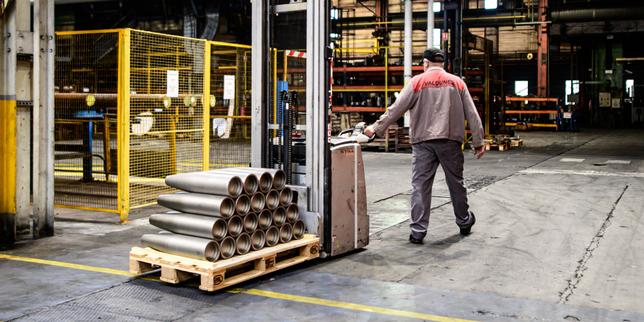
In Tarbes, in the Hautes-Pyrénées department, Les Forges de Tarbes—a key supplier of artillery shell bodies used with the Caesar self-propelled howitzer—has sought court-supervised restructuring (redressement judiciaire). On paper, a filing for redressement judiciaire looks like an administrative footnote. Lawyers trade folders. Clerks stamp dates. Financial reporters write a clean paragraph about cash flow, debt, and court protection while a company attempts to reorganize under judicial supervision.
Yet when the factory in question turns out forged steel casings for 155mm ammunition, that administrative phrase stops feeling like paperwork. It starts feeling like a knot in the stomach.
I have spent years covering European industrial towns where heavy metal and national pride share the same zip code. You walk through a bakery at seven in the morning, smell warm butter and flour, and half the people standing in line with you have grease under their fingernails from a shift that started before dawn. When one of those plants wobbles, the shockwave does not stay inside the perimeter fence. It hits the mechanic down the road, the school budget, the local supplier who waited sixty days for an invoice to clear, and—when defense supply chains are tight—the credibility of entire capitals that swore they had learned how to rearm quickly.
When High Strategy Meets a Cold Ledger
To understand why a court filing in Tarbes matters far beyond the Pyrenees, you have to strip away the grand speeches about "war economy" and look at how heavy industry actually breathes.
Politicians love talking about sovereign defense production in sweeping terms. They announce targets, sign letters of intent, and promise that factories will run faster and longer to replenish stockpiles and support allies. That political momentum is real, and the demand for 155mm shells and Caesar howitzer munitions has surged sharply since full-scale war returned to the European continent.
Demand, however, does not pay today's electricity bill or tomorrow's raw steel order by itself.
Forging an artillery shell body—the thick-walled hollow steel cylinder that will later be filled with explosive and fitted with a fuse—is grueling, capital-heavy work. You start with billet steel, heat it to forging temperature, pierce and draw it under immense pressure, heat-treat it so it can survive the violent acceleration inside a gun barrel without cracking, and machine it to tight tolerances. If a shell casing has a microscopic flaw or uneven wall thickness, it can rupture inside the breech or fly off course. Precision here is not a luxury metric; it is survival.
Building that rhythm takes time, skilled metallurgists, reliable furnaces, and steady working capital. When orders ramp up after years of low peacetime volume, a mid-sized specialist manufacturer often faces a brutal squeeze: rising input and energy costs, heavy equipment demands, complex subcontracting chains, and payment cycles that move slower than the payroll clock.
Consider what happens next when cash tightens at the exact moment output is supposed to expand. You cannot forge half a shell casing and wait for next month's wire transfer to finish pressing the shoulder. Furnaces eat power continuously. Maintenance cannot be skipped without risking a breakdown that halts an entire line. So a company that looks essential from a ministry desk in Paris can still find itself cornered by liquidity pressure in a commercial court.
That tension—between strategic urgency at the top and financial fragility on the shop floor—is the central paradox of modern rearmament.
A Walk Through a Hypothetical Shift in Tarbes
To make the stakes concrete, let us trace a hypothetical scenario grounded in how heavy forging plants operate. Picture Marc, a fictional veteran press operator who has worked in Tarbes for two decades, standing beside a cooling rack of freshly forged steel blanks near the end of a night shift.
Marc knows the sound of every machine by ear. He can tell from a faint change in hydraulic hum whether oil temperature is climbing or a die is starting to wear. Over the past couple of years, the tempo inside the hall has changed. Instead of long, predictable runs punctuated by quiet stretches, the crew has dealt with bursts of urgent orders, shifting schedules, and constant talk of ramping up capacity.
At first, the energy felt hopeful. People in town felt useful again. Younger technicians were brought in to learn from older hands who knew how to read steel color and die alignment by instinct rather than just a screen.
Then came the quieter strain. Rumors of delayed suppliers. Tighter cash margins. Conversations in the breakroom about whether redressement judiciaire meant liquidation or a lifeline.
For a worker like Marc, court-supervised restructuring is an unsettling middle ground. It is not the end of the story—redressement judiciaire under French commercial law is specifically designed to give a struggling business breathing room under court oversight to stabilize operations, freeze certain pressures, and look for a viable recovery or buyer plan. Still, breathing room does not erase anxiety. When your livelihood is tied to a specialized foundry, every legal hearing feels personal.
And what if you are a gunner far from the Pyrenees, loading a Caesar cannon? You never learn the name of the machinist who checked the bore diameter or the heat-treatment log in southern France. You only know whether the round chambers cleanly, fires consistently, and lands where your fire-control data says it should. Behind every reliable shot is a chain of unglamorous industrial links. Break or strain one link, and the whole line feels the tug.
Why Shell Casings Are Never "Just Another Part"
If you are wondering why a single supplier of shell bodies draws so much attention when 155mm artillery is discussed everywhere from Brussels to Kyiv, think of an artillery round like a high-stakes relay race.
Powder provides the push. Explosive provides the punch. The fuse decides when and how it bursts. None of it works without the steel body holding everything together under extreme chamber pressure and centrifugal spin.
In modern warfare, artillery consumes ammunition at rates that shock peacetime planners. A single battery firing sustained missions burns through crates of shells in hours that took weeks to forge and machine. Because Caesar systems—wheeled, mobile, and prized for their ability to "shoot and scoot" before counter-battery fire arrives—rely on standardized 155mm ammunition, keeping the pipeline of casings steady is vital to keeping guns active rather than waiting on logistics.
Here is the part that often trips up people watching from afar: scaling up ammunition production is not like flipping a light switch on a software server. You cannot simply spin up ten extra forging presses in a weekend. Heavy presses are massive investments. Heat-treatment lines take space and regulatory approvals. Skilled operators take months or years to train to exacting standards.
When a specialist link in that chain enters redressement judiciaire, it exposes a raw truth about European defense manufacturing. Decades of lean inventory management, cost-cutting, and smaller defense budgets left many industrial ecosystems thin, with fewer backup suppliers than people assumed in calmer times. Even when governments pledge support and order books fill up, individual firms can still stumble over the mechanics of financing growth and surviving market shocks.
Is a court filing a catastrophe? Not automatically. Sometimes restructuring is the exact mechanism that clears away dead weight, brings in fresh capital or stronger industrial backing, and puts a vital workshop back on firmer footing.
Yet it is a warning light we cannot afford to ignore.
The Human Ledger Behind Industrial Policy
Let's be honest about something: defense topics make a lot of people uneasy. Some readers recoil from anything connected to weapons and war; others feel frustrated that governments can find urgency for munitions while local hospitals, schools, or transit lines struggle for funding.
That discomfort is real, and pretending it does not exist makes any conversation about defense industry sound hollow. Forging artillery shell bodies is grim business in an ideal world. Nobody wishes for high demand for heavy shells.
Still, once conflict exists and democracies commit to deterrence and support, ignoring the industrial reality behind those commitments carries its own cost. You cannot ask factories to perform miracles of output while leaving their survival to chance, and you cannot ask skilled workers in towns like Tarbes to carry all the emotional and economic weight of shifting geopolitics without clear answers.
Every industrial town in Europe carries memories of factories that closed "temporarily" and never quite came back the same. Once a specialized workforce scatters—once experienced operators take jobs elsewhere or retire early—rebuilding that tacit know-how is painfully slow. Metal can be bought; seasoned hands and institutional memory are much harder to replace.
In Tarbes, the court process will test whether legal protection, industrial demand, and commercial discipline can align before momentum is lost. Workers will watch every update. Local businesses that rely on the plant's payroll will do the same. Defense officials watching supply bottlenecks will look for signs of stability rather than another headline about friction.
Cold steel cools quickly once it leaves the furnace, turning from glowing orange back to dull grey in minutes. Promises on paper take much longer to cool—or harden into reality. Out in the Pyrenees, the mountains will keep standing either way, quiet and indifferent to court dockets, while inside the hall the real test is whether the heat stays on and the people who know how to shape the steel have a future worth staying for.
(Note: If you're reading this in a signed-out session, signing in to a Google Account can help you keep track of stories like this and pick up where you left off later.)