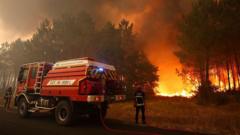
When thousands of tourists and locals were forced to pack up their belongings and flee southwest France as monster fires tore through the Gironde, it wasn't just a sudden emergency. It was a stark warning of a new normal across Southern Europe. Massive infernos have swept through the pine-dense forests near Bordeaux, destroying tens of thousands of hectares, burning homes, and forcing massive evacuations across popular coastal hubs like La Teste-de-Buch and Landiras.
The immediate headlines focused on the sheer scale of the evacuation effort. Over 10,000 holidaymakers and residents were moved out in a single rush as smoke plumes darkened the sky over the Arcachon Bay. Emergency response teams from across Europe—including crews from Germany, Poland, and Romania—helped local crews tackle the flames. But focusing only on the dramatic air drops and fleeing campers misses the bigger story.
To understand why these fires spread so aggressively, you have to look beneath the surface. Literally.
The Fire Underground
One of the most dangerous aspects of forest fires in regions like Gironde isn't what happens in the tree canopy. It's what happens in the ground.
Much of the soil in southwest France is rich in peat and organic matter. During severe drought conditions, fires burn deep into this peaty earth, creating sub-surface "zombie fires." Even after firefighters douse the surface flames and declare a zone contained, the ground continues to smolder for weeks at extreme temperatures.
Surface Fire Controlled ➔ Underground Peat Smolders ➔ Heat Waves & Winds ➔ Flare-Up
When a new heatwave hits and strong winds kick up, these underground embers ignite the dry surface vegetation all over again. That's exactly why communities in Belin-Béliet faced repeated evacuation orders in the span of a month. Fire crews weren't just fighting new sparks; they were fighting a fire that never actually died.
Monoculture and Fire Risk in Landes de Gascogne
The geography of the region plays a massive role here. The Landes forest is largely a man-made ecosystem, planted heavily with Maritime Pine during the 19th century for timber and resin production.
While commercially profitable, dense monoculture pine plantations act like tinderboxes. Pine needles create an acidic, highly flammable ground cover, and resin-heavy wood burns fast and hot. When combined with prolonged summer heatwaves exceeding 35°C, the forest loses its natural moisture buffers.
Experts and forestry management teams are now rethinking how these forests are structured. Key changes include:
- Diversifying Tree Species: Introducing broadleaf trees like oak, which retain moisture far better than conifers and slow down advancing fire lines.
- Expanding Firebreaks: Creating wider, unplanted corridors along highways and residential zones to give emergency crews a line of defense.
- Clearing Underbrush: Enforcing strict brush-clearing laws (déroussaillage) for homeowners living within 50 meters of forested areas.
What Travelers and Residents Need to Know
If you're traveling through or living in fire-prone regions in Southern Europe, relying on last-minute news updates isn't enough. Emergency planning has to be proactive.
First, download local emergency warning apps and keep alerts turned on. In France, local prefectures issue real-time status updates via social media and official government portals when risk levels escalate to red or black status.
Second, respect local access restrictions without exception. During peak drought, authorities routinely close forest roads, ban camping in high-risk zones, and restrict motorized equipment in rural areas. Ignoring these rules not only risks heavy fines but actively endangers rescue operations.
Finally, if an evacuation notice is issued for your commune or campsite, leave immediately. Fast-shifting winds can turn a distant smoke trail into a wall of fire moving down your street in under fifteen minutes. Pack an emergency bag with essential documents, meds, and basic supplies at the start of any high-heat period, keep your vehicle's fuel tank at least half full, and follow prescribed evacuation corridors rather than secondary backroads that might easily get cut off by smoke.