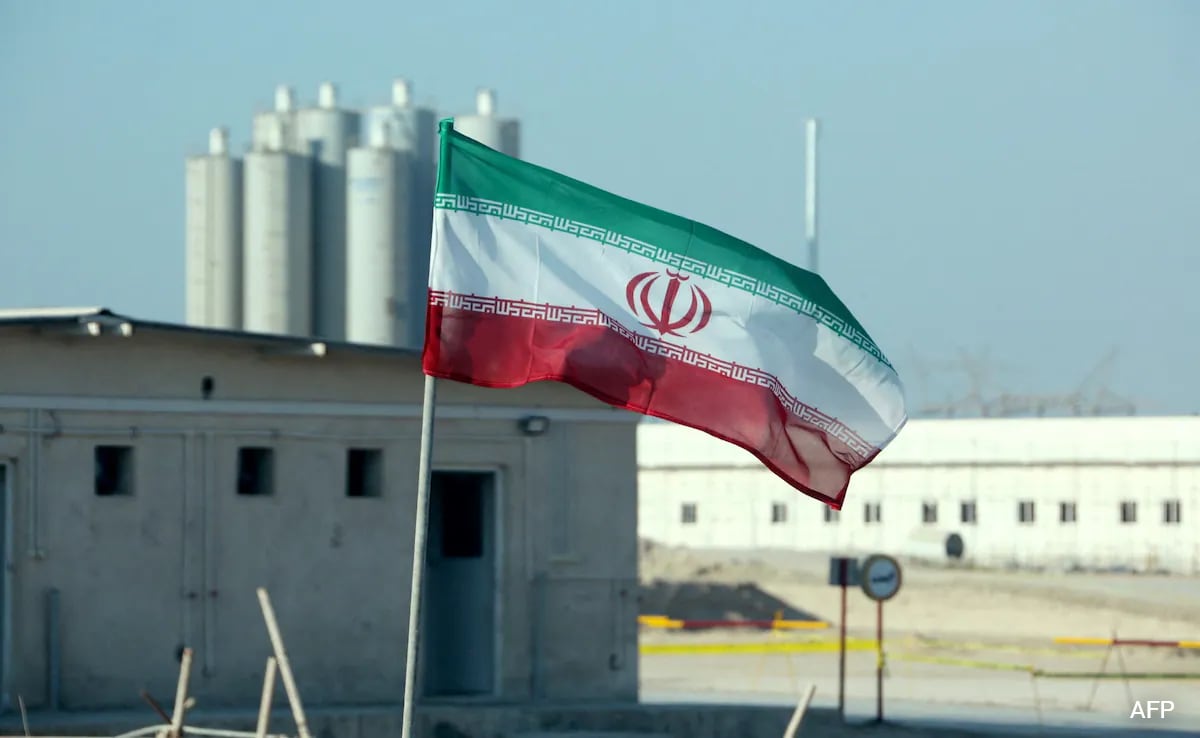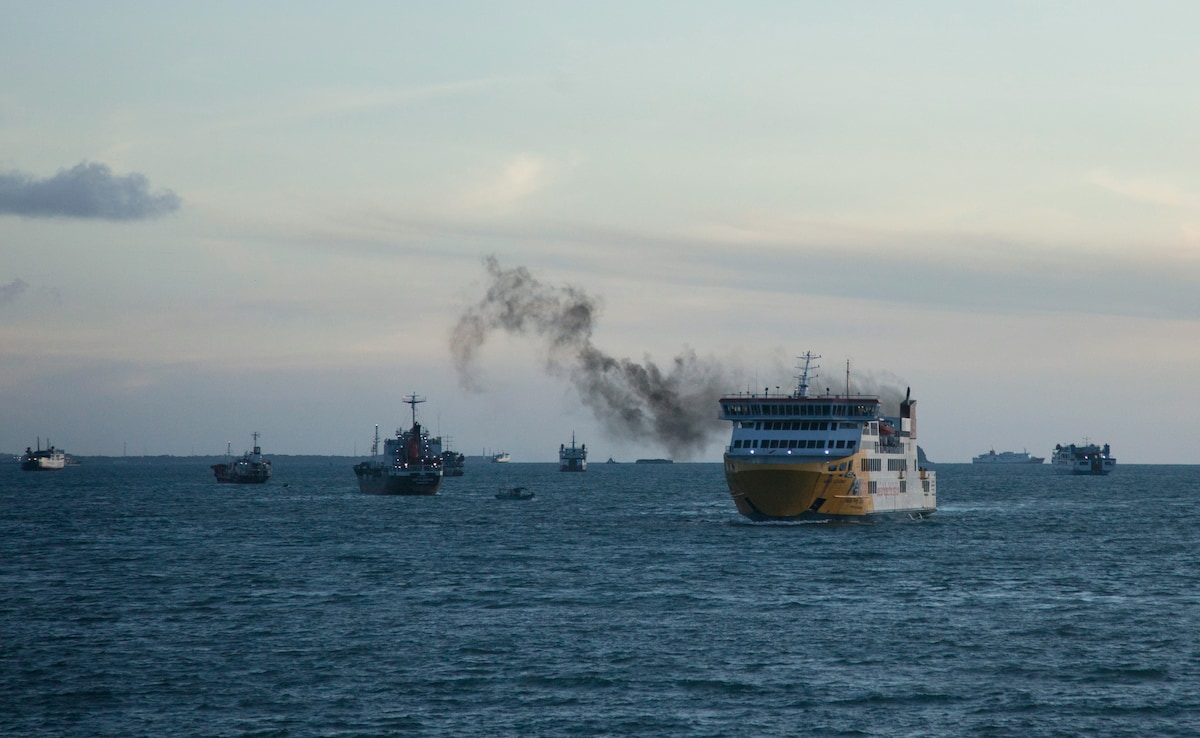
The Strait of Hormuz serves as the world’s most sensitive economic choke point, a maritime corridor where approximately 20% of global petroleum consumption passes through a navigable channel only two miles wide. When Iranian officials characterize specific vessels as "non-hostile" to permit transit, they are not merely issuing a safety guarantee; they are asserting a doctrine of conditional sovereignty. This framework shifts the legal status of the waterway from an international strait governed by "transit passage" to a discretionary zone governed by Tehran’s internal security definitions. Understanding the mechanics of this shift is essential for quantifying the risk to global energy supply chains and maritime insurance markets.
The Taxonomy of Hostility and Maritime Law
The United Nations Convention on the Law of the Sea (UNCLOS) defines the right of transit passage as the exercise of freedom of navigation and overflight solely for the purpose of continuous and expeditious transit. Iran’s recent rhetorical pivot toward "hostility-based" screening creates a new category of maritime classification that exists outside of established international norms.
Under this Iranian framework, "non-hostile" status is likely determined by three primary variables:
- Flag State Alignment: Vessels flying flags of nations perceived as neutral or friendly to Iranian regional interests are granted a baseline presumption of non-hostility.
- Cargo Destination and Provenance: Economic activity involving regional rivals or nations enforcing sanctions against Iran acts as a trigger for reclassification.
- Military Escort Status: The presence of Western naval protection, intended to ensure safety, is paradoxically categorized by Tehran as a "hostile" escalation, potentially stripping the commercial vessel of its protected status under Iranian domestic interpretation.
By applying these subjective criteria, Iran effectively moves the goalposts from a rules-based system to a discretionary one. This creates a "gray zone" where the legal safety of a vessel is no longer a constant, but a variable dependent on the shifting political climate of the hour.
The Cost Function of Discretionary Transit
The transition from guaranteed transit to conditional permission introduces a massive "uncertainty premium" into the global economy. This is not a vague concern; it is a measurable increase in the cost of doing business. The economic impact propagates through the system via three specific mechanisms:
1. The Insurance Risk Multiplier
War risk premiums for tankers transiting the Persian Gulf are highly sensitive to rhetoric. When a sovereign power claims the right to define "hostility" on its own terms, insurers lose the ability to model risk based on historical legal precedents. This forces a shift from "experience-based" underwriting to "exposure-based" pricing, where the mere presence of a vessel in the Gulf incurs a flat, high-cost surcharge regardless of its actual safety record.
2. Operational Latency and Logistics Decoupling
If transit is conditional, shipping companies must factor in "wait-and-see" delays. A vessel may hover outside the Gulf of Oman while legal teams and diplomats verify its current standing with Iranian maritime authorities. This latency disrupts the Just-In-Time (JIT) delivery models that modern refineries rely on. A 48-hour delay for a Very Large Crude Carrier (VLCC) can cost upwards of $100,000 in daily charter rates, a cost ultimately passed to the consumer at the pump.
3. The Shadow Fleet Incentive
The imposition of subjective "non-hostile" criteria encourages the growth of the so-called "shadow fleet"—vessels with opaque ownership, falsified AIS (Automatic Identification System) signals, and substandard insurance. These vessels are more likely to meet Iranian definitions of "non-hostility" because they operate outside the Western financial and regulatory ecosystem. This creates a bifurcated market where legitimate, safe operators are penalized, and high-risk, unregulated actors are rewarded with easier passage.
The Strategic Logic of Kinetic Signaling
Iran’s statements regarding "non-hostile" ships serve as a form of kinetic signaling—using the threat of physical force to achieve diplomatic or economic leverage. This strategy relies on the principle of "Reflexive Control," where one actor provides information to another to influence them into making a decision that benefits the provider.
By framing the Strait as a place where "non-hostile" ships are safe, Iran signals that "hostile" ships are not. This forces Western powers into a dilemma: they can either challenge the Iranian definition through naval presence (which Iran labels as hostile) or they can accept the Iranian definition and effectively cede the legal status of the Strait.
The mechanism at work here is the "Salami Slicing" tactic. Each individual statement or minor inspection of a ship does not, on its own, warrant a full-scale military response from the international community. However, the cumulative effect of these actions is the gradual erosion of the "transit passage" norm, eventually resulting in de facto Iranian control over the waterway’s commercial flow.
Structural Vulnerabilities in Global Energy Flow
The dependency on the Strait of Hormuz is a structural vulnerability that cannot be easily engineered away. While pipelines exist across Saudi Arabia and the United Arab Emirates, their combined capacity remains significantly lower than the total volume of oil and LNG (Liquefied Natural Gas) passing through the Strait.
- The Pipeline Ceiling: The East-West Pipeline (Petroline) in Saudi Arabia and the Abu Dhabi Crude Oil Pipeline have a combined theoretical capacity of roughly 6.5 to 7 million barrels per day. The Strait carries over 20 million.
- LNG Inelasticity: While oil can be diverted to pipelines at great cost, LNG has no such alternative. Qatar, one of the world's largest LNG exporters, is entirely dependent on the Strait of Hormuz for its sea-borne shipments. Any disruption in "non-hostile" status for gas carriers directly threatens the heating and industrial power of European and Asian markets.
This physical reality means that Iranian rhetoric regarding the Strait is not just a regional security issue; it is a direct input into the global inflation index.
Operational Recommendations for Maritime Stakeholders
Given the transition toward a discretionary transit environment, stakeholders must move beyond traditional risk management and adopt a "resilience-first" posture.
First, ship owners should prioritize "Flag of Convenience" diversification. Vessels registered in nations with active diplomatic channels to Tehran may experience lower rates of interference than those registered in nations viewed as adversarial. This is a cynical but necessary tactical adjustment to the "non-hostile" framework.
Second, the maritime industry must accelerate the adoption of "Hardened AIS." Current tracking systems are easily spoofed or turned off, but next-generation satellite-based verification provides a tamper-proof record of a vessel's movements. In a world where Iran claims to be looking for "hostile" actors, having an indisputable, transparent record of innocent passage is the best defense against arbitrary detention.
Third, energy importers must re-evaluate their Strategic Petroleum Reserves (SPR). The traditional 90-day buffer was designed for supply shocks; it was not designed for a permanent "tax" on transit through a contested strait. Diversifying supply toward Atlantic-basin producers (U.S., Brazil, Guyana) is no longer just an economic choice; it is a hedge against the permanent politicization of the Hormuz transit.
The "non-hostile" designation is an attempt to normalize a state of perpetual tension. By accepting this terminology, the international community risks validating the idea that freedom of navigation is a gift to be granted rather than a right to be exercised. The strategic response must involve a firm re-assertion of the transit passage doctrine, backed by a diversified energy infrastructure that reduces the leverage any single nation can exert over the global jugular vein of commerce.