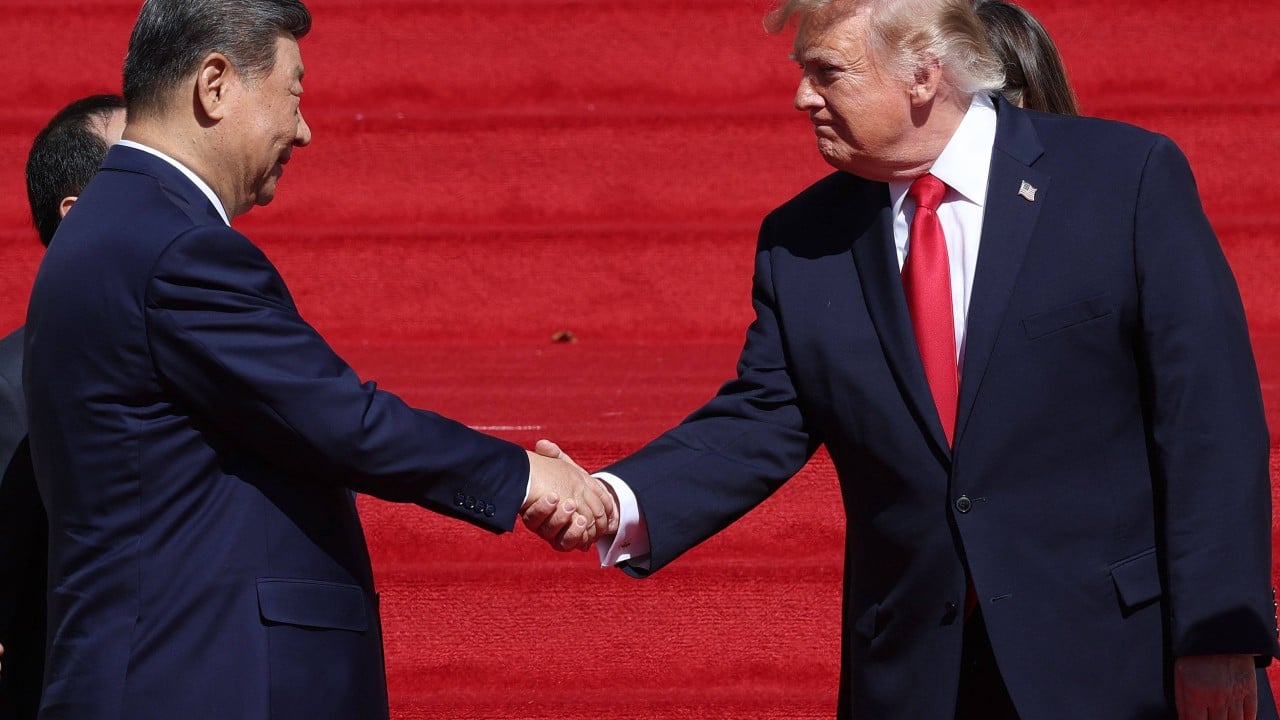
The welcome was lavish, heavy on polished stone and personalized helicopter tours. Yet beneath the pageantry of the recent White House summit between Donald Trump and Chinese President Xi Jinping, the architecture of global economic and military power shifted very little. When the cameras stopped rolling and the trade delegations adjourned, the structural realities governing the world's two largest economies remained stubbornly unchanged.
Standard reporting likes to frame these high-level encounters through the lens of diplomatic breakthroughs or sudden freezes. That perspective misreads the mechanics of modern statecraft. What occurred in Washington was not a historic realignment, but an exercise in strategic buying of time. Both administrations face domestic pressures, slowing economic gears, and deeply entrenched technological rivalries. Rather than resolving structural imbalances, the two leaders opted for optics, theatrical handshakes, and a short two-month extension of an expiring trade truce.
To understand why this summit matters—and why its tangible output was remarkably thin—we have to look past the rhetoric of "strategic stability" and examine the concrete choices made behind closed doors.
The Mechanics of the Trade Truce
The headline economic achievement of the meeting was an agreement to extend the fragile truce halting the worst of the tariff escalations. Treasury Secretary Scott Bessent and Chinese economic officials managed to push the expiration date back by two months, offering multinational corporations a brief window of predictability.
For global supply chains, this reprieve is functional but deeply unsatisfying. A sixty-day extension does not solve the underlying uncertainties surrounding industrial subsidies, intellectual property enforcement, or the weaponization of critical mineral supply chains. Companies cannot restructure multi-billion-dollar manufacturing footprints on a rolling two-month horizon.
Instead, the short extension reflects mutual exhaustion. Beijing is wrestling with structural drag in its domestic property and consumer sectors, while Washington is balancing an industrial policy push with persistent inflation anxieties. Neither capital wanted the political liability of a sudden market shock. By kicking the economic can down the road, both leaders chose temporary calm over difficult resolutions.
The Technology Divide and Artificial Intelligence
On artificial intelligence and advanced computing, the chasm between the two superpowers widened rather than narrowed. Publicly, the rhetoric touched on safety and human oversight, but the private calculations are entirely about dominance.
The American posture remains anchored on maintaining a decisive semiconductor and algorithmic lead. Meanwhile, domestic Chinese tech firms continue to make aggressive strides despite rigorous export controls, optimizing open-weights models and refining alternative supply chains. When leadership styles collide over emerging technologies, empty declarations about managing the frontier obscure the fierce race for foundational supremacy. Neither side is willing to cede an inch of computational advantage, rendering substantive bilateral governance on artificial intelligence virtually impossible under current conditions.
Taiwan and the Deferred Collision
Perhaps the sharpest divergence unfolded over the geopolitics of the Taiwan Strait. Xi utilized the summit to press the White House on the sovereignty question, demanding clear opposition to independence and attempting to stall a multi-billion-dollar security assistance package that has lingered in legislative and executive limbo.
For regional allies, the treatment of Taiwan as a transactional bargaining chip creates profound anxiety. When security guarantees are openly weighed against commercial concessions or trade purchase targets, deterrence weakens. The administration's choice to keep major arms deliveries in suspense serves as a persistent pressure point, yet it also invites miscalculation from a Beijing that watches every bureaucratic delay closely.
The summit produced no guardrails for this primary flashpoint. It merely froze the friction in place, leaving military planners and regional capitals to anticipate the inevitable resumption of pressure once the diplomatic theater concludes.
The Cost of Spectacle
Diplomatic history suggests that when substantive disagreements cannot be bridged, leaders substitute choreography for substance. The White House meetings offered a masterclass in this dynamic.
By framing personal rapport as a substitute for institutional progress, both governments managed domestic headlines while deferring the hard reckonings. Markets may react to the temporary survival of the trade truce, and international observers may breathe a sigh of relief that tensions did not actively boil over. But genuine stability requires aligned interests or enforceable rules. Right now, the United States and China possess neither, leaving their relationship locked in a high-stakes, managed antagonism where every temporary agreement carries an expiration date.