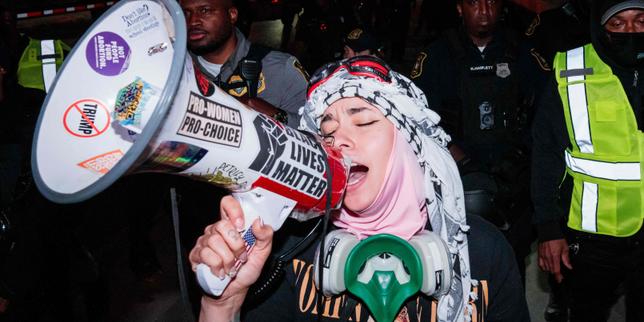
The gravel driveway leading to the Delaney Hall Detention and Correction Facility in Newark, New Jersey, is a quiet stage for a loud war. For years, activists have gathered outside this drab concrete complex, holding hand-painted signs against the chain-link fences while Immigration and Customs Enforcement (ICE) transport vans idle nearby. They are protesting a system that treats administrative immigration violations as criminal offenses. While news cameras frequently capture the emotional faces of these anti-ICE demonstrators, the broader reality of Delaney Hall is not just a story of local protest. It is a stark window into how federal deportation policy relies on a highly profitable, privately managed network of local lockups to sustain mass detentions.
To understand why Delaney Hall became a flashpoint, one must look past the protest lines and examine the mechanics of detention logistics.
The Logistical Engine of Mass Deportation
Delaney Hall does not operate in a vacuum. Located in Newark’s industrial Ironbound district, the facility sits strategically near major transit hubs, including Newark Liberty International Airport and Port Newark. This geographical positioning is entirely intentional. It allows ICE to move detainees efficiently between court hearings, medical evaluations, and ultimate deportation flights without drawing the attention that a downtown federal facility would attract.
The facility itself is operated by the GEO Group, one of the largest private prison corporations in the world. This corporate structure changes the fundamental nature of immigration enforcement. When a private entity manages a detention center, the operational goals shift. Profit margins depend on maintaining a high bed occupancy rate, a reality that critics argue creates an inherent financial incentive to keep people locked up.
Federal immigration enforcement has increasingly leaned on these types of sub-contracted facilities. By using private operators and county jail agreements, the federal government bypasses the lengthy process of building and maintaining its own infrastructure. It creates a flexible, outsourced archipelago of confinement that can expand or contract based on the political mandates of the day.
The Friction of Corporate Confinement
Life inside Delaney Hall reflects the structural contradictions of the American immigration system. Officially, immigration detention is civil, not punitive. Detainees are not supposed to be subjected to the punitive conditions of a maximum-security prison because they are awaiting administrative hearings, not serving criminal sentences.
The physical reality tells a different story.
Detainees wear institutional uniforms. They move through secure corridors under corporate guard supervision. Their access to the outside world is heavily restricted and expensive, mediated through private telecom vendors who charge high rates for phone calls and video visits. For a migrant trying to gather evidence for an asylum claim or find a pro bono lawyer, these communication barriers can be insurmountable.
+-------------------------------------------------------------------+
|               Civil vs. Punitive Detention Reality                |
+-----------------------------------+-------------------------------+
| Legal Status                      | Administrative / Non-Criminal |
+-----------------------------------+-------------------------------+
| Physical Environment              | Razor wire, locked pods       |
+-----------------------------------+-------------------------------+
| Daily Regime                      | Scheduled roll calls, guards  |
+-----------------------------------+-------------------------------+
| Access to Counsel                 | Highly restricted telecom     |
+-----------------------------------+-------------------------------+
The psychological weight of this environment is heavy. Unlike criminal inmates who have a specific release date or "max-out" target, immigration detainees face indefinite detention. They do not know if they will be released on bond tomorrow, held for another six months, or suddenly boarded onto a flight to a country they fled out of fear for their lives. This prolonged uncertainty creates a unique form of mental duress that local advocacy groups frequently document during their vigils outside the facility walls.
The Local Economic Dependency Trap
Protesters demand the immediate closure of Delaney Hall and the termination of all ICE contracts in New Jersey. It is a straightforward moral position, but the political economy surrounding the facility is deeply complicated.
For decades, northern and central New Jersey counties have built local budgets around federal immigration revenue. Local municipalities and private operators receive a set per-diem rate for every ICE detainee housed in their facilities. This cash influx funds local payrolls, fills budget deficits, and subsidizes public services for residents who may have no idea their town’s financial stability is tied to immigration enforcement.
When state lawmakers previously attempted to ban New Jersey entities from entering into or renewing ICE detention contracts, they ran into fierce resistance from both private operators and local labor unions. The arguments against closure rarely center on the merits of immigration policy. Instead, they focus on the loss of correctional officer jobs and the sudden evaporation of millions of dollars in local revenue.
This economic dependency turns local communities into stakeholders in the mass detention complex. A cell block is no longer just a place of confinement. It becomes a line item in a municipal budget that local officials will fight to protect, regardless of their personal political leanings.
Beyond the Chain Link Fences
The images of protesters outside Delaney Hall show a community in pain, but the policy decisions that fill those beds are made hundreds of miles away in Washington. Every shift in enforcement priorities, every change in asylum thresholds, and every budget allocation for border security ripples directly into the Ironbound district.
When federal policies tighten, the intake lines at Delaney Hall grow longer. When courts stall, the duration of confinement stretches. The people standing outside with signs understand that this facility is a symptom, not the root cause. They gather because it is the closest physical manifestation of a federal apparatus that is otherwise abstract, bureaucratic, and distant.
As long as federal policy relies on private corporations to manage civil detention, facilities like Delaney Hall will remain essential to the enforcement machine. The protests will continue, the transport vans will keep idling in the driveway, and the quiet struggle over who belongs in America will play out day after day against a backdrop of razor wire and industrial Newark marshland.