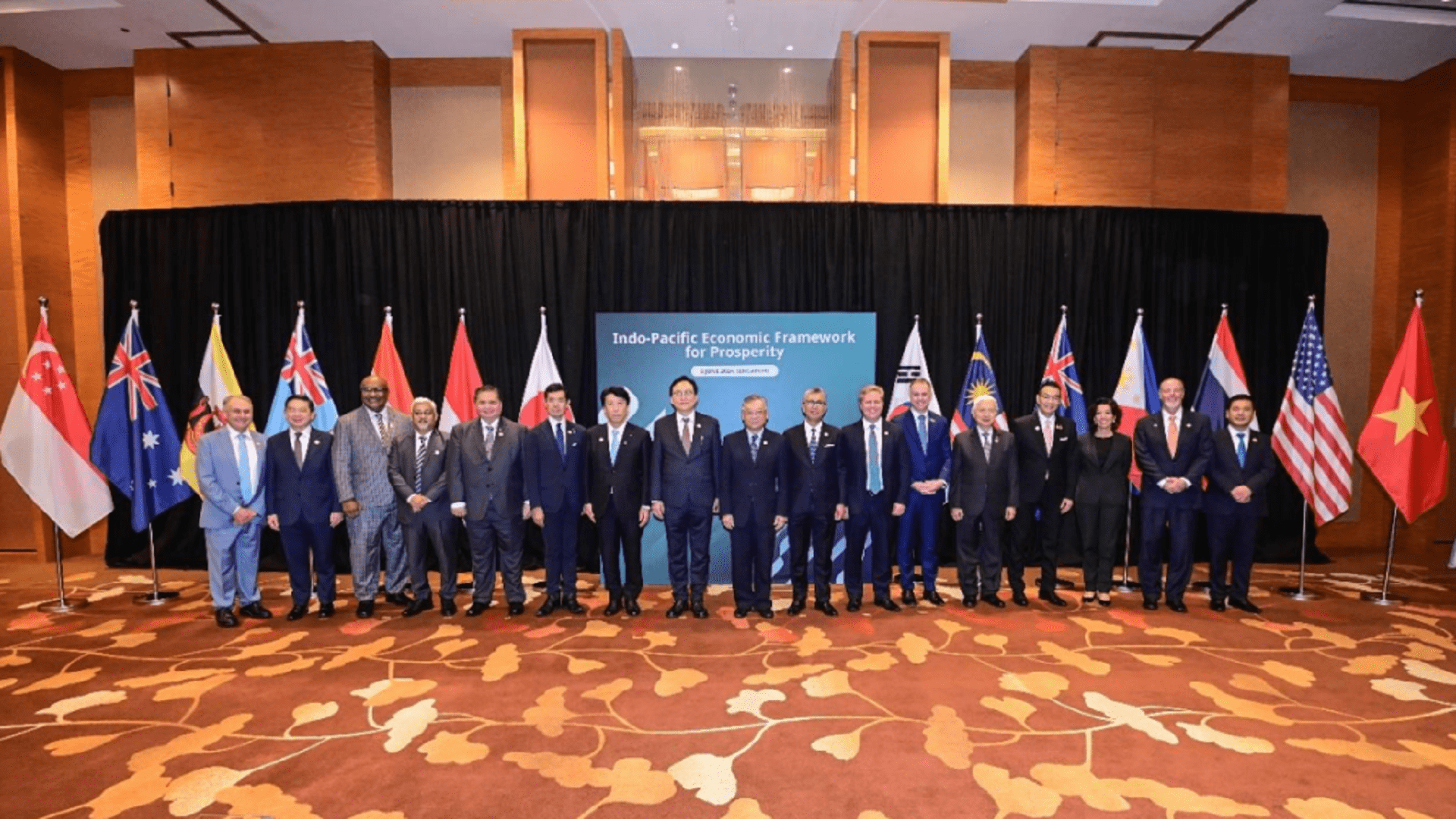
Diplomats love the word "alignment." It’s a comfortable, bureaucratic blanket that hides the jagged edges of geopolitical reality. When Deputy Assistant Secretary Paul Kapur talks about a "secure and prosperous Indo-Pacific," he isn’t describing a strategy; he is reciting a prayer. The consensus view—that the US and India are merging into a seamless democratic bulwark against China—is a dangerous oversimplification that ignores the structural friction between Washington’s desire for a deputy and New Delhi’s obsession with autonomy.
We are watching a classic "Sunk Cost" fallacy play out in real-time. The US is betting the farm on India as the primary counterweight to the CCP, while India is busy ensuring it never has to actually fight anyone else’s war. If you think this is a unified front, you haven't been paying attention to the balance sheets or the hardware.
The Strategic Autonomy Trap
The "lazy consensus" suggests that shared values lead to shared objectives. In the real world, shared values are what you talk about when you can't agree on trade tariffs. India does not want to be the "Great Britain of the East." They have no interest in being a junior partner in a US-led security architecture.
New Delhi practices what I call Aggressive Neutrality. They will buy your GE F414 jet engines today and refine Russian Urals crude tomorrow. They will join the Quad for the naval exercises but refuse to sign onto Western sanctions that hurt their bottom line.
"Strategic autonomy is not a relic of the Cold War; it is the fundamental operating system of the Indian state."
The US diplomat’s vision of a "prosperous Indo-Pacific" assumes that prosperity is a collective good. To India, prosperity is a zero-sum competition for manufacturing dominance. They don't want to "integrate" into a global supply chain; they want to be the supply chain. This isn't a partnership; it’s a temporary overlap of grievances.
The Defense Industrial Illusion
The much-hyped iCET (Initiative on Critical and Emerging Technology) is being touted as a revolutionary bridge. In reality, it is a desperate attempt to fix a fundamental mismatch in hardware.
The US wants to sell platforms. India wants the "source code."
I have seen defense contractors lose their minds trying to navigate the "Make in India" requirements. Washington expects loyalty in exchange for tech transfers. New Delhi expects the tech transfers as a "right" for being the only democracy big enough to matter in the region.
Consider the $3 billion MQ-9B Predator drone deal. The talking heads call it a "security milestone." I call it an expensive tether. High-altitude long-endurance drones are useless if the underlying data-sharing agreements (like BECA) are treated with suspicion by the Indian bureaucracy. We are selling them the Ferrari, but they are still arguing over who gets to hold the keys and which GPS map we’re allowed to use.
The China Miscalculation
The biggest flaw in the current diplomatic narrative is the assumption that India’s fear of China equals a desire for US protection.
India’s strategy toward Beijing is Calculated De-escalation, not containment. While the US wants a "Free and Open Indo-Pacific" (read: a region where the US Navy sets the rules), India wants a "Multipolar Asia."
A multipolar Asia is one where the US eventually goes home, and India is left as the natural hegemon. They aren't helping us keep the door open; they are waiting for us to finish the heavy lifting so they can lock it from the inside.
The Math of Dependence
Look at the trade numbers. You cannot build a "secure Indo-Pacific" while one half of the partnership is fundamentally tied to the adversary’s economy.
- Trade Deficits: India’s trade deficit with China reached nearly $85 billion recently.
- API Dependence: 70% of India’s active pharmaceutical ingredients come from Chinese factories.
- Telecom Infrastructure: Despite "Clean Network" initiatives, significant portions of the grid still rely on legacy Chinese hardware.
If a conflict breaks out in the Taiwan Strait, the US expects India to close the Malacca Strait. But why would they? To save a semiconductor supply chain that competes with their own fledgling "Semicon India" program? To risk a Himalayan border war for an island 3,000 miles away?
Imagine a scenario where the US Navy requests docking rights in Chennai during a hot conflict with the PLAN (People's Liberation Army Navy). The Indian government, fearing a blockade of their energy routes, denies the request "to maintain regional stability." That is the moment the "Indo-Pacific Partnership" evaporates.
The Talent Drain vs. The Tech Gain
We hear a lot about the "vibrant diaspora" as a bridge. In reality, the H-1B visa pipeline is a massive brain drain that hampers India’s domestic innovation while creating a political lobby in the US that is often at odds with actual US strategic interests.
The US thinks it is "leveraging" Indian talent. India thinks it is "exporting" its way to influence. Both are wrong. By shipping the best engineering minds to Silicon Valley, India slows its own ability to build the very defense ecosystem the US says it wants them to have.
Stop Asking if India is an Ally
The "People Also Ask" section of Google is filled with variations of "Is India a US ally?"
That is the wrong question. The right question is: "When will the US realize India is a customer that hates the store?"
An ally signs a treaty. Japan is an ally. Australia is an ally. India is a sovereign power that views treaties as a loss of face. If you want to actually "secure" the Indo-Pacific, stop treating India like a democratic younger brother and start treating them like a ruthless corporate competitor.
The Actionable Pivot
If you are a tech leader or a policy architect, stop planning for "alignment." Plan for Redundancy.
- Diversify "China Plus One": Don't just move everything to Vietnam or India. Use a fragmented manufacturing strategy that includes Mexico and Eastern Europe.
- Audit the IP Transfers: If you are sharing critical dual-use technology, assume it will eventually be used to compete against you in the global market.
- Verify the Interoperability: Stop buying the PR about "joint exercises." Check if the encrypted comms systems actually talk to each other without a three-week bureaucratic delay.
The US-India relationship isn't a romance; it’s a marriage of convenience where both parties are sleeping with one eye open. The diplomat’s "prosperous future" is a ghost. The only thing being built right now is a taller fence, and we’re both arguing over who pays for the wire.
Stop looking for a partner to share the burden. Start looking for a competitor you can't afford to lose.