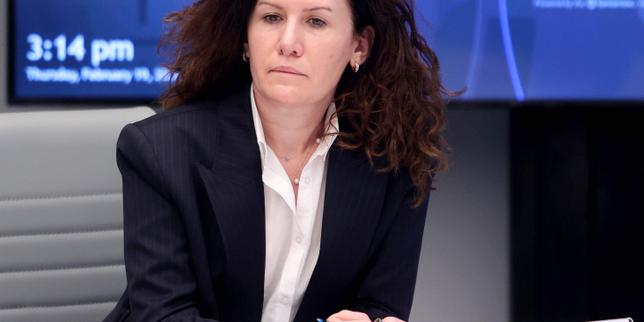
The sight of an intelligence chief ordered into house arrest is never just a routine legal matter; it signals the structural cracking of a state's security apparatus. When the Special Prosecution Against Corruption and Organised Crime (SPAK) in Tirana moved against Vlora Hyseni, the head of Albania's State Intelligence Service (SHISH), it did more than target an individual. It ripped open an uncomfortable reality about the intersection of Balkan intelligence networks, private capital, and organized crime.
For months, surface-level reporting treated the case as an isolated administrative scandal. That interpretation misses the forest for the trees. The allegations against Hyseni—centered on the unauthorized disclosure of classified information and the shielding of targeted figures like businessman Ergys Agasi—reveal an institutional vulnerability that has plagued post-communist security structures for decades. When the guardians of state secrets are accused of acting as private brokers for elite networks, the crisis goes far beyond ordinary graft. It strikes at the heart of national sovereignty.
The Anatomy of the SHISH Breakdown
To understand how Hyseni reached the center of a criminal probe, one must examine the unique architecture of Albanian intelligence. Appointed to head SHISH after a high-profile exit from her previous security roles in Kosovo, Hyseni was cast as a technocratic professional insulated from local political friction. That reputation made her an attractive candidate for Prime Minister Edi Rama's administration, which has long faced international pressure to clean up state institutions under the watchful eye of Western allies.
Yet, technocratic insulation can easily mutate into a lack of democratic accountability. According to investigators, the core of the case involves confidential intelligence being channeled away from official channels to protect individuals entangled in broader corruption inquiries, including state IT procurement scandals and illicit asset transfers spanning from Tirana to France.
When statecraft becomes personal, institutional walls dissolve. Prosecutors allege that classified data—the kind meant to track transnational cartels and monitor regional threats—was instead leveraged to manage domestic political and commercial turf wars. This is the dark underbelly of modern intelligence work in fragile democracies, where the tools designed to protect the state are occasionally co-opted by those who wish to navigate around it.
The SPAK Factor and the Limits of Reform
The most significant variable in this entire episode is not Hyseni herself, but the prosecutor's office that brought her down. SPAK was constructed under intense international supervision, specifically engineered to be immune to the traditional pressures of Tirana's political elite. For years, skeptics questioned whether the special prosecution would ever touch high-ranking officials or would remain confined to low-level municipal corruption.
The action against the SHISH director answers that question with brutal clarity. SPAK is swinging upward, striking core pillars of the executive branch. This follows other high-level tremors, including investigations touching former deputy prime ministerial circles and vital state infrastructure tenders.
However, an aggressive anticorruption prosecutor's office operating inside a heavily compromised ecosystem creates a state of perpetual friction. Every high-profile indictment triggers a political earthquake. Prime Minister Rama has found himself forced to distance his administration from appointees once heralded as reformist assets, scrambling to appoint interim leadership to SHISH while opposition figures point to the arrests as proof of systemic rot.
The Geopolitical Ripple Effect
Intelligence services in the Western Balkans do not operate in a vacuum. Albania is a vital NATO member, a bridgehead for regional stability, and a candidate for European Union integration. When the chief of its primary intelligence agency is placed under restrictive measures for allegedly leaking state secrets, foreign partners take notice.
Western intelligence-sharing agreements rely on absolute discretion and data compartmentalization. While international partners have maintained a cautious public silence regarding whether specific foreign databases were compromised during the alleged leaks, private diplomatic anxiety is palpable. If sensitive threat assessments or counter-organized-crime intelligence can be diverted to domestic power brokers, the credibility of Albania as a secure partner takes a severe hit.
This creates a vicious cycle. The more Tirana tries to prove its reform credentials to Brussels by empowering independent prosecutors, the more domestic scandals erupt, exposing the very institutional decay those reforms were meant to cure.
The house arrest of Vlora Hyseni is not the conclusion of a chapter; it is a symptom of a deeper governance deficit. Until transparency replaces political patronage in the selection of national security leadership, the state apparatus will remain vulnerable to the exact forces it was built to fight.