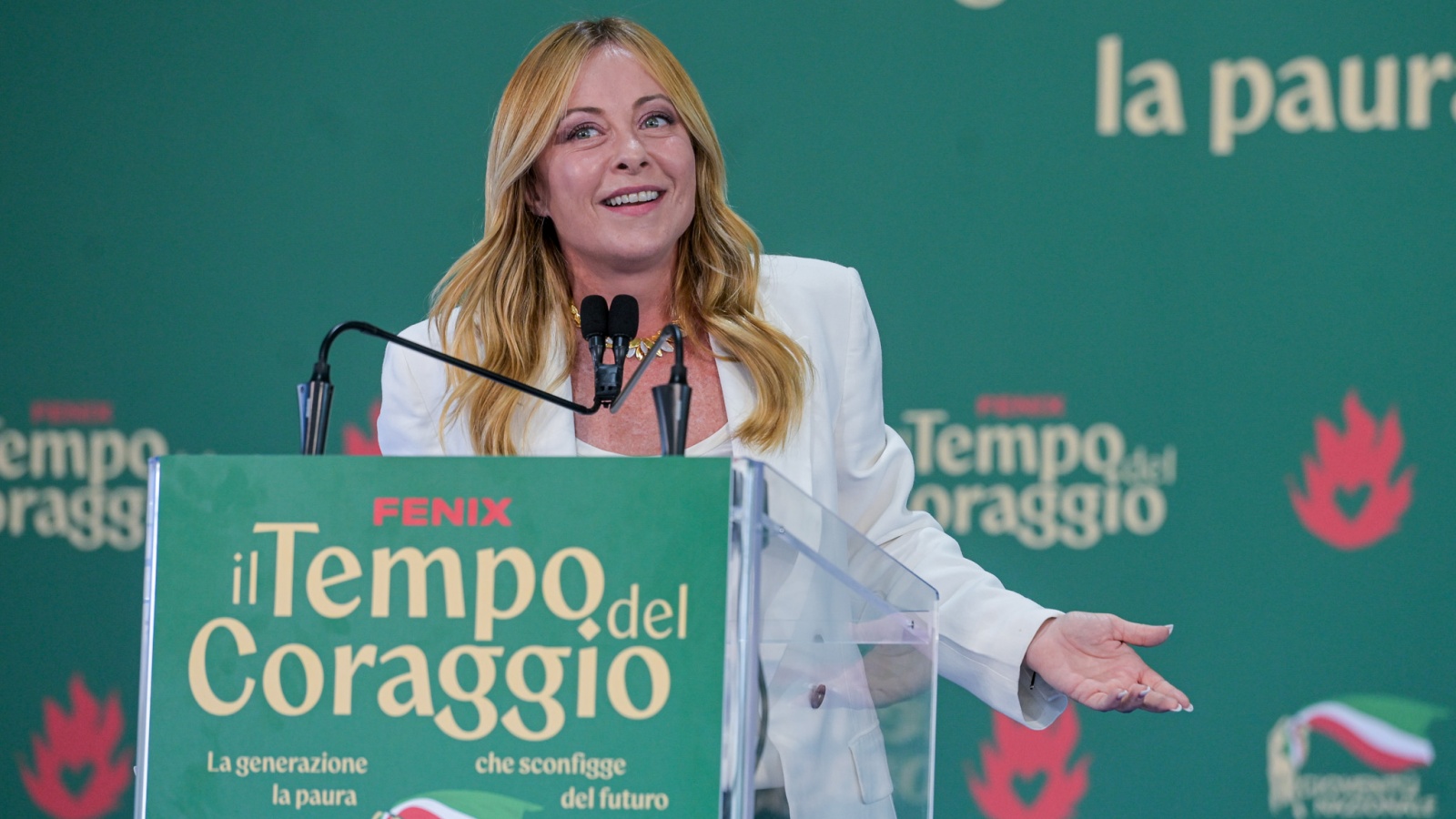
Prime Minister Giorgia Meloni’s administration has pushed through a controversial decree-law targeting Italian classrooms, officially banning full-face coverings like the burqa and niqab while establishing a strict 30 percent ceiling on non-Italian speaking students per class. This aggressive legislative maneuver, approved by the Council of Ministers, aims to reshape the demographic and cultural framework of Italy’s educational institutions. Yet, beneath the political rhetoric of national identity and social cohesion lie logistical nightmares, fierce opposition, and deep constitutional questions that Rome is entirely unprepared to answer.
To understand the weight of this policy, one must examine the mechanics of what the cabinet actually passed. The decree explicitly prohibits garments that obscure the face—specifically targeting the niqab and burqa while exempting the standard hijab. Violations carry financial penalties ranging from 200 to 1,000 euros, with liability transferring directly to parents if the offender is a minor. Concurrently, the state is moving to cap foreign-background pupils who lack adequate language proficiency at 30 percent per classroom, backed by mandatory language acquisition programs for parents whose children struggle to integrate.
The Logistical Quagmire in Northern Hubs
The government frames these measures as common-sense solutions to prevent the rise of isolated sub-communities within public schools. Prime Minister Meloni insists that true integration requires transparency, shared linguistic foundations, and absolute adherence to civic norms.
Real-world application, however, tells a vastly different story.
Consider a hypothetical school district in Milan or Turin, where foreign-born student populations frequently exceed 40 or 50 percent due to concentrated residential demographics. Enforcing a rigid 30 percent cap without a massive, systemic redistribution of pupils creates an immediate structural crisis. School principals and administrative heads have already raised alarms. Where do the excess students go? If local schools are legally barred from admitting more non-native speakers past the threshold, municipal education boards face an impossible choice: busing children across distant provinces or constructing entirely new infrastructure that local budgets cannot support.
Antonello Giannelli, president of the National Association of School Principals, has pointed out the glaring disconnect between political decrees and operational reality. Italy’s educational framework is already strained by underfunding and aging facilities. Imposing administrative caps without deploying an army of specialized language instructors and funding auxiliary classrooms transforms a well-intentioned integration policy into an administrative blockade.
The Legal and Constitutional Fault Lines
Beyond logistics, the face-covering ban hits a dense wall of Italian jurisprudence. Italy’s legal tradition has long wrestled with the tension between public security laws—specifically legacy statutes originally designed to prohibit helmets and face-masking items in public spaces—and individual liberties.
In 2008, Italy’s highest administrative authority issued guidance suggesting that religious motivations could complicate blanket prohibitions on face veils within specific contexts, provided identity verification remained possible. By shifting the battleground directly into state-run schools via an emergency decree-law, Meloni’s cabinet is attempting to bypass lengthy parliamentary debates, forcing lawmakers either to ratify the measure within sixty days or watch it expire.
Critics argue that targeting a minute demographic of students wearing full-face veils solves no structural educational deficit. Civil rights advocates point out that the number of school-aged girls wearing niqabs or burqas in Italy is statistically marginal. By elevating a fringe wardrobe choice into a national security and cultural crisis, the administration successfully galvanizes its nationalist base while deflecting attention from deeper economic stagnation and youth unemployment plaguing the peninsula.
The Cost of Forced Assimilation
Language acquisition remains the one objective component of the decree that garners cross-ideological agreement. No serious educator disputes that fluency in Italian is the single most critical determinant of academic success and future economic mobility for immigrant youth. Yet, penalizing families with heavy fines or forcing parents into state-mandated language classes under threat of judicial sanction introduces an adversarial dynamic into school-family relations.
Integration is rarely achieved through coercion. When the state treats immigrant communities primarily as a security variable or a demographic threat to be managed through caps and penalties, it fosters alienation rather than belonging. The children sitting in these classrooms do not need ideological battlegrounds; they need resources, smaller teacher-to-student ratios, and functional support systems that bridge cultural divides organically.
As the decree moves through its mandatory parliamentary review window, the administration is banking on public fatigue with immigration to secure a legislative win. Yet, once the political theater fades, Italian educators will be left holding the bill for a policy designed for the ballot box rather than the blackboard.
Italian government bans burqas, sets foreign student cap in schools
This video provides additional context regarding the Italian government's newly approved school decree targeting face coverings and foreign student classroom limits.