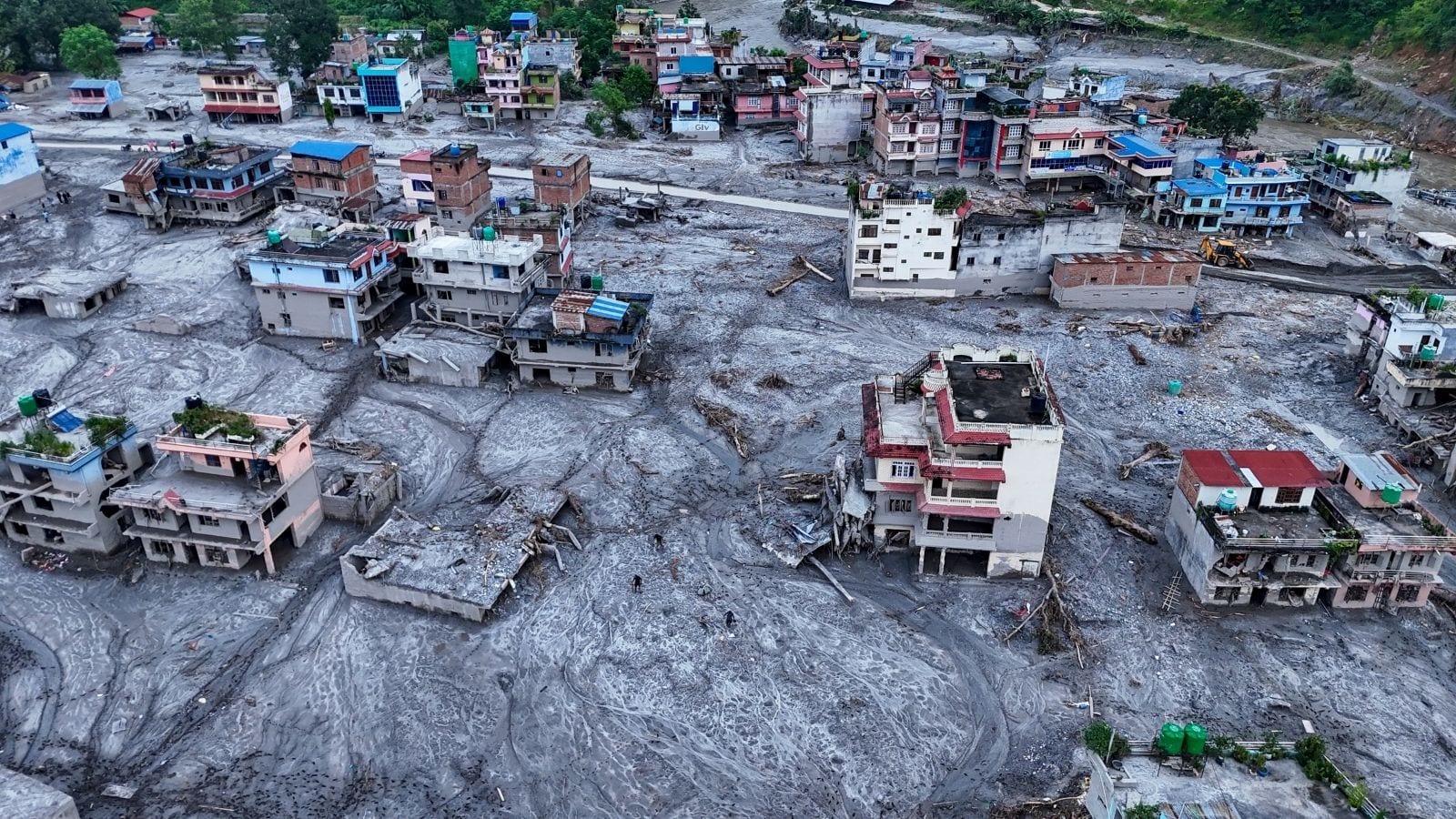
The official numbers coming out of the Himalayan foothills are staggering, terrifying, and still incomplete. Nepal's National Disaster Risk Reduction and Management Authority confirms that the death toll from the late-August flash floods has climbed to 903, while 4,247 people remain unaccounted for. Entire communities along the Bhotekoshi and Trishuli river corridors were wiped out in a matter of minutes when an unprecedented wall of ice, rock, mud, and debris tore down the valleys. But beneath the grim tally of bodies recovered from districts like Chitwan, Nawalparasi, and Nuwakot lies a more complex structural catastrophe. This disaster was not merely a random act of meteorological cruelty. It was the predictable collision of aggressive Himalayan infrastructure development, fragile high-altitude geology, and a ticking cryospheric time bomb that scientists have been warning about for years.
To understand why this disaster became so lethal, one must look up toward the roof of the world, far past the villages that bore the brunt of the impact. Preliminary studies by regional scientists indicate that the catastrophe was triggered by a massive ice-rock avalanche at roughly 5,200 meters in the Langtang-Lirung area of Rasuwa. Unlike a conventional glacial lake outburst flood, which typically gives downstream communities hours of warning as water spills over a moraine dam, this event was an instantaneous, high-energy impact. Tons of debris slammed directly into the Lhende River, transforming into a dense, fast-moving slurry that heavily scoured the narrow gorges below. By the time the torrent breached the Nepal-Tibet border, it carried enough kinetic energy to snap reinforced concrete bridges, swallow vehicles, and permanently alter the topography of the Bhotekoshi Corridor.
Yet, physical geography only explains half of the carnage. The human cost was exponentially magnified by the heavy concentration of infrastructure projects tightly packed into these narrow river valleys. Nepal has spent the last decade aggressively developing hydropower to fuel its economy and export energy to neighboring nations. This rush to harness the rivers placed thousands of construction workers directly inside high-risk hazard zones. According to disaster management data, more than 930 people associated with various hydropower projects along the river route are among the missing.
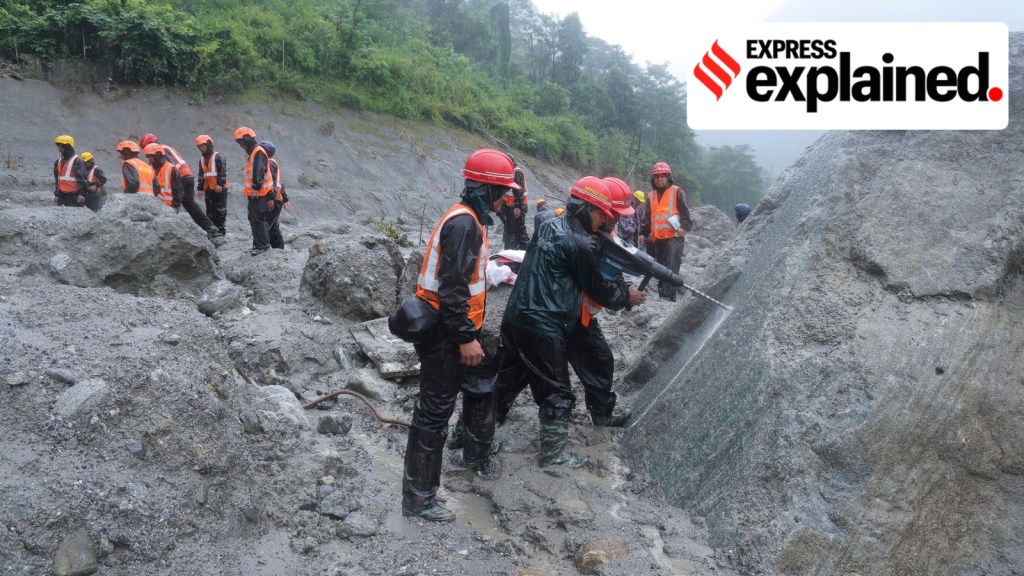
Rescue operations have centered heavily on these industrial sites, where Indian and Chinese tunnel-rescue specialists are working alongside the Nepali Army to clear blocked subterranean access points. Sites like the Trishuli-3A project and the tunnels in Chilime became death traps when the slurry surged underground. Workers were trapped deep inside tunnels as tons of mud and boulders sealed the entrances. Days into the crisis, heavy machinery continues to claw at the blockages. The reality of tunnel rescue in these conditions is grim. Thick, compacted silt acts like concrete once it settles, turning subterranean corridors into sealed tombs.
The political and logistical fallout is testing a government already strained by resource limitations. Prime Minister Balendra Shah mobilized nearly 21,000 security personnel for search and rescue operations, backed by international aid flights delivering emergency supplies from regional partners. However, the sheer scale of the devastation has overwhelmed local institutions. Hospitals in Kathmandu and regional centers have become sites of collective grief. Outside emergency wards, authorities have pinned up grim photoboards of recovered victims, forcing desperate families to comb through images of decomposed or unidentifiable remains. With hundreds of foreign nationals also listed among the missing—including tourists and migrant laborers from India, China, and Western nations—the diplomatic and consular dimensions add another layer of friction to an already chaotic recovery effort.
The tragedy exposes a profound systemic vulnerability in how Himalayan nations balance economic development with ecological survival. For years, environmental impact assessments for mountain infrastructure have frequently underestimated high-altitude cryospheric risks. Climate change is destabilizing permafrost and destabilizing hanging glaciers across the Hindu Kush Himalaya region at an accelerating rate. When an avalanche drops millions of tons of mass into a restricted gorge, traditional engineering margins of error evaporate instantly. The Bhotekoshi and Trishuli corridors were treated as narrow arteries for power generation, ignoring the reality that these same valleys are ancient, dynamic pathways for glacial discharge.
As water levels in the Bhotekoshi River continue to fluctuate and trigger fresh emergency alerts via mobile networks, the immediate focus remains on locating survivors and clearing the remaining blocked tunnels. But once the mud dries and the final missing persons lists are reconciled, Nepal and its neighbors will face an uncomfortable reckoning. The rush to build green energy cannot outpace the physical reality of a warming mountain range. Every megawatt generated in these steep gorges carries an invisible risk profile, and the cost of ignoring that balance has been written in over nine hundred lives.