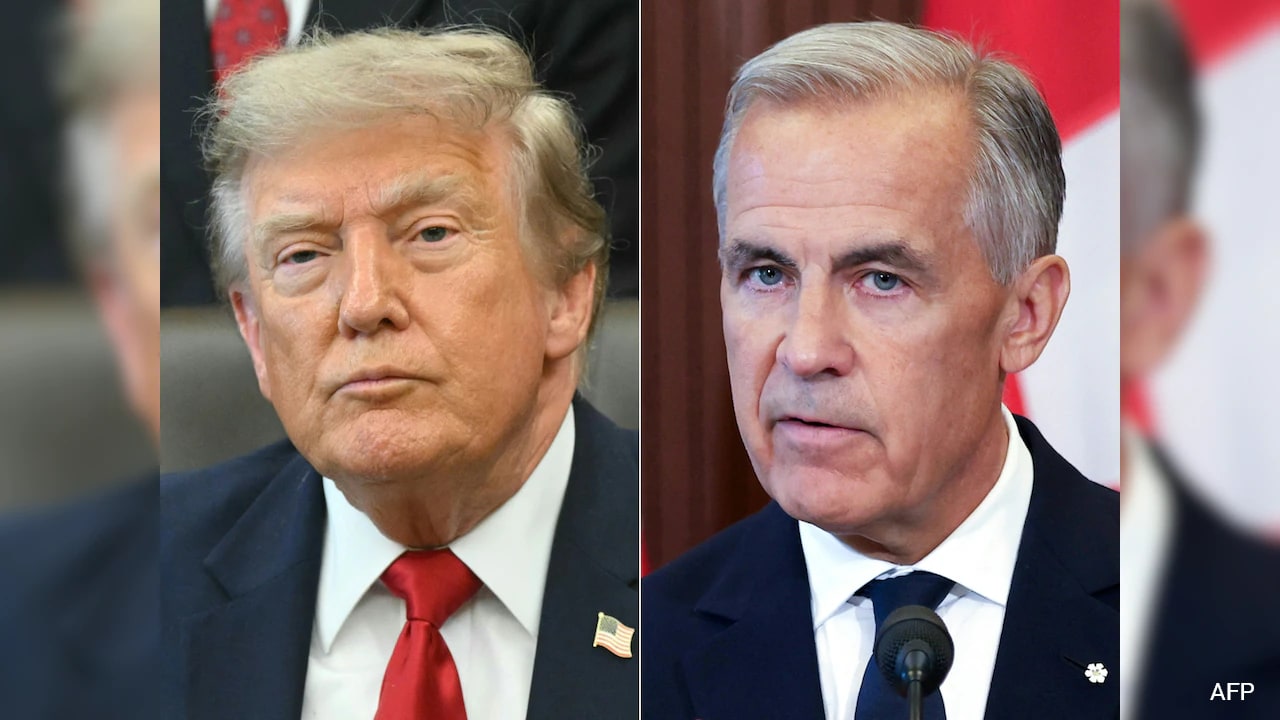
The border separating the United States and Canada is no longer just a administrative line on a map; it has become an economic fault line. For decades, the narrative of continental commerce relied on a comforting myth of permanent integration. Goods crossed back and forth across the 49th parallel multiple times before a finished vehicle or appliance ever reached a consumer. That architecture of shared production is breaking apart under the weight of escalating tariffs, protectionist policy shifts, and retaliatory measures.
Understanding how the world's most stable trading partnership unraveled requires looking past standard diplomatic rhetoric and examining the structural mechanics of modern economic nationalism. When the White House deployed sweeping import taxes under various legal authorities, it fundamentally altered the baseline of cross-border commerce. These tariffs are not temporary anomalies or minor regulatory adjustments. They represent a permanent shift toward mercantilism that treats trade deficits as direct security threats.
For industries anchored in the Great Lakes basin and across the industrial heartland, the friction has transformed supply chain management from a logistics puzzle into a high-stakes guessing game. Consider the automotive sector as a prime illustration of this vulnerability. An engine block might be cast in Michigan, machined in Ontario, assembled into a transmission in Ohio, and finally installed in a vehicle sold in Toronto. Under the current regime of fluctuating duties and sudden retaliatory strikes, every border crossing introduces a potential twenty-five to fifty percent cost penalty.
Corporate planners are discovering that redundancy is no longer optional. Supply chains designed around absolute efficiency and just-in-time delivery are buckling because efficiency assumes stable political parameters. When political parameters shift overnight, efficiency becomes a liability.
The Anatomy of Retaliation and Economic Friction
Policy actions rarely occur in a vacuum. When Washington levied aggressive duties on aluminum, steel, and manufactured goods, Ottawa faced immense domestic political pressure to respond in kind. Prime ministerial administrations, navigating volatile electoral landscapes, could not afford to project weakness in the face of what they characterized as predatory trade policies.
The resulting cross-fire of retaliatory levies targeted specific regional sensitivities. Provincial liquor boards pulled American spirits from shelves, while federal regulators enacted counter-tariffs on billions of dollars worth of American agricultural and industrial exports. This tit-for-tat escalation operates on a dangerous momentum. Each protective barrier erected by one side justifies a harsher penalty from the other, creating a downward spiral that punishes integrated businesses far more than it helps domestic producers.
Economists frequently point out that taxing your closest neighbor is a form of industrial self-harm. North American manufacturing was built on the principle of comparative advantage and pooled resources. When a smelter in Quebec faces punitive duties entering the United States, downstream manufacturers in Wisconsin and Michigan must absorb the higher cost or pass it directly to consumers. Margins compress. Capital investment stalls. Long-term infrastructure projects that require predictable material costs are postponed indefinitely.
The legal landscape has added another layer of chaos. Landmark court rulings striking down initial emergency trade measures offered brief moments of optimism for corporate legal teams, only to be met by new executive maneuvers invoking alternative statutory authorities. This game of legal chess creates an atmosphere of chronic uncertainty. Businesses cannot invest with confidence when the tax code at the border can change via a weekend executive proclamation.
Strategic Divergence in Capital and Resources
Beyond manufactured goods, the fracture extends deep into energy and natural resources. Canada remains the premier foreign supplier of crude oil, electricity, and critical minerals to the American economy. Yet, even these vital flows have been weaponized in political disputes over environmental policy, border enforcement, and geopolitical alignment.
When environmental friction or wildfire smoke sparks diplomatic fury in Washington, trade policy is frequently deployed as a blunt instrument of punishment. This weaponization of commerce teaches Canadian political and economic leaders a harsh lesson about over-reliance on a single superpower market. Diversification, once viewed as a secondary priority for Canadian exporters, has transformed into an existential necessity.
Trade agreements like the United States-Mexico-Canada Agreement were originally heralded as permanent guarantees of open borders. However, structural reviews and frequent threats of withdrawal have exposed the fragility of these legal frameworks. When a treaty can be bypassed by national security exemptions or emergency declarations, it ceases to function as a rule of law and becomes merely a suggestion.
Capital markets are reacting to this new reality with quiet brutality. Venture capital and private equity firms are increasingly hesitant to fund cross-border joint ventures. Financing terms now demand higher risk premiums for any project reliant on continuous tariff-free access across the northern border. Investors look at the volatility and choose domestic alternatives, effectively starving the North American economic corridor of the fresh capital it needs to modernize.
The Long-Term Cost of Isolationism
The ultimate casualty of this ongoing trade conflict is not any single corporation or political figure, but the collective competitive edge of North America on the global stage. While Washington and Ottawa expend political capital fighting over automotive parts, dairy quotas, and metal sheets, industrial powerhouses in Europe and Asia are consolidating their own supply networks.
A balkanized North America cannot compete effectively against coordinated state-backed industrial strategies elsewhere in the world. By turning inward and erecting internal trade barriers, both nations are choosing higher costs and lower productivity. The institutional memory of frictionless cooperation is fading, replaced by a defensive posture that views neighbors as economic adversaries.
Fixing this structural decay requires more than temporary truces or negotiated exemptions for select industries. It demands a fundamental return to economic realism. Until policymakers on both sides of the border recognize that integration is a source of collective strength rather than a vulnerability to be exploited, the once-durable alliance will continue to fracture under the weight of its own protectionist ambitions.