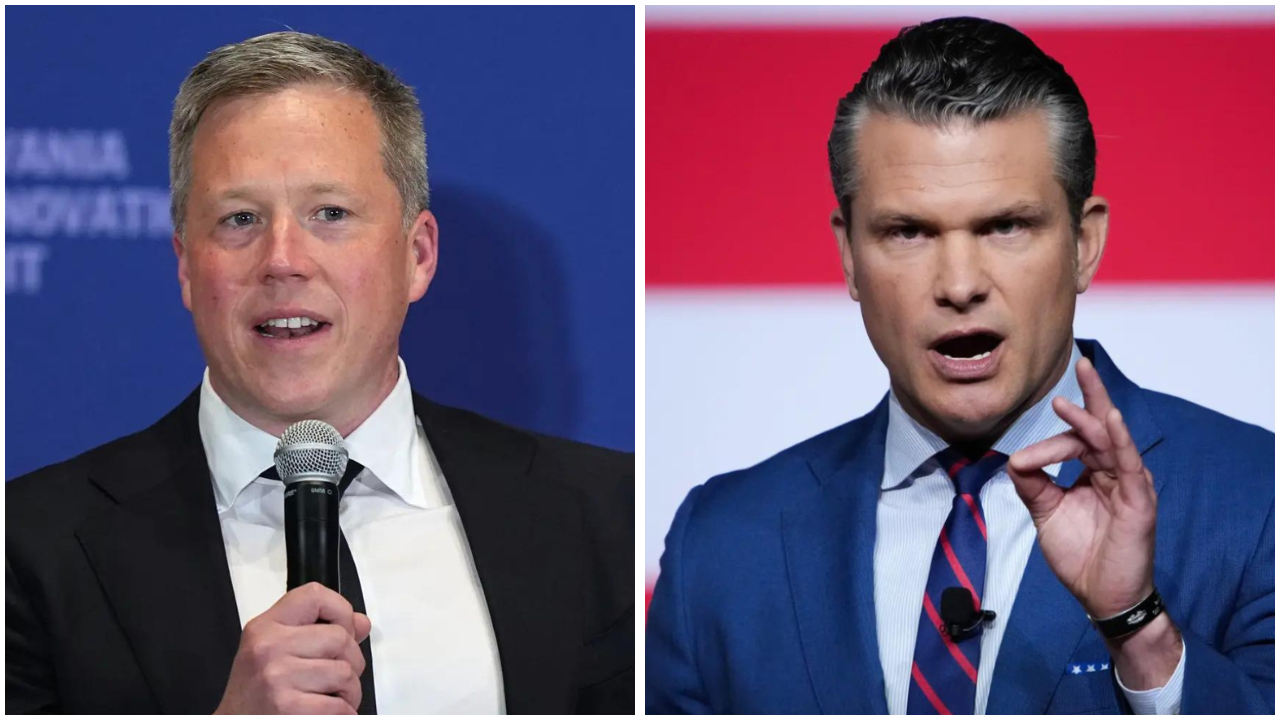
US Army Secretary Dan Driscoll is expected to step down by the end of the year, capping months of intense friction with Defense Secretary Pete Hegseth. This impending departure strips the Army of its final Senate-confirmed civilian leader, compounding a severe institutional vacuum left by earlier high-level purges. Beneath the sanitized language of administrative turnover lies a brutal turf war over modernization, political alignment, and the future command structure of the United States military.
The fault lines began forming almost immediately after the administration took office. Driscoll, a former Army Ranger, venture capitalist, and close political ally of Vice President JD Vance, attempted early on to arrange a high-profile visit for Vance and President Donald Trump to meet soldiers and discuss sweeping military reforms. Hegseth summarily blocked the initiative, signaling a rigid bureaucratic boundary within the Pentagon.
That opening skirmish metastasized into open warfare. Driscoll found a critical operational partner in Army Chief of Staff General Randy George. Together, the pair initiated the Army Transformation Initiative, pushing hard to strip away obsolete force structures and force a traditionally conservative bureaucracy to rapidly absorb commercial innovations, drones, and artificial intelligence modeled after battlefield lessons from Ukraine.
Then came April. Hegseth abruptly fired General George without public explanation, removing the service's top uniformed officer and shattering Driscoll's internal coalition. Driscoll did not hide his disdain for the move. During a subsequent congressional hearing, he openly praised George as an amazing, transformative leader, setting himself on a direct collision course with his superior at the Office of the Secretary of Defense.
The Cost of Institutional Fractures
The personal animosity matters because of what it destroys in its wake. With Driscoll's exit, the United States Army will operate entirely without Senate-confirmed leadership at the top. General Christopher LaNeve currently serves as the acting chief of staff, but his confirmation path on Capitol Hill faces bipartisan resistance.
The institutional damage extends to the modernization timeline. Driscoll had aggressively leveraged his political backing to secure billions in private sector commitments for base infrastructure and critical technology. General officers who initially hesitated to embrace unproven commercial tech were dragged across the finish line by a secretary who knew his time in office carried an expiration date. Without that heavy-handed executive drive, institutional inertia threatens to swallow the transformation process whole.
Meanwhile, Washington rumor mills churn with speculation about succession. Allies of Vice President Vance view Driscoll as a potential counterweight or even a future replacement for Hegseth should political winds shift further, while spokesmen within the defense apparatus maneuver quietly for influence.
The Reality of Pentagon Bureaucracy
Civil-military friction is nothing new. Every generation of civilian leadership fancies itself a band of reformers ready to whip the Pentagon into shape. Yet the structural architecture of the Department of Defense is designed to blunt radical departures. When a secretary and a service chief attempt to bypass institutional friction through sheer velocity, the system pushes back.
Driscoll chose to move fast, alienating old guard traditionalists while picking a permanent fight with the Secretary of Defense. His family moved out of the official government residence at Joint Base Myer-Henderson Hall earlier this summer, quietly relocating dependents back to North Carolina while Driscoll finished out his tenure from a sparse on-base apartment. The physical retreat foreshadowed the political reality.
The modernization programs will limp forward in name, stripped of the fierce internal advocacy that gave them teeth. The machinery of war continues to grind, indifferent to the bruised egos and broken alliances of the fourth floor.
Hegseth 'SPITS' In The Face Of USS Washington Sailors
This video provides additional context on the broader leadership controversies and operational pressures surrounding Defense Secretary Pete Hegseth within the Pentagon.