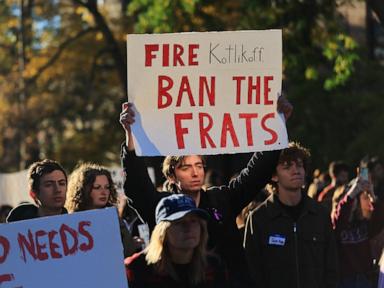
The convergence of internal university disciplinary frameworks and public criminal jurisdictions exposes a structural friction point in how allegations of sexual assault are investigated and resolved. When high-profile incidents emerge within elite institutional settings, the parallel processing of claims by campus panels and civil authorities often yields divergent outcomes, triggering intense public scrutiny over institutional accountability, evidentiary thresholds, and due process. Deconstructing the mechanics of these overlapping systems reveals why identical factual matrices can produce administrative sanctions while failing to satisfy the legal burdens required for criminal indictments.
The Dual Track Architecture of Accountability
Institutional governance operates through a distinct paradigm compared to the state penal apparatus. Under federal mandates such as Title IX, universities maintain administrative obligations to investigate complaints of sexual misconduct, harassment, and assault to ensure an educational environment free from discrimination. This administrative mandate establishes internal tribunals, such as faculty-staff hearing panels, which function under specific institutional bylaws rather than statutory criminal codes. Also making waves lately: What Everyone Gets Wrong About Trump and Texas Politics Right Now.
The divergence between these tracks begins with the standard of proof. While criminal courts require proof beyond a reasonable doubt—a high evidentiary hurdle designed to protect against wrongful state deprivation of liberty—campus adjudications typically utilize a preponderance of the evidence standard. This means an internal panel must determine only whether a policy violation is more likely than not to have occurred. Consequently, an action can breach a university's student code of conduct without meeting the rigorous elements codified in state criminal statutes.
Evidentiary Capture and the Mechanics of Testimony
The investigative phase dictates the trajectory of any subsequent legal or administrative review. In campus settings, initial reporting often occurs weeks after an incident, mediated by university police or Title IX coordinators. This temporal gap introduces significant variables regarding memory retention, intoxication levels, and the preservation of physical or digital evidence. Further details regarding the matter are covered by The Guardian.
In major institutional cases, such as the scrutinized proceedings involving Cornell University and its Chi Phi fraternity chapter, investigations generate extensive documentation, including multi-day evidentiary hearings, cross-examinations, and voluminous interview transcripts. However, the synthesis of these records creates a filtration effect. When law enforcement agencies review condensed summaries rather than raw, verbatim testimonies, critical nuances regarding explicit assertions of non-consent or intoxication can become obscured. This summarization delta often explains why a campus hearing panel, viewing days of live testimony and cross-examination, might reach a unanimous finding of responsibility for specific policy breaches, while an external district attorney declines to present a case to a grand jury citing insufficient statutory evidence of forcible compulsion or incapacity.
The Cost Function of Institutional Sanctions
When administrative panels finalize their findings, they deploy a tiered matrix of disciplinary responses. These interventions range from mandatory educational workshops and temporary suspensions to expulsion. However, the structural limitation of university discipline is its lack of carceral or comprehensive financial recovery mechanisms. Institutions cannot levy criminal fines, issue custodial sentences, or provide the subpoena powers inherent to state investigations.
This creates a systemic mismatch with public expectations. When severe allegations involving multiple individuals and digital footprints—such as contentious group chat communications—result in administrative expulsions and suspensions without simultaneous police arrests, external observers frequently interpret the outcome as institutional leniency. In operational reality, it reflects the boundary limits of private administrative authority versus public penal mandates.
Jurisdictional Overlap and External Intervention
The limitations of internal administrative processes frequently invite legislative and executive intervention when public confidence fractures. The appointment of special prosecutors or the filing of complex civil litigation alters the operational landscape. Civil lawsuits introduce mechanisms absent in both Title IX panels and criminal courts, such as comprehensive discovery demands, depositions, and financial liability claims targeting both the institution and individual actors.
This transition from internal arbitration to civil and criminal re-examination highlights the core vulnerability of dual-track systems. When institutions function simultaneously as quasi-judicial arbiters and educational service providers, they risk structural overload. The absence of uniform evidentiary weight between campus codes and state laws ensures that contested proceedings will continue to generate friction, litigious fallout, and systemic institutional vulnerability.
To mitigate this structural vulnerability, governing bodies must decouple internal disciplinary procedures from public relations management, enforcing absolute transparency in evidentiary standards while establishing clear operational protocols that facilitate, rather than insulate, external law enforcement coordination when felony-level allegations are formally logged.