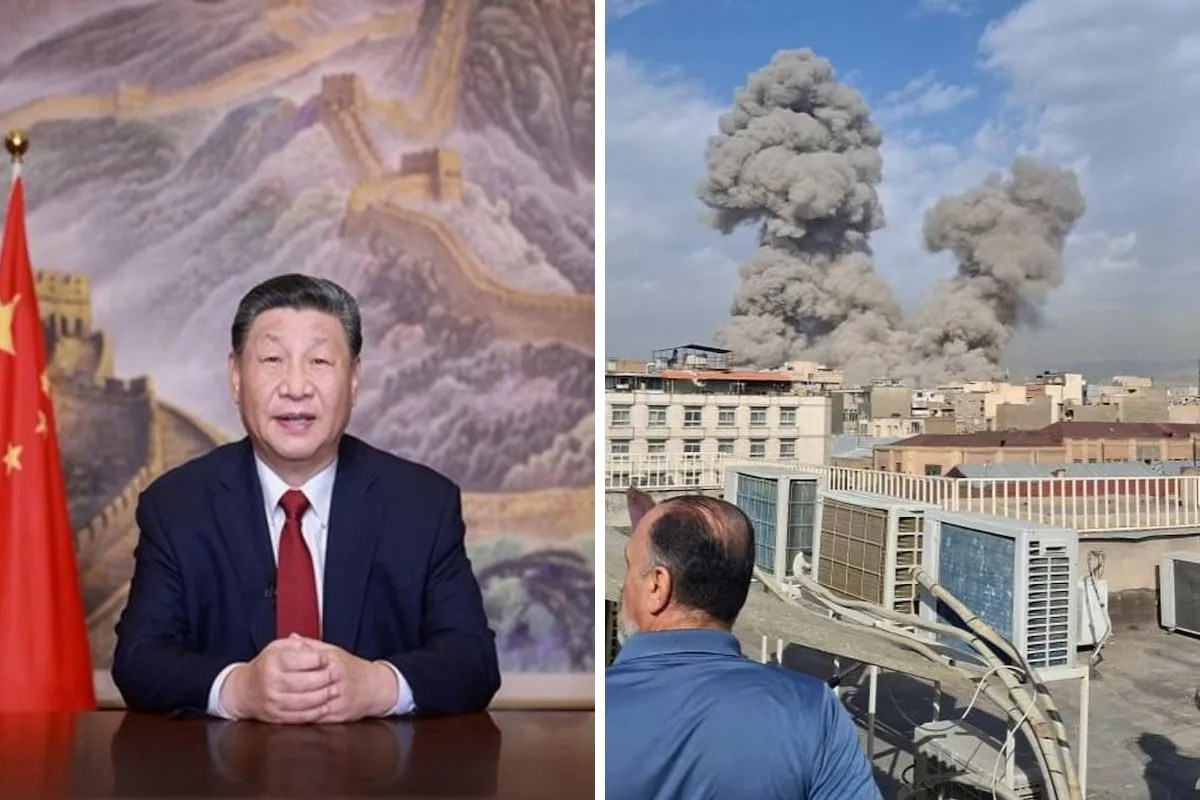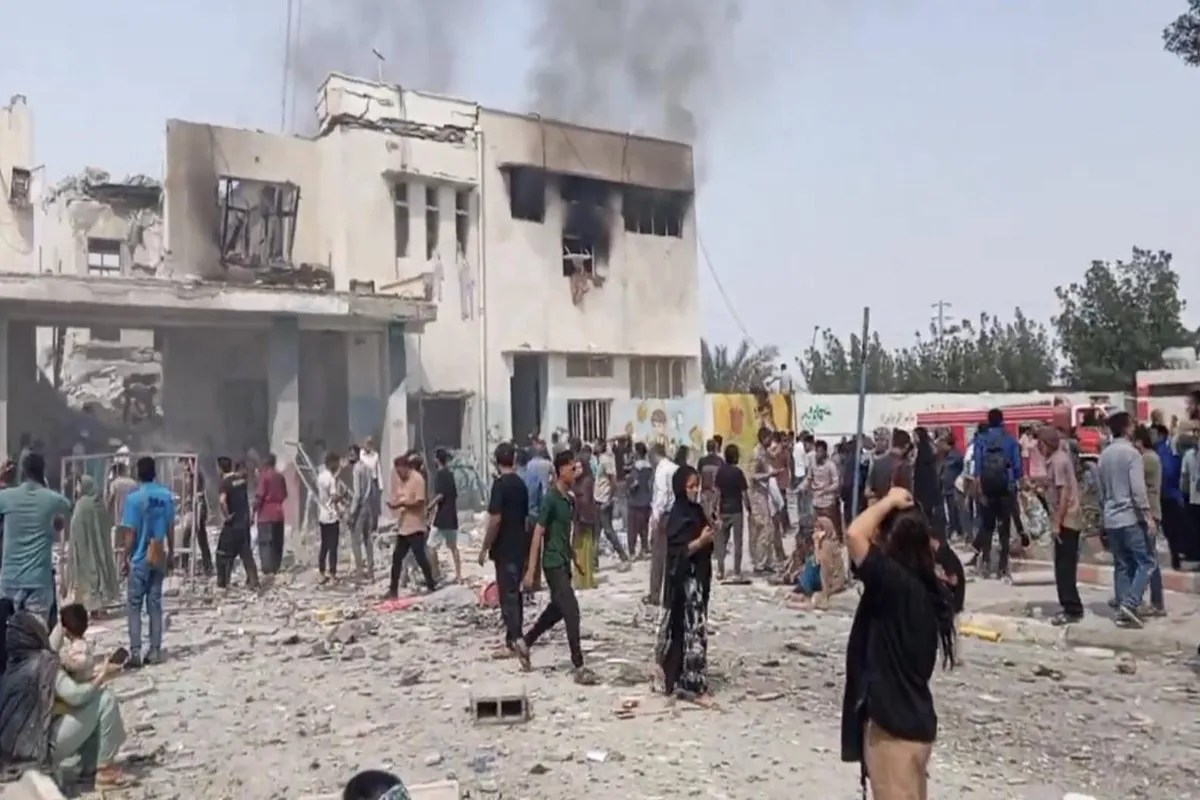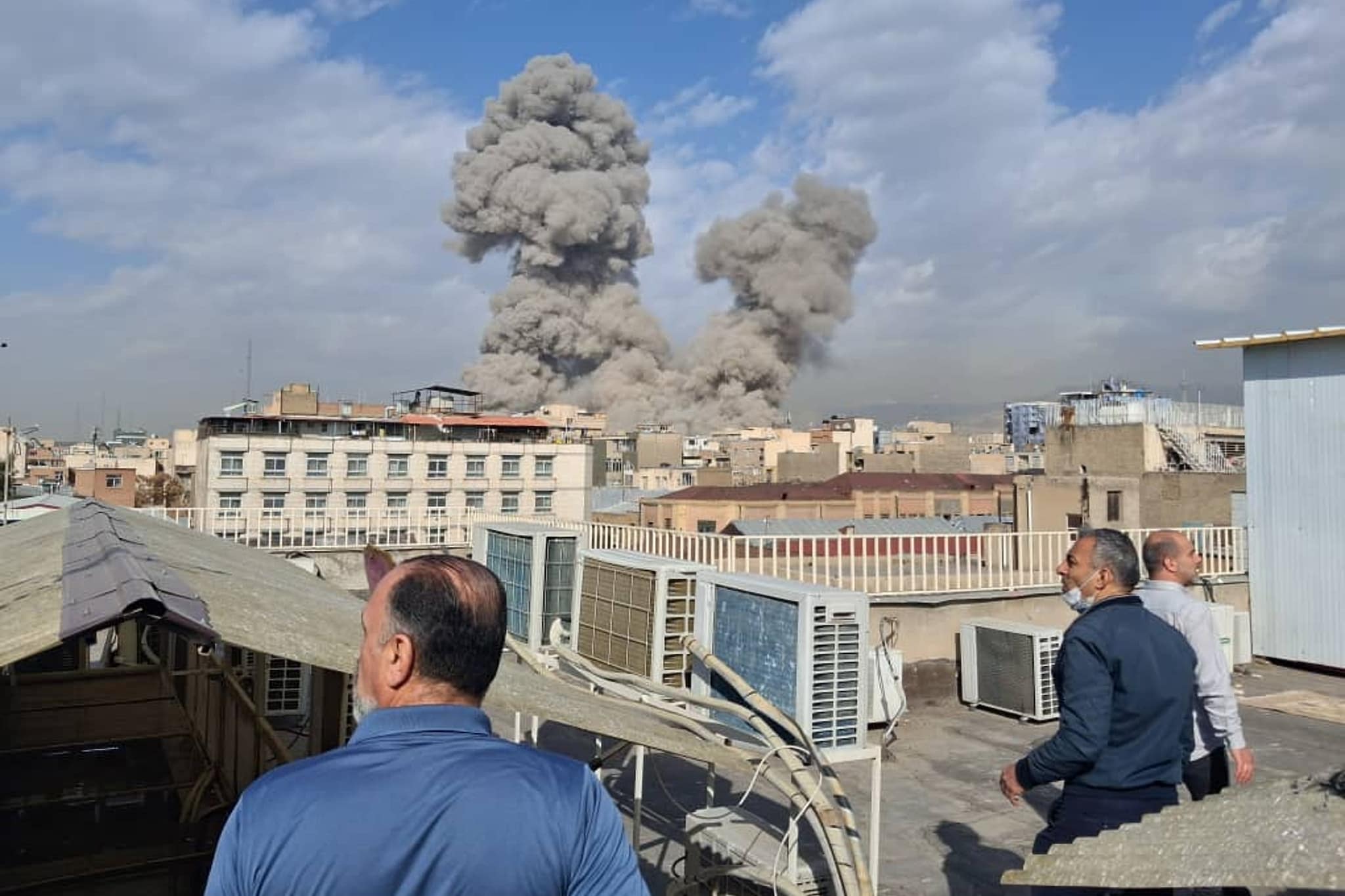
The air in the control room of a nuclear power plant doesn't smell like ozone or electricity. It smells like floor wax and stale coffee. It is the smell of meticulous, soul-crushing boredom—the kind of boredom that is actually a victory because it means nothing is going wrong. But for the engineers at the Bushehr Nuclear Power Plant on Iran’s coast, that silence has become a fragile thing. When the skies over the Middle East begin to hum with the sound of drones, that boredom evaporates. It is replaced by a cold, mathematical dread.
We often talk about war in terms of territory, oil, or national pride. We count the missiles. We map the intercepts. But there is a different kind of ledger being kept in the Kremlin and the halls of the International Atomic Energy Agency. It is a ledger of isotopes. Russia’s recent warnings about a "radiological disaster" in the wake of escalating Iran-Israel tensions aren't just diplomatic posturing. They are a reminder that in modern conflict, the battlefield isn't just three-dimensional. It is atomic.
The Concrete Shell and the Ghost of Chernobyl
Imagine a technician named Arash. He is hypothetical, but his fear is shared by every soul working within ten miles of a reactor core. Arash knows that the VVER-1000 pressurized water reactor at Bushehr is wrapped in layers of steel and concrete designed to withstand an airplane crash. He knows the physics. He trusts the containment.
But Arash also knows that a "radiological disaster" doesn't always start with a direct hit on the reactor vessel itself. It starts at the edges. It starts with the cooling systems. If you've ever seen an engine seize because the radiator was shot out, you've seen the fundamental problem of a nuclear power plant. The uranium fuel doesn't care if the war is just or not. It only cares about heat. If the cooling pumps lose power—if the external grid is severed or the backup generators are crushed by a "stray" missile—the fuel begins to eat itself.
Russia, having built the Bushehr plant and supplied its fuel, is the only party in the room that truly understands the blueprint of its vulnerabilities. When they warn of a radiological disaster, they aren't just predicting. They are describing the specific physics of their own architecture. They are thinking of the Spent Fuel Pools. These are the deep, blue-glowing baths where used-up uranium rods sit, waiting for their radioactivity to decay over decades. These pools are the soft underbelly. They are less protected than the reactor core. If they are hit, if they leak, the isotopes are no longer a technical problem. They become weather.
When Geography Becomes a Weapon
The Persian Gulf is a small, crowded bathtub. If a cloud of Cesium-137 or Iodine-131 rises from a shattered cooling pond at Bushehr, it doesn't stay in Iran. The wind doesn't respect borders. It doesn't care about the Iron Dome or the IRGC’s air defenses.
Think about the desalination plants. The entire Arabian Peninsula—the shimmering skyscrapers of Dubai, the desert cities of Saudi Arabia, the tiny, oil-rich states of the Gulf—runs on desalinated seawater. It is their lifeblood. Now, imagine a radiological plume drifting across the water, settling into the Gulf. The intakes of those desalination plants are designed to filter salt, not isotopes.
The threat Russia is articulating is the ultimate asymmetrical weapon. A single strike on a nuclear facility by Israel, or a catastrophic failure of Iranian defenses, doesn't just damage a military objective. It potentially poisons the water supply of an entire region. It is a slow-motion catastrophe that could render entire cities uninhabitable without a single soldier ever stepping foot on their streets.
The Poker Game of Plausible Deniability
We are living in an era of "maybe." Did a drone hit a transformer? Maybe. Was it a cyberattack that caused the cooling valves to stick? Perhaps.
Russia’s intervention here is a calculated bit of theater, but it’s grounded in a terrifying reality. By highlighting the radiological risk, they are raising the price of a strike. They are telling Israel, and by extension the West, that the environmental and humanitarian cost of a "pre-emptive" strike on Iran's nuclear infrastructure could be higher than the cost of a nuclear-armed Iran. It is a grim calculation.
Consider the human cost in the aftermath. If a radiological event occurs, who manages the cleanup? In the middle of an active war zone, who sends the "liquidators"—those doomed, brave souls who shoveled radioactive graphite off the roof of Chernobyl? Would Israel stop its bombardment to allow Russian or IAEA technicians to stabilize a melting core? Would Iran allow "enemy" inspectors into the zone while the smoke is still rising?
The Architecture of a Nightmare
The technical reality is that a nuclear plant is a living organism. It breathes water. It pulses with energy. When you introduce the chaos of high-explosive ordnance and electronic jamming into that delicate balance, the math starts to break.
- The Grid Collapse: Modern reactors need the outside world. They need the electrical grid to keep their safety systems running. If the Iranian power grid is targeted to "blind" their defenses, the reactors at Bushehr are suddenly on life support.
- The Human Factor: Under the stress of bombardment, even the best-trained operators make mistakes. Stress narrows the vision. It makes the fingers shake. A simple valve error during an air raid can turn a minor incident into a meltdown.
- The Sabotage Loop: In a world of Stuxnet and sophisticated cyberwarfare, the risk isn't just a bomb. It's the silent, invisible corruption of the logic controllers that prevent the fuel from overheating.
Russia’s "warning" is a ghost story told in the daylight. It is a reminder that we have built a world where our greatest achievements in energy are also our most terrifying vulnerabilities. We have planted gardens of lightning in the middle of a desert where everyone is carrying matches.
The Dust That Never Settles
There is a specific kind of silence that follows a nuclear accident. It’s not the silence of peace; it’s the silence of a void. It’s the silence of a house where the people left their tea on the table and never came back.
If the tensions between Iran and Israel boil over into a strike on Bushehr, we aren't just looking at another chapter in a long, bloody history. We are looking at a permanent alteration of the earth’s chemistry in that corner of the world. The isotopes don't surrender. They don't sign peace treaties. They sit in the soil and the water for thousands of years, long after the names of the generals and the presidents have been forgotten.
The "radiological disaster" Russia speaks of isn't a theory. It’s a possibility that is currently sitting in a control room on the coast of the Persian Gulf, waiting for a single mistake, a single missile, or a single moment of lost cool. Arash is still there, watching the dials. He is hoping the boredom lasts forever.
Every time a siren wails in Tel Aviv or Tehran, the ghost of a cloud that hasn't happened yet shivers in the wind. It is a cloud that could change the map of the Middle East far more effectively than any army. It is the dust that never settles, waiting for its turn to speak.