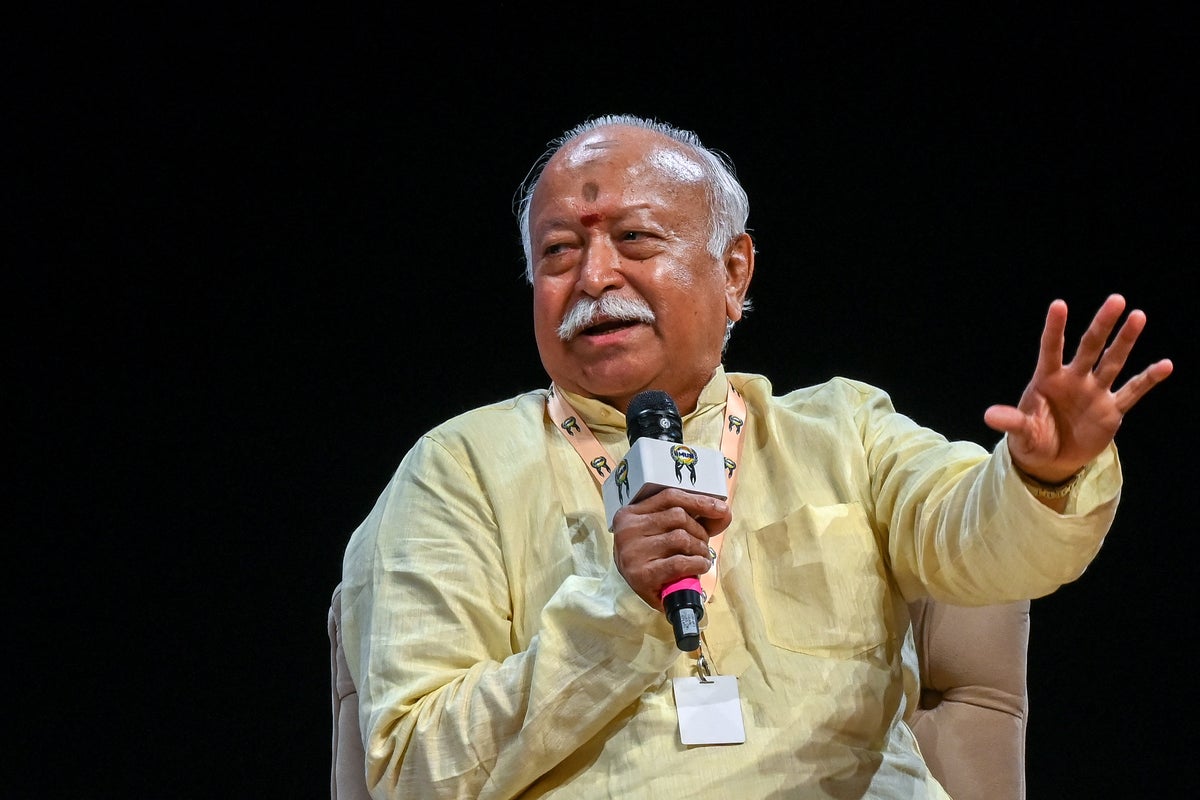
Transnational political movements frequently test the operational boundaries of municipal governance when global ideological conflicts intersect with local civil rights frameworks. This friction became apparent when New York City Mayor Zohran Mamdani publicly addressed a scheduled appearance at Madison Square Garden by Mohan Bhagwat, chief of the Rashtriya Swayamsevak Sangh (RSS). While the administration registered formal opposition to the event's underlying ideology, it simultaneously affirmed the absence of legal mechanisms to prohibit a private gathering. This dynamic highlights a structural tension within urban governance: the collision between municipal values of pluralism and the constitutional protections afforded to private assemblies, regardless of their ideological provenance.
The Structural Mechanics of Municipal Jurisdiction
Local executives operate within strict statutory limits that separate municipal political preference from regulatory enforcement. When evaluating whether a municipal government can halt a private event booked at a commercial venue like Madison Square Garden, the analysis reduces to three legal variables:
- Property Ownership Status: Privately owned commercial venues possess independent rights regarding contract execution, provided the events do not violate local public safety codes or municipal ordinances.
- First Amendment Protections: Constitutional jurisprudence within the United States establishes a high threshold for content-based restrictions on speech or assembly, even for organizations associated with foreign nationalist movements.
- Police Power Limits: Municipal authority is restricted to maintaining public order, managing traffic flow, and enforcing permitting for public street usage rather than vetting the ideological alignment of private conference attendees.
Consequently, declarations of opposition from executive leadership function as signaling mechanisms rather than regulatory bans. The distinction underscores a central governance challenge: executive rhetorical power is infinite, but municipal jurisdictional power is bounded by statutory and constitutional constraints.
Transnational Ideological Export and Local Pushback
The convergence of foreign political organizations in major diaspora hubs such as New York City represents an intentional strategy of international legitimation. Organizations like the RSS, operating as the ideological core of India's ruling establishment, utilize high-profile international venues to reframe cultural nationalism as universal civic engagement.
This outreach triggers a predictable counter-response from diaspora civil society and municipal leadership. The conflict centers on competing narratives of identity. Proponents package the gathering under banners of interfaith unity and shared heritage, while critics and municipal officials identify the underlying philosophy as structurally exclusionary toward religious minorities. For a municipal administration committed to a pluralistic framework, hosting organizations linked to systemic discrimination creates acute political and moral friction.
The Calculus of Diaspora Politics
Diaspora communities function as proxies for home-country political polarization. When political figures from foreign movements stage events abroad, the primary objectives include resource mobilization, narrative control, and diaspora consolidation. Local political leaders caught in the middle must navigate competing constituency pressures:
- Vote-Bank Dynamics: Aligning with or alienating distinct immigrant blocs carries immediate electoral consequences in dense urban centers.
- Human Rights Accountability: Mayoral positioning often requires balancing international human rights advocacy against standard municipal neutrality regarding foreign cultural events.
- Institutional Consistency: Maintaining credibility requires applying uniform standards to all international political figures seeking platforms within city limits, regardless of diplomatic sensitivities.
Strategic Operational Outlook
The management of transnational ideological conflict within urban centers requires a clear operational blueprint. Municipalities facing similar pressures must decouple rhetorical values from administrative overreach. Executive leadership retains the institutional duty to articulate civic opposition to exclusionary ideologies while respecting the constitutional boundaries of private assembly.
Future iterations of these conflicts will test the resilience of local civil rights protections against imported polarization. Urban administrators must build robust community liaison frameworks to channel diaspora tensions into civic dialogue, neutralizing the potential for localized public disorder without violating constitutional mandates. The definitive play for municipal leadership is to maintain absolute fidelity to local non-discrimination statutes while refusing to grant moral validation to transnational movements that subvert pluralism abroad.


