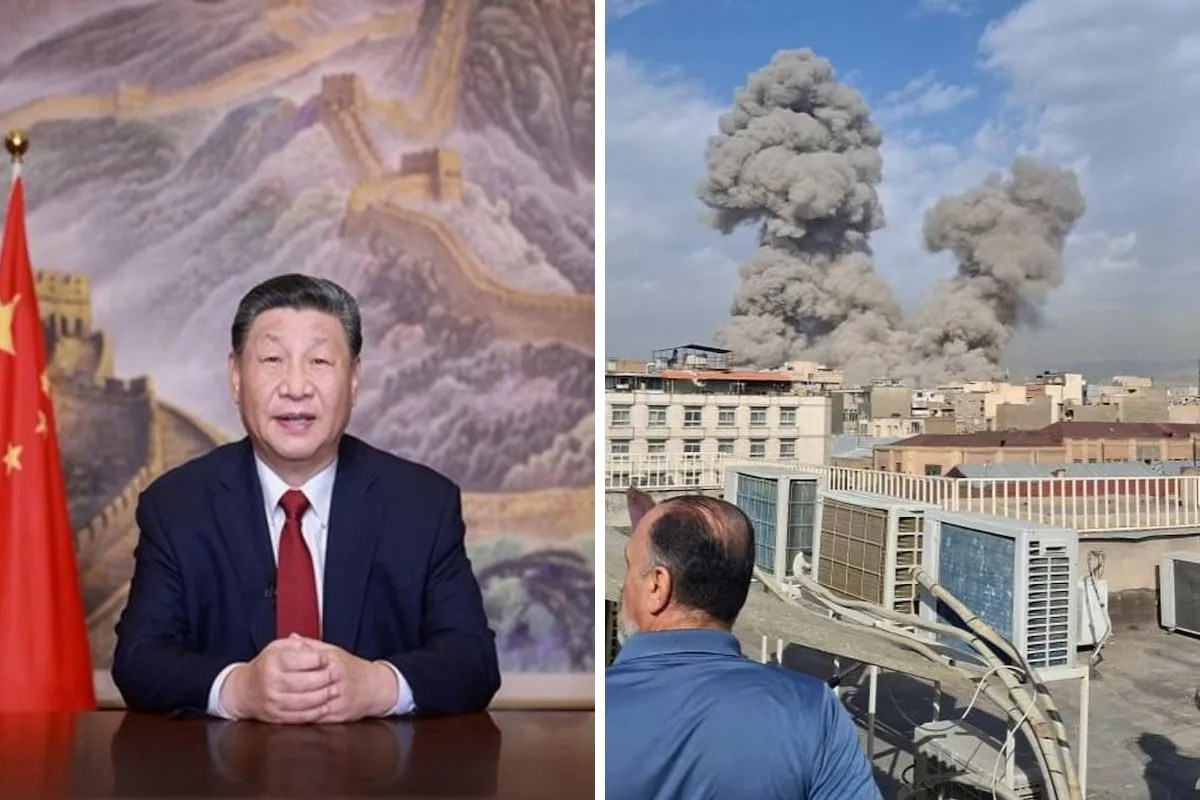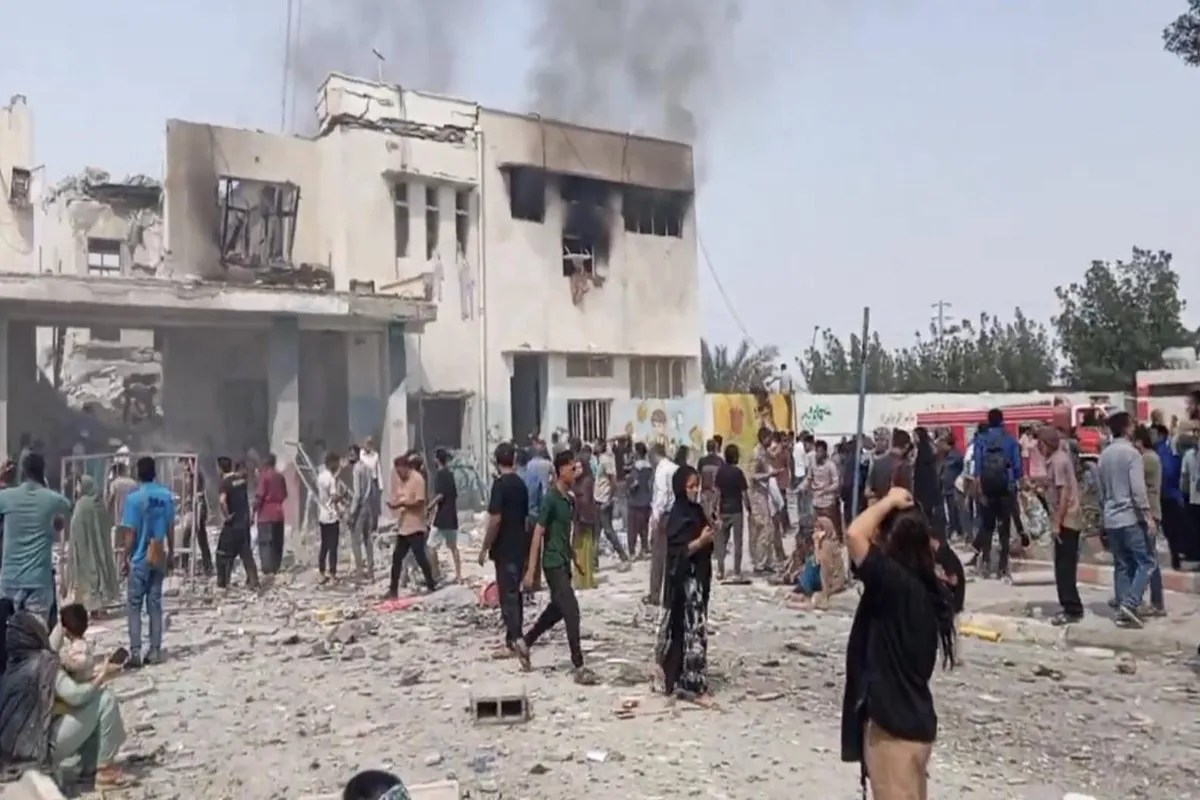
The shift from gray-zone shadow warfare to direct state-on-state kinetic exchange between Iran and Israel represents a fundamental breakdown in the architecture of regional deterrence. This transition is not a "cycle of violence" but a deliberate recalibration of risk thresholds by both actors. Understanding the trajectory of this conflict requires discarding narrative-driven analysis in favor of a structural assessment of three critical variables: the saturation capacity of integrated air defense systems, the shifting geography of the "Axis of Resistance," and the internal political constraints governing the use of long-range precision-guided munitions (PGMs).
The Mathematics of Interception and Saturation
The primary technical constraint in a direct confrontation is the cost-to-kill ratio and the physical limits of interceptor magazines. Modern missile defense operates on a deterministic logic of probability. When Iran launched a massive drone and missile salvo, the objective was not necessarily total destruction but the empirical testing of the "Iron Dome," "David’s Sling," and "Arrow" systems. Recently making waves lately: The Kinetic Deficit Dynamics of Pakistan Afghanistan Cross Border Conflict.
The attrition of interceptors creates a vulnerability window. An Arrow 3 interceptor costs approximately $3.5 million, whereas a Shahed-136 loitering munition costs roughly $20,000 to $50,000. This fiscal and inventory asymmetry dictates that an attacker wins by forcing the defender to deplete their high-end kinetic interceptors on low-end targets.
- Volume of Fire (V): The total number of projectiles launched simultaneously to overwhelm radar tracking capabilities.
- Probability of Kill ($P_k$): The statistical likelihood that a single interceptor neutralizes a single incoming threat.
- Magazine Depth: The total number of ready-to-fire interceptors before a manual reload or logistics chain bottleneck occurs.
A saturation attack is successful when $V > (M \times P_k)$, where $M$ is the available interceptor count. Israel’s defense strategy relies on a multi-layered approach to filter these threats, but the reliance on external partners (the United States, Jordan, and the United Kingdom) for "outer ring" interceptions indicates that domestic capacity alone may be insufficient against a sustained, multi-front barrage. Further insights on this are explored by NPR.
The Strategic Encirclement and the Proximal Fronts
Iran’s "Ring of Fire" strategy is a geographical application of distributed lethality. By placing PGM capabilities with non-state actors in Lebanon, Syria, Iraq, and Yemen, Tehran forces Israel to divide its intelligence, surveillance, and reconnaissance (ISR) assets across a 360-degree theater.
Hezbollah as a Strategic Deterrent
The Lebanese border remains the most significant tactical variable. Unlike Iran’s long-range strikes, which provide a 15-to-90-minute early warning window, Hezbollah’s arsenal of an estimated 150,000 rockets—including thousands of precision-guided Fateh-110 missiles—can strike Haifa or Tel Aviv with flight times measured in seconds. This proximity eliminates the "decision space" for Israeli command centers.
The Syrian Land Bridge
The logistics of this conflict depend on the "land bridge" stretching from Tehran to the Mediterranean. Israeli kinetic operations in Syria (often termed "The War Between Wars") aim to disrupt this supply chain. The efficacy of these strikes is diminishing as Iran shifts from transporting finished systems to transferring technical blueprints and localized manufacturing kits for drone assembly and PGM conversion.
The Intelligence Paradox and Signaling
In high-stakes escalation, communication often happens through kinetic action rather than diplomatic cables. Both states are currently engaged in "signaling" their capabilities without triggering a total regional collapse.
- Iran’s Signal: Demonstrating the ability to bypass regional airspace and strike sovereign Israeli territory directly from Iranian soil.
- Israel’s Signal: Demonstrating the ability to penetrate high-value Iranian airspace and strike sensitive military or nuclear-adjacent infrastructure with high precision and low collateral damage.
The paradox of this signaling is that it reduces the ambiguity that previously prevented war. When red lines are crossed and the sky does not fall, the perceived risk of the next escalation decreases. This leads to a "Normalization of Escalation," where actions that would have been considered an act of war five years ago are now treated as routine tactical exchanges.
Domestic Constraints and the Cost Function of War
No military strategy survives the economic realities of the state. For Israel, the cost of a high-intensity conflict includes the mobilization of hundreds of thousands of reservists, which removes productive labor from its high-tech economy. For Iran, the risk is the potential for domestic unrest if the state's security apparatus is perceived as unable to protect internal infrastructure or if the economic toll of increased sanctions and kinetic damage reaches a breaking point.
The cost function of a full-scale war for both sides can be expressed as:
$$C_{total} = C_{kinetic} + C_{economic_disruption} + C_{political_stability}$$
Currently, both actors have calculated that a full $C_{total}$ exceeds their current strategic objectives. However, miscalculation remains the primary driver of unintended escalation. If an intercepted missile produces high civilian casualties due to debris in a major urban center, the political pressure to respond shifts from a calibrated signal to an existential requirement for retaliation.
The Technology of Attribution and Cyber Warfare
Beyond the kinetic exchange, the digital front serves as a force multiplier. Cyber operations against national infrastructure—power grids, water systems, and transport logistics—act as "soft" strikes that can paralyze a nation without the optics of a missile launch.
Israel’s cyber capabilities are historically offensive and preemptive. Iran’s capabilities have evolved from simple DDoS attacks to sophisticated social engineering and industrial control system (ICS) penetration. The integration of AI in cyber-defense allows for real-time threat hunting, but the offensive advantage remains with the party willing to exploit "zero-day" vulnerabilities in critical infrastructure.
Strategic Realignment of Regional Powers
The conflict is no longer a bilateral issue. The Abraham Accords and the subsequent quiet intelligence cooperation between Israel and several Arab states have created a "Middle East Air Defense" (MEAD) alliance. This creates a buffer zone that Iran must penetrate.
- The Saudi-Jordanian Variable: These nations occupy the flight paths between the two combatants. Their involvement—whether active or passive—determines the success of intercepting drones and cruise missiles.
- The U.S. Security Umbrella: The United States acts as the ultimate guarantor of Israeli defense, but its strategic pivot toward the Indo-Pacific creates a tension between its commitments in the Middle East and its long-term geopolitical goals.
Immediate Operational Imperatives
The transition to a direct confrontation phase requires a shift in military posture. Israel must prioritize the hardening of its civilian infrastructure and the rapid expansion of its laser-based defense system, "Iron Beam," which promises to lower the cost-per-kill significantly. Iran must weigh the survival of its "Axis" proxies against the risk of direct strikes on its energy export infrastructure, which remains the regime's primary economic lifeline.
The strategic play for any observer or participant is to recognize that the era of shadow war is over. The "War Foretold" is now a war of active attrition. The decisive factor will not be a single "game-changing" weapon but the industrial capacity to sustain PGM production and the political resilience to absorb the inevitable breakthroughs in air defense.
The immediate tactical priority is the synchronization of multi-domain defenses to ensure that the cost of an Iranian "first strike" remains higher than the perceived benefit of the political victory it seeks to achieve. This requires an immediate investment in autonomous ISR platforms to maintain constant coverage of mobile launch sites across the Iranian plateau and the Levant.