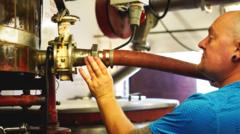
The copper kettles used to gleam. Every morning at 5:00 AM, the sharp, sweet scent of boiling malt would drift across the alleyway, a comforting signal to the neighborhood that the world was spinning exactly as it should. It was the smell of ambition, of community, of liquid poetry brewed five barrels at a time.
Now, the air just smells like damp concrete and stale dust.
Walk into almost any independent brewery today, and you will find a chalkboard behind the bar. It usually lists a dizzying array of India Pale Ales, crisp pilsners, and maybe a rich oatmeal stout. But look closer at the bottom corner. Increasingly, you will see a different kind of message scribbled in chalk: Thank you for the memories. Closing doors this Sunday.
Something is breaking in the world of independent beer. For a decade, we lived through a golden age of brewing. A golden liquid rush. Neighborhoods were revitalized by taprooms tucked into old industrial warehouses. Consumers happily traded mass-produced, watery lagers for complex flavors born out of local pride. It felt like a revolution that could never end.
It ended.
To understand why the taps are running dry, you have to look past the romance of the pint glass and step into the cold, unforgiving reality of the balance sheet.
The Chemistry of a Collapse
Consider a hypothetical brewer named Mark. Six years ago, Mark cashed out his savings to open a modest taproom in a bustling metropolitan suburb. He wasn't trying to become a global conglomerate. He just wanted to make a living doing what he loved, serving the people who lived three blocks away.
For the first few years, the math worked. But a brewery is not just a place of alchemy; it is a highly specialized manufacturing plant masquerading as a living room. And manufacturing requires raw materials.
Carbon dioxide. Carbon dioxide is the literal lifeblood of beer, the element that gives a cold brew its effervescence and protects it from spoiling during the packaging process. A few years ago, the industrial supply chains for carbon dioxide fractured. Supply dwindled. Prices skyrocketed, sometimes tripling overnight.
Suddenly, Mark was paying more just to keep his beer from oxidizing than he used to pay for his entire monthly hop order.
Then came the aluminum shortage. If you cannot get cans, you cannot ship your product to grocery stores or bottle shops. When the price of aluminum cans surged alongside the cost of cardboard packaging, the margin on every four-pack sold outside the taproom evaporated.
But the real problem lies elsewhere. It sits right in the palms of our hands.
The Changing Glass
The consumer shifted. While brewers were battling supply chains, the cultural tide turned quietly, decisively, and without warning.
For decades, the hospitality industry relied on a predictable pattern: young adults drink beer. They go to bars, they try new brands, and they drive volume. But the current generation of twenty-somethings looks at a hazy IPA with 7% alcohol by volume and sees a sugar bomb that will give them a headache by midnight.
They are choosing hard seltzers. They are choosing canned cocktails. Increasingly, they are choosing to drink nothing at all, opting for non-alcoholic alternatives that fit a wellness-focused lifestyle.
Consider what happens next when a brewery's core demographic shrinks while its fixed costs explode. The business model crumbles from both ends.
+--------------------------+     +--------------------------+
|   Rising Input Costs     |     |   Shifting Consumers     |
|  - CO2 prices tripled    |     |  - Gen Z drinking less   |
|  - Aluminum can shortage | +-> |  - Preference for RTDs   |
|  - Energy bills doubled  |     |  - Wellness trend focus  |
+--------------------------+     +--------------------------+
              |                               |
              +---------------+---------------+
                              |
                              v
                +---------------------------+
                |  The Independent Brewery  |
                |   Squeezed Out of Market  |
                +---------------------------+
When you look at the industry data, the numbers bear out this grim reality. Brewery closures have reached rates not seen since the immediate aftermath of Prohibition. In major brewing hubs across the country, more licenses are being surrendered than applied for. The giants of the industry—the multi-national conglomerates with massive marketing budgets and automated facilities—can absorb these shocks. They can negotiate bulk contracts for aluminum and weather a bad quarter.
The local taproom cannot.
The Squeeze of the Everyday
It is easy to look at this as a simple story of market correction. Capitalism is brutal; businesses fail every day. If a brewery cannot survive, perhaps it shouldn't.
But that cold logic ignores the invisible stakes. A brewery is rarely just a business.
Think about your local spot. It is likely the place where you met a friend after a grueling week at work. It is the venue that hosted the local charity fundraisers, the dog-rescue adoptions, the trivia nights that gave people a reason to leave their houses on a rainy Tuesday. It represents an investment in a physical space at a time when our lives are becoming terrifyingly digital.
When Mark has to look at his energy bill—which has doubled due to the global energy crisis—and realize that he cannot charge fifteen dollars for a pint of beer without alienating his remaining regulars, the calculation changes from optimization to survival.
He cuts staff. He stops experimenting with new recipes. He stops buying premium local ingredients, turning instead to cheaper alternatives. But the downward spiral is relentless. The beer loses its magic, the customers notice, and the foot traffic slows to a crawl.
It is a slow, agonizing suffocation.
The Myth of the Craft Premium
For years, independent brewers believed that the "craft premium" would protect them. The theory was simple: consumers would always be willing to pay a little bit more for quality, authenticity, and local ownership.
That theory worked when inflation was low and disposable income was high. But when the price of eggs, rent, and gasoline hits historic highs, the craft premium becomes a luxury few can justify. The consumer standing in the supermarket aisle looks at a twelve-pack of mass-produced commercial lager for fifteen dollars, then looks at a four-pack of local craft beer for eighteen dollars.
Authenticity loses to austerity. Every single time.
This isn't a problem unique to one region or one style of beer. From the historic cask ale pubs of England to the cutting-edge sour blending facilities of California, the story is remarkably consistent. The overhead is too high, the demand is too fragmented, and the safety nets are entirely gone.
The pandemic-era government relief packages that kept many of these hospitality businesses afloat have long since dried up. The loans taken out to survive those dark months are now coming due, with interest rates that make refinancing a financial suicide mission.
The Silent Taps
What do we lose when these spaces vanish?
We lose the third place. Sociologists often talk about the importance of environments outside of home and work—places where people can gather, converse, and find a sense of belonging. The neighborhood brewery became the quintessential third place of the twenty-first century. It was egalitarian, casual, and deeply rooted in its geographic reality.
When a brewery closes, it isn't replaced by another spunky indie startup. The space is carved up into generic retail chains or luxury apartments. The soul of the streetscape chips away, replaced by the sterile efficiency of corporate monoculture.
The shift is structural, permanent, and accelerating.
On a recent rainy Sunday evening, Mark stood behind his bar, watching the last few regulars finish their drinks. The room lacked its usual boisterous energy. The conversation was muted, conducted in the low, respectful tones usually reserved for a wake.
He didn't make a grand speech. He didn't rail against the global supply chains, the rising cost of carbon dioxide, or the changing tastes of a younger generation that no longer saw his passion as relevant. He just wiped down the mahogany counter one final time, turned off the cooling systems that had hummed like a heartbeat for six years, and flipped the sign on the door to closed.
The copper kettles sit dark now. They are cold to the touch, waiting for an auctioneer's gavel to decide which scrap heap they belong to next. The great beer boom didn't just go flat; it left us sitting in the quiet, wondering when the room became so terribly empty.