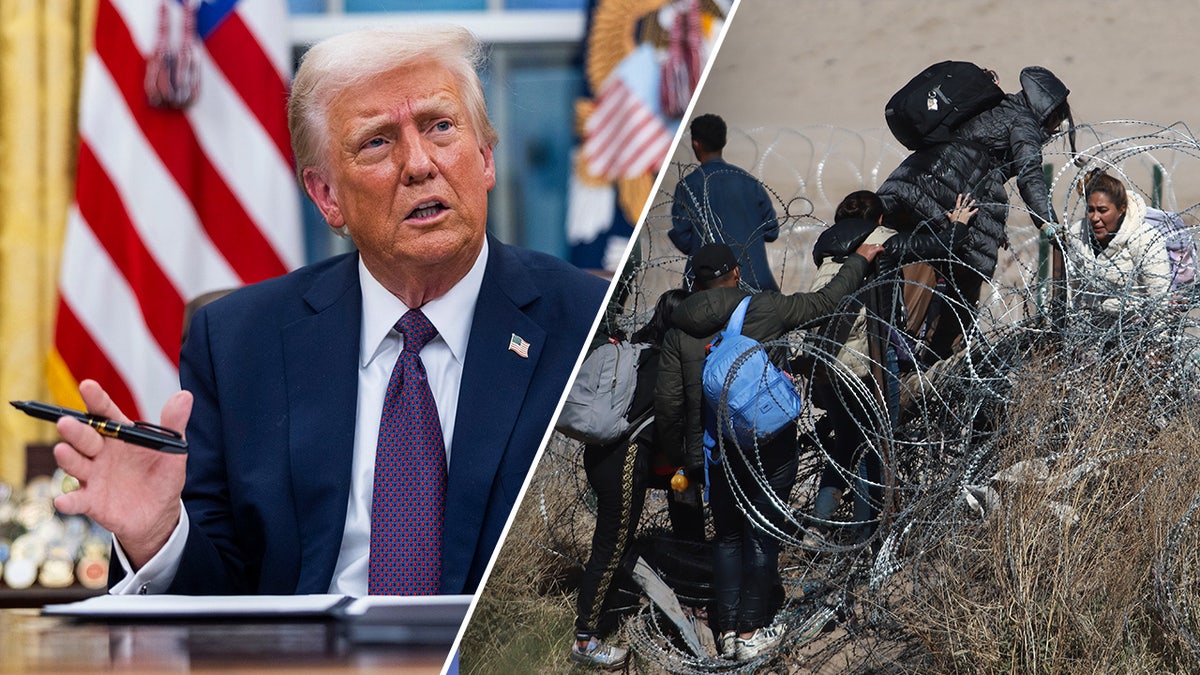
The federal judiciary just handed the executive branch a sharp reminder that political will does not equate to constitutional authority. In a decisive ruling, a US appeals court rejected the Trump administration’s attempt to overhaul immigration detention policies, effectively freezing a central pillar of the White House’s border strategy. The court found that the proposed shifts overstepped statutory boundaries, specifically regarding the mandatory detention of asylum seekers and the bypass of judicial oversight. This isn’t just a procedural hiccup. It is a fundamental breakdown in the administration’s effort to treat the border as a zone of absolute executive discretion.
For months, the administration argued that the surge in arrivals constituted an emergency sufficient to override long-standing detention limits. The court disagreed. By affirming that the government cannot indefinitely hold individuals without clear, individualistic justifications, the ruling protects the narrow path of due process that remains for those seeking legal status.
The Collision of Policy and Precedent
The core of the dispute centers on the Administrative Procedure Act (APA). This law is the unglamorous backbone of American governance, requiring agencies to provide a reasoned explanation for any major change in policy. The administration attempted to pivot from a system of case-by-case release—often called "parole"—to a blanket policy of detention for the duration of legal proceedings.
They hit a wall.
The court noted that the government failed to provide sufficient evidence that a mass detention mandate would actually deter migration or improve national security in the ways claimed. High-level rhetoric about "border integrity" failed to satisfy the legal requirement for a data-driven justification. When an agency changes its mind, it has to show its work. The White House, in its rush to project strength, left the math behind.
The Power of the Parole Power
Historically, immigration officials used "parole" as a relief valve. If a person didn’t pose a flight risk or a danger to the community, they could be released into the interior while their asylum claims wound through the backlogged court system. The Trump administration viewed this as a loophole. They characterized it as "catch and release," a phrase designed to suggest a lack of control.
However, the legal definition of parole is specific. It is a discretionary tool meant to be used on a case-by-case basis for "urgent humanitarian reasons" or "significant public benefit." By trying to eliminate this discretion in favor of a universal detention mandate, the administration actually weakened its own legal standing. You cannot take a law that grants "discretion" and turn it into a law that demands "uniformity" without an act of Congress.
The Logistics of a Failed Mandate
Beyond the courtroom, the administration’s plan faced a secondary, more practical enemy: capacity. The United States does not have the physical infrastructure to detain every person who crosses the border to claim asylum. Currently, the system relies on a patchwork of federal facilities, private prisons, and local county jails.
To implement the rejected policy, the government would have needed to nearly triple its bed space overnight. This involves billions of dollars in taxpayer money that Congress had not fully appropriated. The court’s ruling essentially prevents a logistical nightmare where thousands of people would have been held in makeshift, substandard conditions while the government scrambled to build a private prison empire.
Why the Border is Different in Court
Proponents of the administration's plan often argue that the President has plenary power over immigration. This is a common misunderstanding. While the executive branch has broad authority to conduct foreign affairs and secure the borders, that power is not a blank check when it comes to the rights of individuals already on US soil.
The Plenary Power Doctrine has been shrinking for decades. Modern courts are increasingly skeptical of the idea that the "border" is a lawless vacuum. Once a person is in the custody of the US government, the Fifth Amendment’s Due Process Clause begins to exert its influence. You cannot disappear a person into a detention center indefinitely just because they haven't been granted a visa yet.
The Economic Shadow of Mass Detention
We often talk about immigration in terms of "security" or "compassion," but we rarely talk about the invoice. Detaining an adult costs the federal government roughly $150 to $200 per day. For families, that number climbs significantly higher.
If the appeals court had allowed the administration to proceed, the annual cost of immigration detention would have ballooned into a permanent multi-billion dollar line item. This creates a perverse incentive structure. Private prison corporations, which see their stock prices fluctuate based on detention numbers, have become a shadow lobby in Washington. By rejecting the policy, the court indirectly struck a blow against the "industrialization" of the border—a system where human bodies are converted into daily revenue for shareholders.
The Hidden Cost of Legal Overreach
Every time the administration loses a case like this, it creates a "judicial scar." Future administrations, regardless of party, will find it harder to exercise executive authority because this era of overreach is forcing the courts to draw brighter, harder lines.
The Department of Justice (DOJ) lawyers tasked with defending these policies are increasingly frustrated. They are being asked to defend positions that ignore decades of settled law. This creates a drain on talent and a loss of institutional credibility. When the DOJ enters a courtroom today, they are no longer given the benefit of the doubt that they are acting in "good faith." They are viewed as political operatives trying to find a way around the law rather than working within it.
The Misunderstanding of Deterrence
The administration’s primary defense was that detention acts as a deterrent. The logic is simple: if people know they will be locked up, they won't come.
The data suggests otherwise. Most migrants fleeing violence in Central or South America are not checking the latest rulings from the US Court of Appeals for the Fifth or Ninth Circuits before they leave. They are fleeing immediate, existential threats. For them, a US detention center—no matter how grim—is often safer than the street they left behind. The court recognized this disconnect. Using human beings as "deterrent signals" is not only legally questionable, it is practically ineffective.
A Fractured System of Appeals
One of the most chaotic aspects of this legal battle is the geographic inconsistency. Different appeals courts are ruling in different ways on similar issues. This creates a "zip code justice" system where your rights depend entirely on where you were apprehended.
- The Ninth Circuit has historically been a graveyard for restrictive immigration policies.
- The Fifth Circuit often trends toward executive power but has recently balked at the most extreme versions of detention mandates.
- The DC Circuit remains the final arbiter for many administrative rules, focusing on the "process" rather than the "politics."
This fragmentation is exactly what the administration was hoping to exploit. By creating enough legal noise, they hoped to force the Supreme Court to step in and grant a broad, sweeping victory. Instead, they are getting a series of narrow, stinging defeats that leave their border strategy in taters.
The Statutory Reality Check
At its heart, this is a fight about the Immigration and Nationality Act (INA). This massive, sprawling piece of legislation is what Congress actually wrote. The Trump administration has treated the INA like a suggestion, attempting to "reinterpret" clear language to suit a more aggressive agenda.
Specifically, the court looked at Section 1225(b), which deals with the inspection of aliens seeking admission. While the statute says certain individuals "shall be detained," it also provides for the Attorney General's power to parole. You cannot read the "shall" and ignore the "may." The law is a balance of mandates and permissions. The administration tried to delete the permissions, and the court told them they don't have the power to edit the law from the Oval Office.
What Happens to the Thousands Already Held?
The immediate impact of this ruling will be felt in the intake centers. Officials will now have to revert to the older, more labor-intensive process of evaluating each individual. They must determine:
- Is the person a flight risk?
- Do they have a "credible fear" of persecution?
- Is there a family member in the US who can take them in?
This is slower. It requires more judges and more asylum officers. But it is the law. The administration’s attempt to bypass this "slow" process in favor of a "fast" detention model was a shortcut through the Constitution that the court refused to pave.
The Myth of the "National Emergency"
The White House has frequently used the term "invasion" to justify extraordinary measures. Legally, an "invasion" triggers specific constitutional powers. Politically, it’s a great soundbite. Legally, it’s a non-starter. The courts have consistently held that a high volume of civil immigration violations does not constitute a military invasion or a state of war.
By rejecting the detention policy, the court is essentially de-escalating the rhetoric. It is treating immigration as a civil administrative matter, which it is, rather than a military confrontation, which the administration wants it to be. This distinction is vital for the long-term health of American civil liberties. If the government can suspend the rights of non-citizens during an "emergency," what stops them from doing the same to citizens during the next crisis?
The Failure of "Executive Only" Governance
This ruling highlights a recurring theme of the last decade: the failure of the executive branch to work with Congress. Because the legislative branch is paralyzed by polarization, Presidents have increasingly turned to executive orders to manage the border.
Executive orders are fragile. They are built on the shifting sands of administrative law and are easily washed away by a single judge's pen. The Trump administration’s reliance on these orders, rather than seeking a legislative overhaul of the detention system, was a strategic error. They chose the path of least resistance in the short term, which led to the path of most resistance in the courts.
The Path to the High Court
There is little doubt that the DOJ will attempt to move this case toward the Supreme Court. They are banking on the conservative majority to prioritize executive authority over administrative procedure. However, even the most conservative justices have shown a streak of "textualism"—a commitment to the literal words of the law.
If the text of the INA doesn't explicitly allow for mass, indefinite detention without parole, the administration might find that their "friendly" Supreme Court is more interested in the dictionary than the headlines. This is the danger of a purely political legal strategy. When you live by the pen, you die by the gavel.
The administration now faces a choice. They can continue to fight a losing battle in the courts, draining resources and political capital, or they can return to a system of individualized justice that, while imperfect, at least holds up under scrutiny. The "firewall" of the judiciary hasn't just stopped a policy; it has exposed the fundamental flaw in trying to run a democracy through decree.
The border remains a complex, high-stakes theater of American life, but it is not a territory exempt from the law. Every person in custody, regardless of how they arrived, is a test of the system's integrity. For now, the system decided that the law matters more than the optics of a crackdown.
The administration needs to stop looking for a way around the courts and start looking for a way to fix the actual infrastructure of the immigration system. You cannot litigate your way out of a logistical crisis.
As of this morning, the release orders are already being prepared.