.jpg?width=1200&auto=webp&trim=0%2C0%2C0%2C0)
Ink on paper rarely smells like dust and iron, but treaties do. In the quiet backrooms of London, beneath the watchful portraits of empire, a decision dropped quietly onto the ledger. A trade ban. Not on arms, not on oil, but on the quiet, stubborn artifacts of expansion: goods flowing from West Bank settlements. To a bureaucrat in Whitehall, it was a calibration of policy, a legalistic adjustment of numbers on a spreadsheet.
To Sarah, it was the sound of a gate locking.
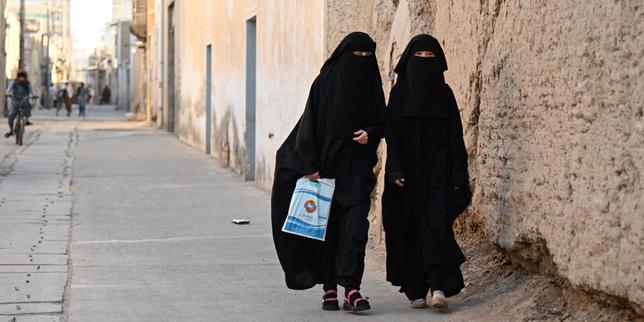
Sarah is a hypothetical shopkeeper in a terraced stone village outside Bethlehem, her hands permanently stained with the deep, earthy purple of pressed olives and the pale dust of limestone carving. Every morning, she watches the mist lift off the valleys where her family has coaxed life from stubborn soil for generations. When trade policies shift oceans away, her world does not change through press releases. It changes at the checkpoint, where crates sit longer in the sun, where paperwork multiplies like weeds after a spring rain, and where the invisible walls grow an inch higher.
Then came the telephone call across an ocean.
Donald Trump, watching the ledger from his own vantage point, announced he would speak to Israel. Just like that. A sentence tossed into the global wind, carrying the weight of past alliances and future bargains.
We forget that geopolitics is fundamentally a human drama played out by people who will never smell the dust of the roads they partition. We treat borders as lines on a map, clean and blue, drawn with rulers in air-conditioned rooms. But a border is never a line. It is a scar. It is a tollbooth on a child's walk to school. It is the reason Sarah cannot ship her carved olive-wood doves to London anymore, while a warehouse ten miles down the road hums with a different currency entirely.
Consider the mechanics of isolation. When a government thousands of miles away decides that the stones quarried from a hillside carry too much political baggage to cross its ports, the immediate casualty is not a prime minister. It is the rhythm of ordinary survival. It is the weaver who bought yarn on credit, expecting a market in Europe that has suddenly vanished behind a wall of compliance certificates.
Diplomacy moves in grand gestures. Leaders speak of sovereignty, security, and historic rights, trading these heavy concepts like poker chips. But beneath the high rhetoric lies the quiet desperation of a father calculating how many weeks his savings will stretch if the export licenses are frozen indefinitely.
When Trump declared his intention to intervene, to bridge the sudden chasm opened by the British trade restriction, the immediate reaction in the alleys of the West Bank was neither joy nor despair. It was exhaustion. Because when giants argue, the grass beneath them gets crushed. Whether the intervention brings relief or deeper complication matters less than the dizzying realization that ordinary lives hang by the frayed thread of foreign electoral cycles and late-night phone calls between capitals.
We have built a world where a bureaucrat in a tailored suit in Europe can alter the livelihood of a family in the hills of Judea with the stroke of a pen, and where an ex-president in Florida can attempt to rewrite that equation with a broadcasted conversation.
The map we look at is a lie. It shows colors and boundaries, but it leaves out the heartbeats. It leaves out the sound of a hammer striking chisel against stone in the early morning cold. It leaves out the heavy silence of a merchant looking at unsold goods, wondering if the next headline will bring salvation or another lock on the door.
The phone lines between Washington, London, and Jerusalem remain open, humming with electricity and ambition. But down here, in the dust and the olive groves, the only sound that matters is the wind shifting through the wire, carrying no answers at all.