The survival of the Islamic Republic of Iran is not a function of popular legitimacy but of a sophisticated internal security architecture designed to withstand high-frequency, low-intensity shocks. While many analysts point to "death throes" based on superficial indicators like street protests or currency devaluation, a rigorous assessment requires looking at the State Survival Function. This function balances the cost of domestic suppression against the loyalty of the elite security apparatus. For the regime to collapse, the cost of loyalty must exceed the state’s ability to extract or print rent, while simultaneously, the coordination cost for the opposition must drop below a critical threshold. Currently, the Iranian state is experiencing a decoupling: the economy is in a terminal decline, but the security infrastructure remains technologically and organizationally intact.
The Triad of Institutional Insulation
To understand why the regime persists despite systemic failures, we must deconstruct its survival strategy into three distinct pillars: Paramilitary Integration, Economic Autarky, and Information Hegemony.
1. Paramilitary Integration and the "No-Defection" Constraint
The Islamic Revolutionary Guard Corps (IRGC) is not a traditional military; it is a diversified conglomerate with a vested interest in the status quo. The regime has solved the "dictator's dilemma"—the fear that the military will side with protesters—by making the IRGC the primary stakeholder in the national economy.
- Vertical Integration: The IRGC controls an estimated 30% to 50% of Iran’s GDP through front companies and engineering firms like Khatam al-Anbiya.
- The Cost of Defection: In most revolutionary scenarios, the military defects when it perceives its future is better secured under a new administration. In Iran, the IRGC leadership is so deeply entwined with the regime's extra-legal activities that any transition would likely result in their prosecution or asset seizure. This creates a "burned bridges" effect, ensuring absolute loyalty through shared culpability.
2. Economic Autarky and the Resistance Economy
The "Resistance Economy" is a deliberate strategy to decouple the regime's survival from global financial markets. While this has impoverished the Iranian middle class, it has succeeded in its primary goal: ensuring the elite security forces are the last to feel the impact of sanctions.
- Shadow Banking: Iran utilizes a "harkat" style informal network and a series of "money exchange" houses in third-party jurisdictions (Turkey, UAE, Iraq) to bypass SWIFT.
- The Oil-to-Goods Barter: By leveraging bilateral trade with non-aligned powers, the state maintains a baseline level of essential imports, preventing the total systemic seizure that precedes state collapse.
3. Information Hegemony and Digital Authoritarianism
The regime has transitioned from crude censorship to a "National Information Network" (NIN). This is a localized intranet that allows the state to provide essential services (banking, utilities) while severing connection to the global internet during periods of unrest.
- Surgical Shutdowns: Instead of a total blackout, which causes massive economic damage, the NIN allows the regime to throttle specific social media packets while keeping the state’s logistical backbone online.
- The Surveillance Feedback Loop: AI-driven facial recognition, often sourced from Chinese tech partnerships, allows the state to identify protesters post-facto, reducing the need for immediate, high-optics violence on the streets that could trigger international intervention.
The Threshold of Kinetic Failure
State collapse is rarely a gradual slide; it is a non-linear event triggered by a "cascade failure" in the security apparatus. For Iran, this threshold is defined by the Security-Wage Parity.
The regime’s most significant vulnerability is not the ideology of the Basij (the volunteer paramilitary) but their purchasing power. As hyperinflation erodes the real value of the rial, the "loyalty wage" paid to low-level enforcers reaches a point of diminishing returns. When the cost of being a pariah in one’s own neighborhood outweighs the value of the state’s paycheck, the enforcement layer of the state becomes porous.
The Succession Variable
The transition of power from the current Supreme Leader represents the highest period of risk for the regime. Authoritarian systems are historically most fragile during the "Interregnum"—the period between leaders where the rules of the game are redefined.
- Factional Infighting: The IRGC may seek to move from being the "power behind the throne" to the throne itself, potentially alienating the clerical establishment.
- Information Vacuum: In the absence of a clear successor, the coordination cost for the opposition drops. If the public perceives a split at the top, the perceived risk of protesting decreases, leading to an exponential rise in street activity.
Quantifying the "Death Throes" Myth
The term "death throes" implies a terminal state with no possibility of recovery. However, a data-driven look at sovereign resilience suggests that states can exist in a "failed but functional" state for decades (e.g., North Korea, Venezuela). The Iranian state is currently in a phase of Structural Decay, characterized by:
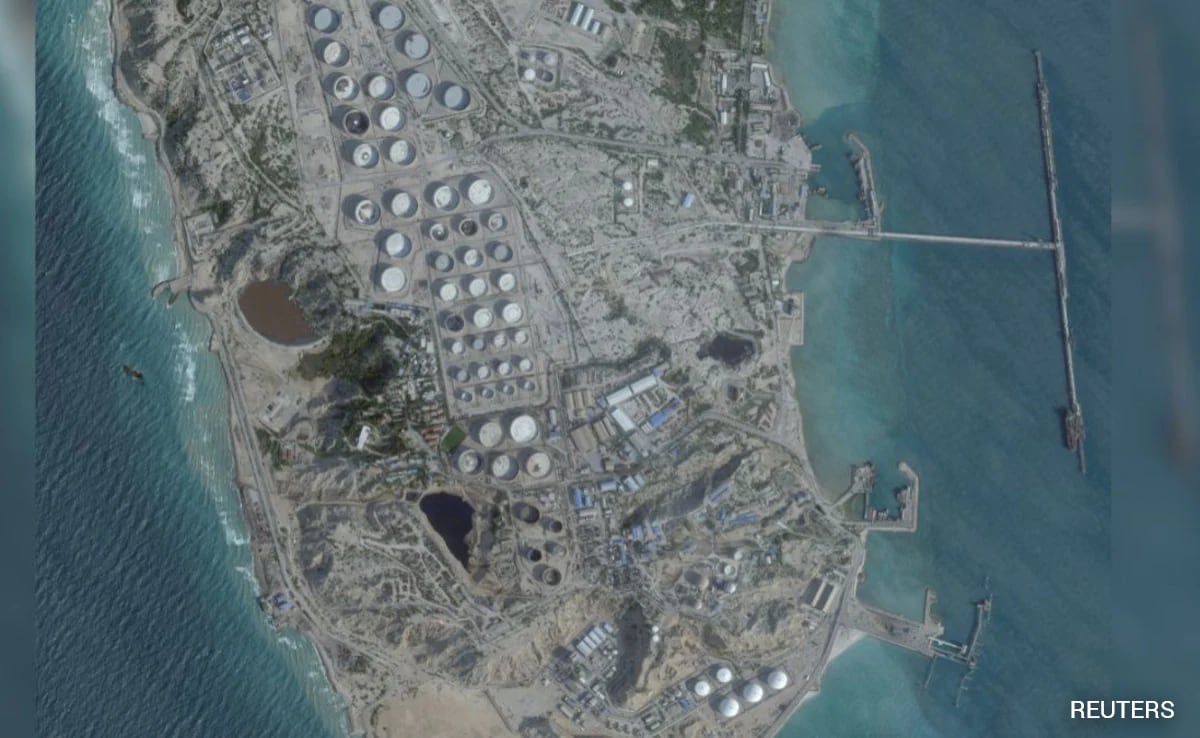
- Negative Net Investment: Capital is fleeing the country faster than it can be generated or borrowed, leading to crumbling infrastructure in the oil and gas sectors.
- Brain Drain as a Safety Valve: By allowing the most educated and dissatisfied segments of the population to emigrate, the regime effectively exports its most potent opposition. This reduces the immediate threat of a sophisticated revolution but guarantees long-term economic irrelevance.
The Geopolitical Buffer
The regime’s survival is also bolstered by its role as a regional "spoiler." By maintaining a network of proxies (the "Axis of Resistance"), Iran ensures that any attempt to topple the central government would result in a multi-theater regional war. This "Mutually Assured Instability" forces Western powers to prefer a weakened, sanctioned Iran over the chaotic vacuum that would follow a rapid collapse.
The logic is purely transactional. For the regime, the "cost of conflict" abroad is an investment in "security at home." As long as the US and its allies view the cost of regime change as higher than the cost of containment, the international pressure will remain sub-lethal.
The Strategic Play for Observers
Analyzing Iran through the lens of "impending collapse" is a tactical error for policymakers and investors alike. The state has demonstrated an elastic response to pressure. The critical indicators to watch are not the size of protests, but the following three metrics:
- The Rial-to-Gold Ratio for Security Personnel: If the state can no longer provide "hard" value to its enforcers, the internal perimeter will fail.
- Succession Velocity: A swift, IRGC-backed transition to a new leader signals continuity; a prolonged vacancy signals a breakdown.
- The Tech-Sovereignty Gap: If the opposition develops a decentralized, satellite-based internet access that bypasses the NIN, the regime’s information hegemony—and its ability to prevent coordinated action—is finished.
The regime is not in its death throes; it is in a state of high-entropy equilibrium. It is brittle, yes, but a brittle object can withstand immense pressure until the exact moment it shatters. Until one of the three metrics above crosses the threshold, the most likely outcome is not a revolution, but a continued, violent stagnation.
Monitor the internal IRGC budget allocations over the next fiscal cycle. If the state begins to prioritize "internal security hardware" over "foreign proxy subsidies," it is a definitive signal that the regime has shifted from a stance of regional expansion to one of existential survival. This internal pivot is the only reliable lead indicator of a coming systemic break.
Would you like me to analyze the specific fiscal dependencies between the Central Bank of Iran and the IRGC’s commercial subsidiaries?