The heat in the equatorial forest does not just sit; it heavy-presses against your skin, thick with the scent of damp earth and rotting leaves. In a small village just beyond the tree line, a man named Alphonsi woke up with a headache. It felt ordinary. We have all had that dull throb behind the eyes, the kind you dismiss as dehydration or a long day under a unforgiving sun. He drank some water. He went about his day.
Within forty-eight hours, Alphonsi was burning.
This is how the monster slips into the room. It does not knock. It does not announce itself with a trumpet blare. It arrives disguised as the common flu, masquerading behind a fever, sore throat, and muscle aches. But inside the bloodstream, a terrifying architecture is unfolding.
The Ebola virus is shaped like a shepherd’s crook, a delicate, looping thread under an electron microscope. It looks almost elegant. It is not. It is a master key designed to unlock human cells and turn them into factories for its own replication. To understand an outbreak, you have to look past the sterile statistics printed in global health bulletins and look into the eyes of the people holding the plastic buckets.
[Image of Ebola virus structure]
The Anatomy of an Invasion
When we read standard news reports about Ebola, they tend to lead with terrifying phrases like "hemorrhagic fever." It sounds like something out of a horror movie. The reality is more clinical, yet far more devastating. The virus targets the endothelial cells, the very bricks that build our blood vessels.
Think of your circulatory system as a highly secure, perfectly sealed plumbing network. Now, imagine a chemical agent that quietly dissolves the glue between the pipes. The water does not just stop flowing; it seeps through the walls.
As the virus dismantles the body’s internal structures, the immune system panics. It launches what clinicians call a cytokine storm. This is the body’s scorched-earth policy. In a desperate bid to kill the invader, the immune system floods the body with inflammatory proteins, inadvertently damaging healthy organs. The liver suffers. The kidneys falter. The blood loses its ability to clot.
This is the hidden mechanics of the disease. It is not just that the patient is sick; their body has become a battleground where both sides are using heavy artillery.
The transmission is brutally intimate. You cannot catch Ebola by walking past someone in the market. It does not drift through the air like measles or influenza. It demands closeness. It spreads through direct contact with the bodily fluids of someone who is symptomatic or has died from the disease. Blood, sweat, vomit, feces.
This requirement for physical contact creates a cruel paradox. The very people most at risk are those acting out of pure, human love.
The Traps of Love and Tradition
Consider the family members. When a child is burning with a fever, a mother does not look for personal protective equipment. She wipes the sweat from their forehead with her bare hands. She holds them close when they shake with chills. In many outbreaks, the first wave of infections ripples outward from the bedside of the first patient, tearing through caretakers who refused to abandon their kin.
Then comes the final trap: the funeral.
In many regions where Ebola emerges, traditional burial practices are sacred. They are not mere chores; they are profound expressions of respect and spiritual necessity. The body of the deceased must be washed. Families kiss the face of their departed loved one, saying a final, physical goodbye.
But an Ebola victim’s body is at its most contagious immediately after death. The viral load is astronomical. Every drop of fluid is teeming with billions of microscopic hooks.
When international health workers arrive in white biohazard suits, looking like astronauts dropped into a rural paradise, a profound friction occurs. They tell a grieving father that he cannot touch his daughter. They wrap the deceased in thick, opaque plastic bags and spray them with chlorine. To the community, this does not look like medicine. It looks like desecration.
Breaking an outbreak requires navigating this emotional minefield. It demands more than just medical expertise; it requires deep cultural humility. epidemiologists quickly learn that you cannot stop a virus with science alone if you do not first establish trust.
The Frontline in Plastic Armor
Step inside a treatment center. The air inside the personal protective equipment—the suit known simply as PPE—is stifling. Within minutes, sweat pools in your rubber boots. Goggles fog up. Your breath echoes loudly in your ears.
Working in these suits is an exercise in extreme psychological endurance. You cannot scratch an itch. You cannot wipe your brow. Every move must be deliberate, choreographed, and slow. A single tear in the glove, a momentary lapse in concentration while undressing, and you become the next patient.
The patients looking out from their beds do not see human faces. They see walls of yellow fabric, plastic visors, and gloved hands. It is an incredibly isolating environment to die in. Doctors and nurses learn to write their names in bold marker on their chests, drawing small smiley faces or taping photos of their actual faces to the outside of the suits, just to remind the patients that there is a human being inside the machine.
But the narrative around Ebola is shifting. For decades, a diagnosis felt like a death sentence, with mortality rates hovering around fifty percent, and sometimes spiking up to ninety percent in ill-equipped areas. The world watched in horror during the West African outbreak between 2014 and 2016, realizing that a localized health crisis could rapidly balloon into a global threat.
That terror forced a revolution in medical science.
The New Arsenal
We are no longer defenseless. The landscape of management has transformed dramatically due to two critical breakthroughs: highly effective vaccines and targeted monoclonal antibody treatments.
The vaccine works like an early-warning system for the body. It introduces a harmless, vesicular stomatitis virus that has been genetically engineered to carry a single Ebola protein. It cannot cause the disease, but it gives the immune system a flawless blueprint of the enemy. If the real virus ever shows up, the body’s defenses are already mobilized, weapons drawn.
Health officials utilize a strategy called ring vaccination. When a new case is confirmed, teams do not try to vaccinate an entire nation. Instead, they identify everyone who has come into contact with that patient—family, friends, neighbors—and then vaccinate their contacts as well. It creates a human shield of immunity around the virus, choking off its ability to jump to the next host.
[Confirmed Case] ──> [Direct Contacts] ──> [Contacts of Contacts]
                           │                         │
                           ▼                         ▼
                     (Vaccinated)              (Vaccinated)
                           └───────────┬─────────────┘
                                       ▼
                             [Human Shield Built]
If someone does fall ill, the introduction of monoclonal antibodies has rewritten the prognosis. These treatments are essentially lab-grown super-antibodies that latch onto the virus, blocking it from invading cells and flagging it for destruction by the patient's own immune system. When administered early, these therapies radically increase the chances of survival.
Yet, having the medicine is only half the battle. Delivering it is the real war.
The Logistics of Light and Dark
Imagine transporting a fragile vial of vaccine that must be kept at ultra-cold temperatures—minus sixty to minus eighty degrees Celsius—through a tropical jungle with no paved roads.
The power grid fails constantly. Generators require diesel, which must be hauled across rivers on wooden rafts. Health workers carry heavy coolers on the backs of motorbikes, racing against the midday heat to reach remote settlements before the ice melts and the medicine spoils.
The infrastructure of global health is a fragile chain of custody, where a single broken link can mean an entire village is left unprotected.
There is also the profound psychological toll on the survivors. Winning the battle against the virus inside your body is not the end of the journey. Many survivors suffer from post-Ebola syndrome, enduring chronic joint pain, vision problems, and severe fatigue for months or even years after clearing the infection.
Worse than the physical lingering is the social exile.
When a survivor returns home, neighbors often step back. Friends hesitate to shake their hand. Shopkeepers refuse their money. The fear is a secondary infection, one that warps communities long after the physical virus has been eradicated from the bloodstream.
The Forest’s Edge
Where does it go when the outbreak ends? It retreats into the shadows.
Ebola is a zoonotic virus, meaning it lives permanently in an animal reservoir. The prevailing scientific consensus points to fruit bats as the primary hosts. The bats carry the virus without getting sick, flying silently through the canopy, dropping partially eaten fruit or waste onto the forest floor.
When a non-human primate—a chimpanzee or a gorilla—or a human encounters that contaminated fruit, or hunts wild game for food, the spillover event occurs. The virus crosses the species barrier. It finds a new home.
We cannot eradicate the fruit bats; they are vital pieces of the ecosystem, pollinating trees and keeping insect populations in check. The forest requires them. Therefore, Ebola will always be with us, sleeping in the trees, waiting for the right moment, the right contact, the right tear in the fabric of human vigilance.
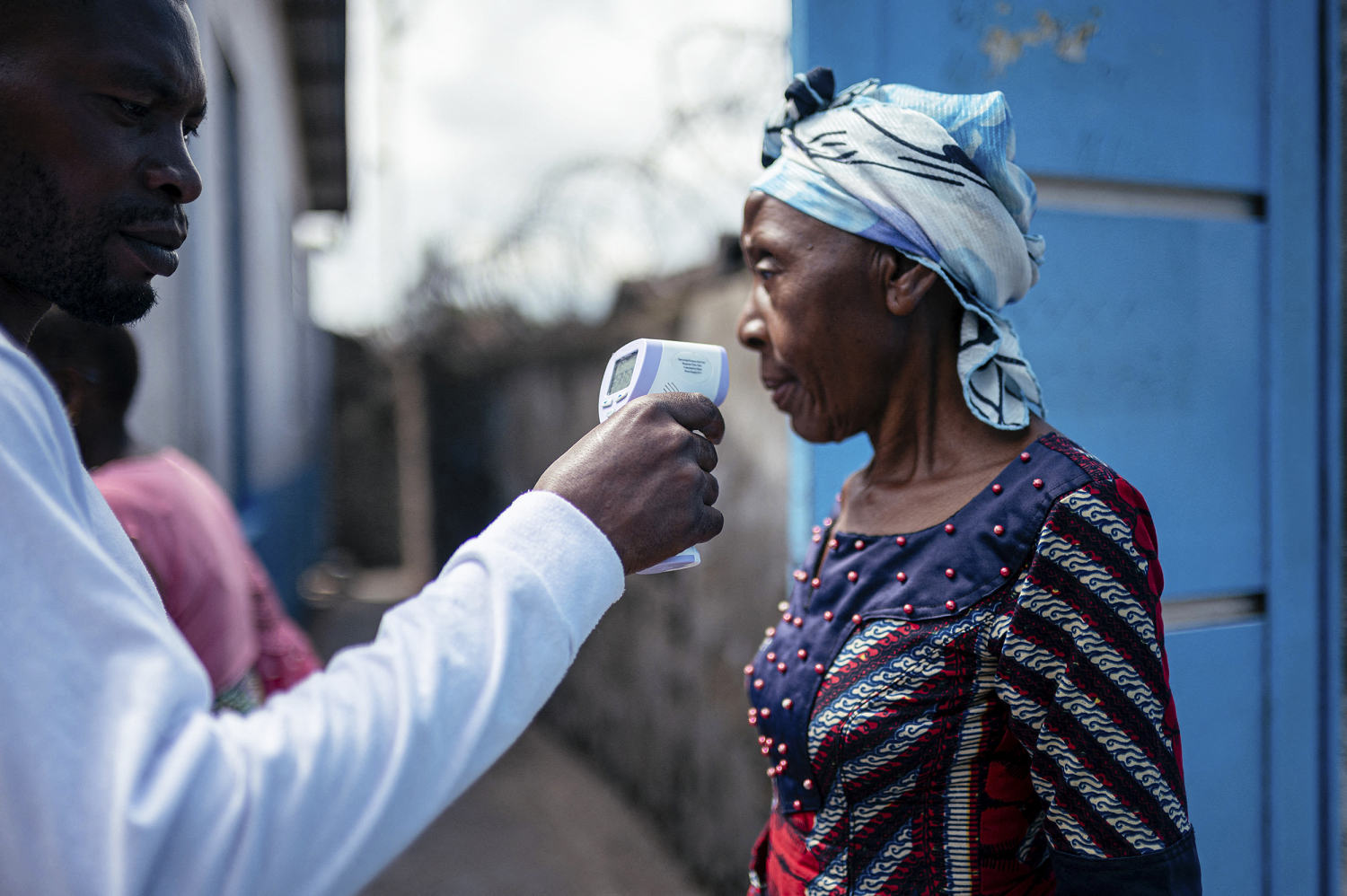
The true defense against the next outbreak is not a taller wall or a closed border. It is a well-trained local nurse with a working thermometer, a reliable supply of clean water, and a community that trusts her enough to tell her when a neighbor wakes up with a fever.
Down in the village, the afternoon rain begins to fall, washing away the dust from the broad green leaves at the forest's edge. The treatment center is quiet today. A young boy, no older than ten, walks out through the exit gate. He has tested negative twice. His skin is cool to the touch.
Before he steps back into the world, he turns and waves to the yellow-suited figures standing behind the plastic fencing. They cannot smile with their mouths, so they crinkle their eyes, watching him walk toward his father, who opens his arms wide, unafraid to hold him tight.


