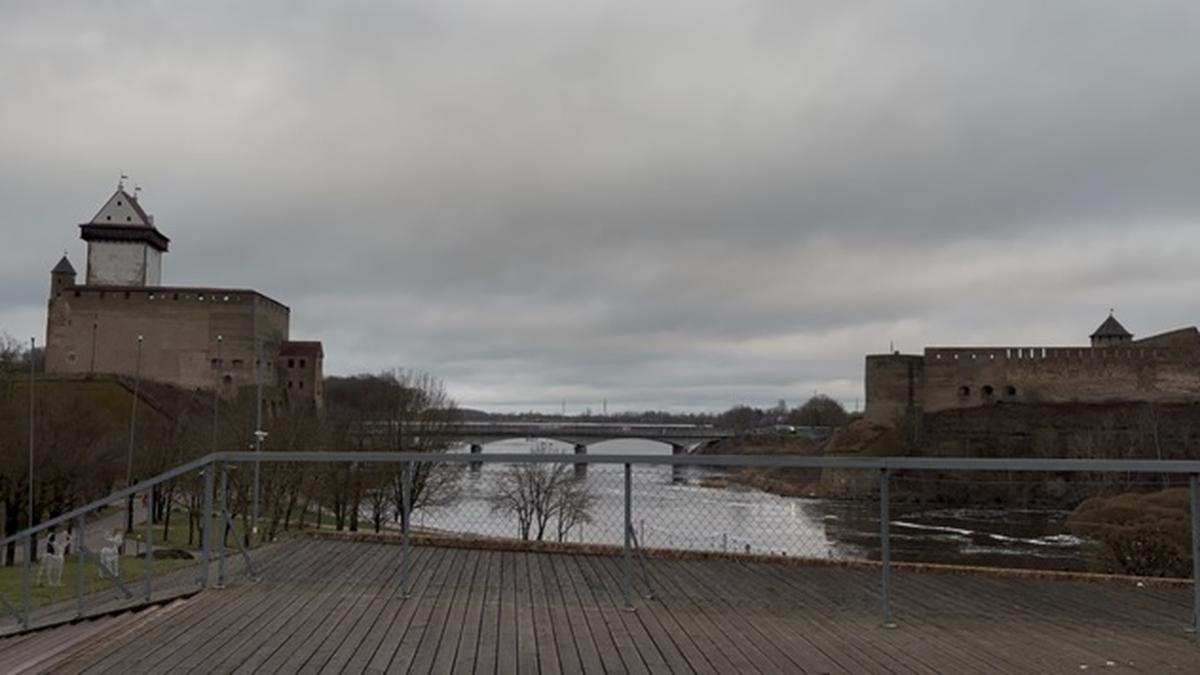
The concrete barrier on the Friendship Bridge does more than stop cars. It marks the precise spot where the Western world ends and the Russian Federation begins. In Narva, Estonia’s third-largest city, the geography is a taunt. From the riverbank, you can see the Ivanogorod fortress across the water, close enough to hear the bells of its churches. For decades, this proximity was a convenience, a source of cheap cigarettes, and a bridge for families. Today, it is a psychological pressure cooker.
Narva is 95% Russian-speaking. This statistic often leads outsiders to view the city as a potential "fifth column" or a ticking time bomb for Kremlin-style hybrid warfare. That view is too simple. The reality on the ground reveals a population caught in a visceral identity crisis, where the fear of Russian aggression clashes with a deep-seated resentment toward Tallinn’s push for Estonianization. The city isn’t just divided by politics; it is struggling to reconcile its heritage with a future that looks increasingly militarized.
The Fortress Mentality
Walking through Narva today feels like moving through a museum of the Cold War that never actually thawed. The Estonian government has been systematically removing Soviet-era monuments, most notably the T-34 tank that sat on the city’s outskirts. To the national government in Tallinn, these are symbols of a brutal occupation. To many Narva residents, these were markers of their own grandfathers' sacrifices.
When the tank was hauled away under the cover of security forces, it didn't just leave an empty plinth. It left a vacuum of trust. Local officials, who must balance the directives of a NATO-aligned state with the sensibilities of their constituents, find themselves in an impossible position. They are tasked with integrating a population that watches Russian state television via satellite while shopping at Lidl and benefiting from the Euro.
The security apparatus isn't taking chances. Estonia has increased its military presence in the region, conducting drills that are visible from apartment balconies. This is "deterrence" in the parlance of Brussels, but to a retiree in Narva who remembers the chaos of the 1990s, it looks like a rehearsal for a disaster they are powerless to stop.
The Economic Severance
Before February 2022, the border was a lung. Narva breathed through it. Thousands of people crossed daily for work, trade, or to visit relatives. The closure of the bridge to vehicular traffic has effectively amputated a limb of the local economy.
Logistics firms have folded. Small shops that relied on cross-border foot traffic are shuttering. While the rest of Estonia enjoys a tech-fueled economic boom, Narva feels left behind, a rust-belt outpost on the edge of a geopolitical cliff. The government's solution is to pivot the city toward "green energy" and tech hubs, but you cannot retrain a 55-year-old former Soviet factory worker into a software developer overnight.
The economic disparity between Narva and the capital creates a fertile ground for Russian propaganda. When the Kremlin’s media outlets talk about "the neglected Russian-speaking soul," they aren't just making it up—they are weaponizing a genuine sense of economic displacement.
The Language Barrier as a Weapon
Estonia’s transition to a fully Estonian-language education system is perhaps the most contentious internal flashpoint. For the youth of Narva, this is a gateway to the European job market. For their parents, it feels like an erasure of their culture.
The policy is meant to ensure that every citizen can participate in the national life, but in a city where you can spend an entire week without needing a word of Estonian, the mandate feels like a foreign imposition. It creates a generational rift. You have teenagers who see themselves as Europeans first, and their grandparents who still view the world through the lens of a lost empire.
The Gray Passports
A peculiar relic of the post-Soviet transition remains central to Narva’s friction: the "alien’s passport" or gray passport. These are held by residents who are neither Estonian nor Russian citizens. They are people in legal limbo, a status that was intended to be temporary but has persisted for over thirty years.
These residents can travel freely within the EU and Russia, a privilege they are loath to give up. However, their lack of citizenship means they cannot vote in national elections. This disenfranchisement feeds a narrative of second-class citizenship. If the state wants their loyalty, the state must first decide if it actually wants them as full members of the tribe.
The Myth of the Ukrainian Parallel
Analysts often point to Donbas and wonder if Narva is next. This comparison ignores a fundamental difference: the border. Unlike the porous, ill-defined lines in eastern Ukraine circa 2014, the border at Narva is an external frontier of NATO and the EU.
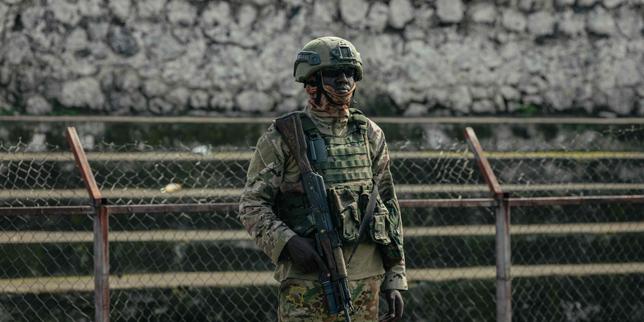
Every inch of the riverbank is monitored by high-tech sensors, drones, and a professionalized border guard. The "Little Green Men" scenario that played out in Crimea would face an entirely different tactical reality here. Estonia has spent years preparing for "hybrid" threats—cyberattacks, staged protests, and disinformation.
The danger in Narva isn't a sudden conventional invasion; it is the slow, grinding erosion of social cohesion. If the population feels that Tallinn views them as a security threat rather than as citizens, the Kremlin doesn't need to send tanks. They just need to wait for the social fabric to tear itself apart.
Information Warfare in the Living Room
Despite the ban on Russian state channels, the signals still cross the river. People use VPNs, satellite dishes, or simply talk to relatives in Ivangorod. The information space in Narva is a battlefield of competing realities.
In one reality—the one broadcast from Tallinn and Brussels—Russia is an aggressor state that has shattered international law. In the other—the one echoing from across the bridge—Russia is a defender of traditional values and the protector of the Russian-speaking diaspora against a "hostile West."
The local media in Narva tries to provide a middle ground, but it is underfunded and outgunned. The result is a society where nobody agrees on the basic facts of the world outside their window. This epistemological divide is more dangerous than any military buildup because it prevents the city from forming a collective response to its challenges.
The Resilience of the Borderlanders
It is easy to paint Narva as a place of gloom, but that misses the peculiar resilience of its people. There is a "borderlander" identity that transcends high politics. These are people who have survived the collapse of one empire and the messy birth of a new republic.
They are pragmatic. They value stability above all else. When asked about the possibility of conflict, the most common response isn't a political manifesto; it is a tired sigh. They know that if the bridge ever becomes a front line again, they will be the first to lose everything.
This pragmatism is Estonia's greatest asset, provided the government doesn't mistake silence for compliance. The people of Narva aren't looking to be "liberated" by Moscow, but they are looking to be heard by Tallinn.
The Security Dilemma
Estonia faces what international relations scholars call a security dilemma. Every move it makes to secure its border and integrate its population—moving monuments, changing the school curriculum, increasing military patrols—is perceived by the local population and Moscow as a provocation.
Yet, doing nothing is not an option. A vacuum of authority on the border is exactly what the Kremlin exploits. The challenge is to project strength without triggering the very alienation that makes the city vulnerable.
The Friendship Bridge is currently quiet. The pedestrians who cross it do so with their heads down, clutching bags of groceries or documents. They pass the armed guards and the barbed wire without looking up. In Narva, peace isn't a feeling; it is an absence of noise.
The city is a mirror. It reflects the anxieties of a continent that thought it had moved past the era of territorial disputes and ethnic tensions. Looking across the river from the Narva promenade, the view is clear, but the path forward is obscured by the fog of a new, colder war.
Integration cannot be forced at the end of a legislative pen or through the removal of bronze statues. It happens in the schools, in the marketplaces, and through the slow, agonizing process of proving that life under a liberal democracy is fundamentally better, even if it’s more complicated, than the alternative.
The concrete barriers on the bridge are temporary. The psychological walls being built in the minds of Narva’s citizens will take generations to dismantle.