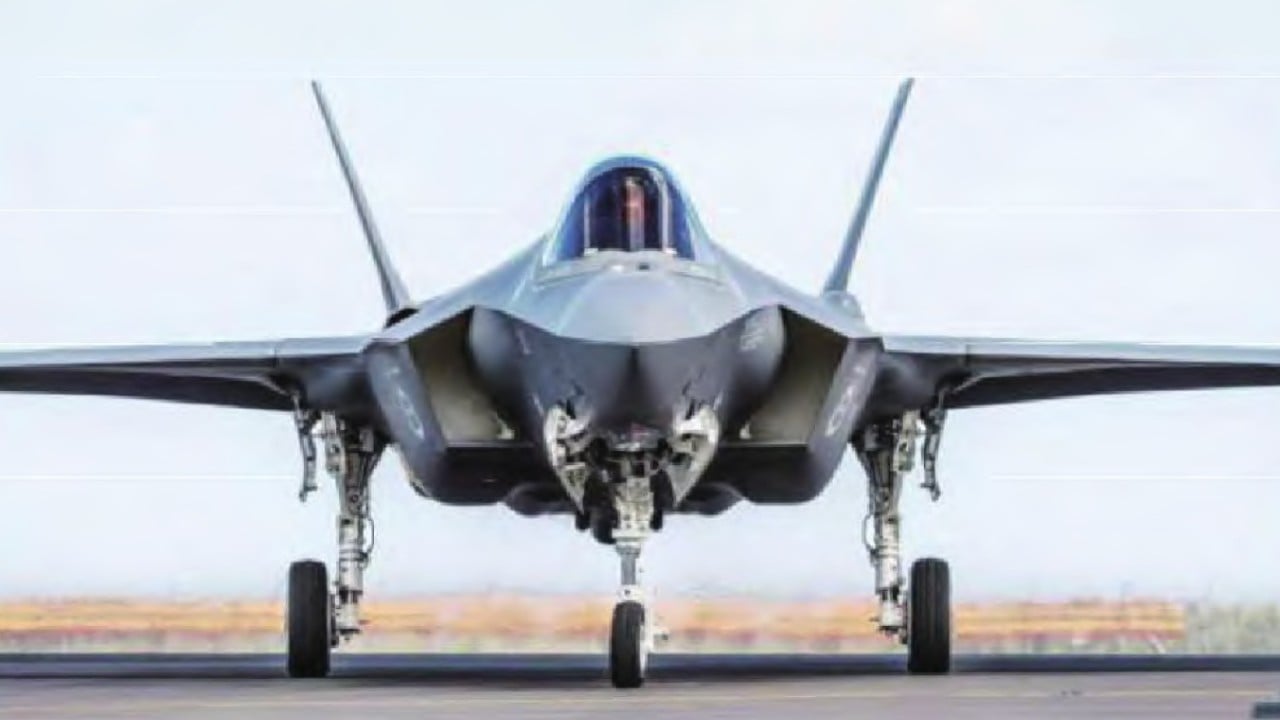
Defense journalists lost their minds when a Parisian startup named Harmattan AI rolled out renderings of a two-thousand-kilometer autonomous strike drone called IRIFI. The headlines practically wrote themselves: Europe is building a GPS-free robot assassin that can cross continents on its own.
I have watched companies burn millions on shiny concept art while ignoring the brutal physics of electronic warfare.
The defense media treats this announcement as a fundamental rewriting of modern combat. They repeat the company line that dropping satellite navigation in favor of visual guidance solves every jamming problem on Earth. They marvel at the notion that a single operator can manage a swarm of deep-strike munitions across a massive operational theater.
It is a neat narrative. It is also entirely detached from how attrition warfare actually functions.
The Fatal Flaw Of The Presentation
Look past the press release and you find an uncomfortable void. The creators disclosed zero specs on payload weight, cruising speed, unit cost, or actual test flight data. They have a rendered image and a memorandum of understanding with Morocco to build future production facilities.
In defense tech, a glossy render without a price tag is not a weapon system. It is a fundraising deck.
The lazy consensus in tech reporting assumes that removing satellite dependence via onboard image processing gives you an invincible weapon. If a drone navigates by matching visual landmarks to pre-loaded satellite imagery, what happens when a dust storm hits, snow blankets the terrain, or an adversary burns the forests along the approach vector? Visual navigation is only as good as the static reality underneath the lens. Smoke, seasonal shifts, and deliberate landscape alteration turn optical scene-matching into a coin flip.
The Economics Of Attrition Do Not Care About Your Software
We need to talk about mass. Modern high-intensity conflicts do not swing because you have a brilliantly complex guidance computer. They swing because one side runs out of airframes before the other runs out of targets.
A two-thousand-kilometer range demands a substantial fuselage, heavy fuel fraction, and a propulsion system that costs real money. If your drone costs hundreds of thousands of dollars because it requires high-end edge computing to process onboard optical navigation without GPS, you cannot deploy it as disposable mass. You have simply built a cruise missile with extra steps and a worse warhead-to-weight ratio.
True autonomy at scale requires cheap stupidity, not expensive cleverness. When you design a munition that relies on complex AI-driven image analysis to pilot itself across an ocean of hostile airspace, you create a supply chain bottleneck. If your microchips come from restricted global markets, your monthly production capacity caps out at a handful of units. That is useless when your adversary is churning out thousands of crude, combustion-engine loitering munitions built from commercial off-the-shelf parts.
The Command Mirage
The claim that one operator can coordinate dozens of these systems simultaneously sounds great in a pitch to venture capitalists or defense ministers looking for easy answers to personnel shortages.
Imagine a scenario where thirty long-range autonomous platforms are hurtling toward heavily defended infrastructure across a contested border. The software handles the waypoints. The human commander gave the green light before launch. But what happens when the tactical picture shifts mid-flight? What happens when a high-value mobile target relocates, or civilian traffic crowds the designated impact zone?
True autonomy under fire introduces a terrifying legal and tactical vacuum. If the machine makes a terminal navigation error because a civilian convoy parked on its optical target vector, the human miles away cannot intervene safely without a continuous, high-bandwidth datalink. Yet the entire selling point of these systems is that they operate independently precisely because the enemy is jamming communication spectrums. You cannot have a communications blackout and a remote human safety override at the exact same time.
Stop Chasing Silver Bullets
Europe does not need another expensive, exquisitely engineered boutique drone designed for a best-case operational environment. It needs industrial pragmatism.
The companies winning modern conflicts are the ones treating airframes like printer paper. They are building systems that accept high failure rates, embrace cheap components, and prioritize brute-force volume over elegant software architecture.
Until Harmattan AI publishes a concrete unit cost, a verified combat payload mass, and telemetry from a live electronic-warfare test range, IRIFI remains what it looks like on day one: a brilliant PowerPoint presentation wrapped in a military-industrial press release. Stop celebrating the render. Watch the balance sheet.