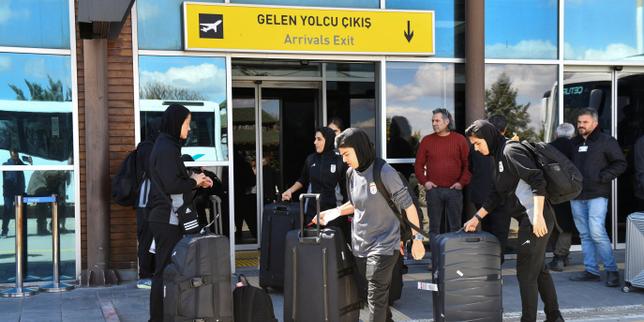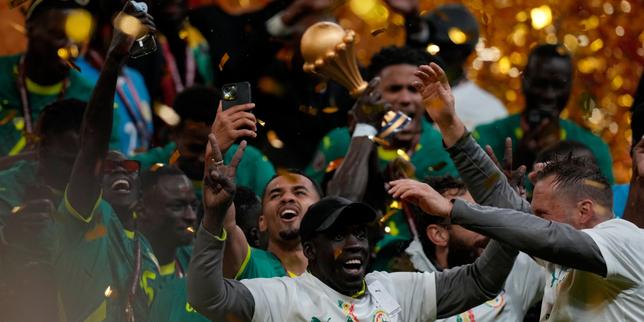
The humidity in Dakar usually feels like a warm embrace, a thick reminder of the Atlantic's proximity. But two months after the final whistle of CAN 2025, that air turned frigid. It happened in the space of a push notification. Families sitting down for Thiéboudienne, fans still wearing the faded green jerseys of victory, and players scattered across the elite leagues of Europe all looked at their screens and saw the same impossible sentence.
Senegal was no longer the champion. Morocco was.
History is usually written in sweat on the pitch. It is recorded in the grass stains on a defender's knees and the hoarse throats of eighty thousand people screaming in unison. This time, history was rewritten with a fountain pen. The African Football Confederation (CAF) dropped a hammer that shattered the national pride of one country while handing a bittersweet, confusing glory to another.
The Ghost in the Machine
To understand how a trophy travels thousands of miles across a border sixty days after it was hoisted, you have to look at the shadows of eligibility. Imagine a young midfielder. Let's call him Moussa. Moussa grew up in the suburbs of Paris, dreaming in Wolof but speaking in French. He is brilliant. He is fast. He is the kind of talent that scouts whisper about in darkened stadiums.
When the call came to represent the Teranga Lions, he didn't hesitate. He wore the badge. He played his heart out in the group stages. He contributed to the clinical, rhythmic dominance that saw Senegal march toward the final.
The problem wasn't his heart. It was a clerical error regarding his previous youth appearances and a failure to finalize a change of sporting nationality before the opening match. It was a ghost in the machine of international bureaucracy. A single unsigned document sitting in a digital folder somewhere in Zurich or Cairo.
While the fans were celebrating in the streets of Dakar, lawyers were squinting at birth certificates and FIFA statutes. The protest, lodged quietly by an opponent early in the tournament, had been winding its way through the labyrinth of committees. It moved slowly. Too slowly.
The Weight of a Hollow Gold
Morocco’s ascension to the throne is a strange kind of triumph. For the Atlas Lions, the 2025 tournament had been a journey of "what ifs." They were the favorites who stumbled, the giants who left the pitch in tears after the final whistle blew in favor of the Senegalese.
Walking into a room and being told you are the winner because the other person broke a rule you didn't even notice feels different than winning it on the grass. There is no lap of honor. There are no fireworks. There is only the clinical reality of a revised spreadsheet.
For the Moroccan players, this isn't about the joy of the goal. It is about the technicality of the law. They are now the champions of Africa, but they must carry the weight of a title that many will forever mark with an asterisk. The sporting world thrives on the "purity" of the result. When that result is overturned by a committee, the soul of the game takes a bruising.
The Human Cost of Paperwork
Consider the kit manager for Senegal. He is a man who has spent thirty years folding jerseys, packing cleats, and ensuring the lions have everything they need to hunt. To him, that gold medal wasn't a "legal status." It was the culmination of a thousand bus rides and ten thousand laundry loads.
When the news broke, the reaction wasn't anger at first. It was disbelief. "We thought it was a joke," was the common refrain echoing from the locker rooms to the markets.
The administrative failure is a betrayal of the physical sacrifice. Every sliding tackle made by Kalidou Koulibaly, every sprint by Sadio Mané, and every save by Edouard Mendy was an act of peak human performance. To have those acts erased because of a filing delay is a modern tragedy of the digital age.
It highlights a growing, shivering gap in modern sports: the distance between the athlete and the executive. We watch the game for the drama of the 90 minutes, but the game is increasingly decided in the 90 days following the event by people in suits who have never felt the sting of a mistimed challenge.
The Precedent of Chaos
This isn't just about one trophy. It is about the integrity of the calendar. If a champion can be unmade two months later, when does a tournament actually end?
If we allow the results of a continental final to remain "pending" in the hearts of the legal departments, we lose the magic of the moment. The 2025 CAN will now be remembered not for the tactical brilliance or the emergence of new stars, but for the "Administrative Final."
The logistics of the reversal are a nightmare. Medals must be returned. Record books must be scrubbed. The prize money, already likely allocated to grassroots programs or player bonuses, becomes a focal point of litigation.
But the real loss is the narrative. A child in Saint-Louis who went to sleep dreaming of being the next champion now has to learn a different lesson. They have to learn that even if you win on the field, even if you are the best, the world of adults and their folders can take it all away.
A Silent Shift in the Wind
The streets of Rabat are quieter than they would have been if the win had happened in real-time. There is a sense of justice for some—the rules are the rules, after all—but there is also a lingering awkwardness.
Senegal remains the champion in the eyes of the supporters who saw the sweat. Morocco is the champion in the eyes of the archives. This schism between reality and record is a wound that will take years to heal.
As the sun sets over the Léopold Sédar Senghor stadium, the lights stay off. There is no game tonight. There is only the cold, hard fact of a title stripped away. The lions still have their pride, their talent, and their hunger. But the gold has been packed into a crate and shipped north, leaving behind a silence that screams louder than any crowd ever could.
The trophy is gone, but the memory of the win remains a stubborn, unmoveable ghost in the heart of West Africa.
Would you like me to look into the specific FIFA eligibility rules that led to this disqualification?