Every time a head of state boards a flight, a minor industry of digital tourism writers scrambles to decode their luggage, their motorcade, and above all, their choice of lodging. The lazy consensus across international media is that when a leader like Xi Jinping visits a foreign superpower, the specific hotel they book reveals deep symbolic preferences, hidden historical nostalgia, or eccentric personal comfort demands. Tabloid headlines obsess over presidential suites, bulletproof glass, and private chefs, feeding the public a diet of superficial palace intrigue.
It is entirely wrong. In similar developments, we also covered: The Nord Stream Extradition Farce Proves Geopolitics is Just Theater for Adults.
Leaders of nuclear-armed states do not choose hotels based on interior decor or nostalgic aesthetic value. They choose them based on a single brutal metric: electronic fortification and absolute spatial control. When a premier visits a foreign capital, the entire operation is a military-grade deployment disguised as diplomacy. Analyzing a hotel choice through the lens of luxury travel journalism is like critiquing an aircraft carrier based on the upholstery in the captain's quarters.
The Logistics Of Sovereign Paranoia
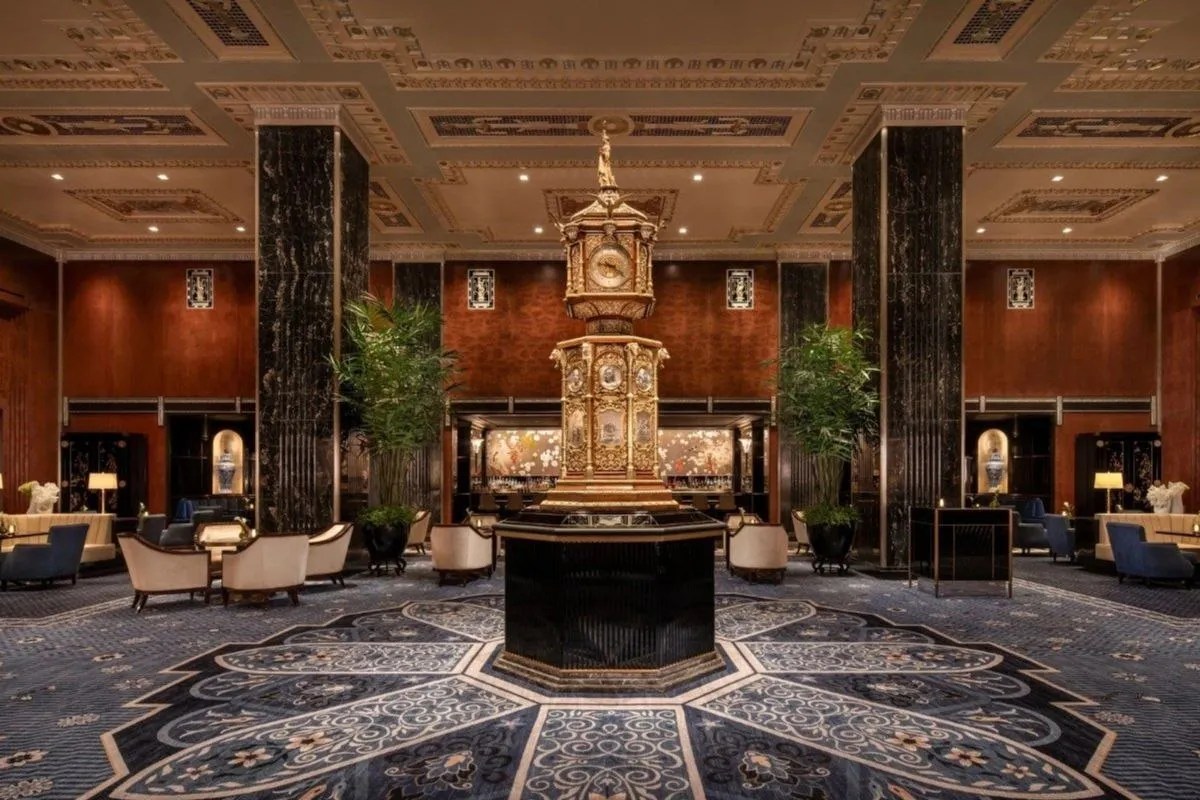
I have spent years watching corporate risk teams and state security details lock down venues for high-stakes international summits. The reality on the ground bears zero resemblance to the romanticized narratives spun by gossip-hungry commentators. When a delegation books an entire property—such as the St. Regis in San Francisco during major diplomatic outings—the motivation is not comfort. It is quarantine. The Guardian has provided coverage on this critical topic in extensive detail.
State security apparatuses operate on a zero-trust architecture. Every square foot of a foreign urban center is treated as a hostile surveillance vector until proven otherwise. A hotel is selected not because of its historical charm, but because its subterranean infrastructure, loading docks, and perimeter lines can be completely militarized within forty-eight hours.
Consider what actually happens behind closed doors. The host country's security service yields physical control of the perimeter, but the visiting delegation brings an inner ring of counter-surveillance specialists. They sweep guest rooms for listening devices, jam local cellular frequencies within a designated radius, and establish closed-circuit communication grids that bypass local infrastructure entirely.
When commentators wonder why a leader repeatedly favors a specific standard of high-security accommodation abroad, they ignore the physical physics of modern statecraft. You do not pick a hotel for the thread count. You pick it because the elevator shafts can be locked down, the air filtration systems can be monitored, and the line-of-sight angles for potential snipers or drone intrusions can be mathematically neutralized.
The Myth Of Personal Preference
Another persistent error in mainstream reporting is the attribution of corporate or state logistics to individual whim. Leaders do not scroll through booking platforms or express personal preferences for pillow firmness when planning a state visit. Every movement is dictated by a massive, risk-averse bureaucracy that views uncertainty as an existential failure.
In international relations, consistency equals risk mitigation. If a security detail successfully secures a specific footprint in a major global city once, repeating that layout minimizes unknown variables on subsequent visits. Familiarity with local choke points, emergency evacuation routes, and hospital proximity matters infinitely more than the view from the penthouse.
Yet, digital columnists continue to treat state visits like luxury lifestyle profiles. They spin elaborate theories about why a leader prefers a downtown high-rise over a sprawling suburban estate, completely ignoring the fact that urban high-rises offer vertical defense capabilities that horizontal properties simply cannot match.
Dismantling The Specter Of Soft Power Symbolism
We must also confront the absurd notion that hotel choices are deliberate acts of economic signaling or psychological warfare against local populations. Pundits love to hyper-analyze whether booking a massive luxury property sends a signal of dominance or austerity.
This is projection at its finest. Local activists and media outlets may stage protests outside the barricaded perimeter, and commentators may read deep geopolitical meaning into the temporary disruption of local traffic, but the decision-makers inside the fortress are entirely divorced from these symbolic concerns. To a state security director, a hotel is merely a temporary fortress with walls thick enough to block high-frequency intercept signals.
If you want to understand the trajectory of global superpowers, stop reading property reviews of presidential suites. Look instead at the frequency of bilateral intelligence exchanges, the restructuring of supply chain corridors, and the hardening of digital borders. The real power plays are happening in secure conference rooms stripped of all personal electronics, far away from the polished marble lobbies that capture the media's superficial attention.
Stop looking for hidden messages where there is only risk management.
This video footage demonstrates how security teams physically isolate and control the entire perimeter around the hotel during high-level state visits.