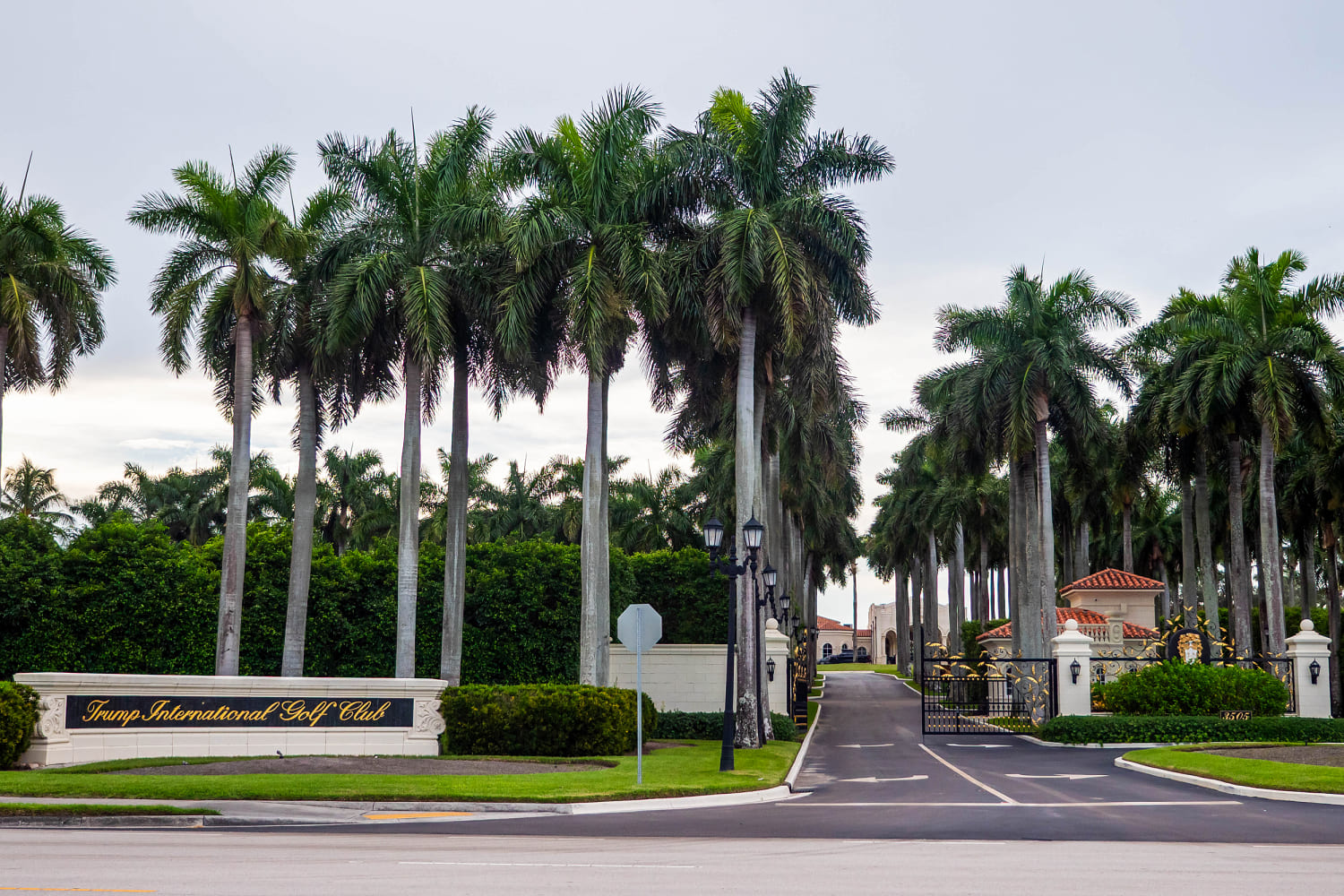
Converting a private commercial asset into a permanent presidential retreat fundamentally alters the operational, financial, and constitutional architecture of the American executive branch. When Donald Trump signals intent to establish his West Palm Beach golf club—Trump International Golf Club—or his broader Palm Beach footprint as a permanent fixture akin to Camp David, the proposal moves beyond mere personal preference. It represents a structural shift from state-owned, isolated executive infrastructure to privately owned, commercially integrated operational hubs. To understand the mechanics of this transition, one must evaluate the logistical friction, security externalities, statutory constraints, and economic incentives embedded in federal executive travel.
The Structural Divergence Between Camp David and Private Clubs
Camp David, officially Naval Support Facility Thurmont, operates as a closed-loop security and communications environment. Located within Catoctin Mountain Park in Maryland, its primary strategic value lies in physical isolation, military administration, and zero commercial overlap. Every square meter is controlled by the Department of Defense and the United States Secret Service. Access is strictly binary: authorized personnel or complete exclusion.
A commercial golf club in South Florida operates on the exact opposite structural model. It is an open-loop revenue-generating enterprise designed for high-net-worth throughput, hospitality, and public-facing events. Integrating the apparatus of the presidency into an active commercial property introduces severe operational friction across three primary vectors:
- Perimeter Vulnerability and Airspace Disruption: Unlike the forested buffer of Catoctin Mountain, a West Palm Beach golf property sits within a dense metropolitan corridor adjacent to Palm Beach International Airport (PBI). Establishing a permanent presidential footprint requires recurring Temporary Flight Restrictions (TFRs) that paralyze local general aviation, reroute commercial traffic, and impose direct economic losses on regional aviation operators. On the ground, municipal road closures along major arteries disrupt local commerce every time a motorcade moves between Mar-a-Lago, the golf club, and the airport.
- Signals Intelligence and Counter-Surveillance: Camp David is continuously swept and hardened against electronic eavesdropping, featuring Sensitive Compartmented Information Facilities (SCIFs) built directly into the terrain. Retrofitting a commercial clubhouse and surrounding fairways to meet intelligence community standards requires continuous physical reconstruction, permanent deployment of signals-intelligence countermeasures, and strict vetting of non-governmental hospitality staff—a recurring vulnerability that intelligence agencies struggle to mitigate in commercial environments.
- Logistical Redundancy: The White House Military Office (WHMO) maintains redundant communication, medical, and transport infrastructure at Camp David. Replicating this permanently at a private Florida club forces the federal government to either construct permanent military-grade facilities on private land or rely on mobile, deployable assets that degrade readiness elsewhere in the executive protection grid.
The Cost Function of Executive Travel and Federal Subsidization
Evaluating the financial mechanics of a permanent private retreat requires separating direct taxpayer outlays from indirect commercial value capture. Whenever the President travels to a private property, the federal government absorbs the variable costs of projection while the private entity retains ownership of the underlying asset.
The direct cost structure breaks down into four distinct buckets:
- Airborne Transport: Operating Air Force One (VC-25A) incurs substantial per-hour flight costs, covering fuel, maintenance, and engineering support. Frequent round-trip flights between Joint Base Andrews and Palm Beach International Airport multiply these baseline expenditures compared to the short Marine One helicopter hop from the South Lawn to Thurmont, Maryland.
- Advance and Protective Details: The Secret Service must rent golf carts, secure perimeter hotel rooms, lease local command posts, and pay overtime for agents rotated into South Florida. When an entity becomes a "permanent" retreat, these temporary deployments solidify into fixed recurring leases and permanent facility modifications.
- Military and Maritime Support: Proximity to the Atlantic coastline and the Intracoastal Waterway requires the United States Coast Guard to deploy maritime security zones, patrol boats, and specialized personnel whenever the President is in residence.
- Local Law Enforcement Reimbursement: Palm Beach County and local municipalities incur massive overtime expenses managing traffic and perimeter security. Historically, local governments have had to petition Congress for special appropriations to cover these unbudgeted security deficits, effectively shifting federal executive costs onto state and local tax bases unless reimbursed.
The second limitation of this model lies in how capital improvements are handled. Under federal law, the Secret Service and the Department of Defense are permitted to construct security enhancements—such as blast-resistant glass, perimeter fencing, and communication bunkers—on private property to protect the President. While the government retains ownership of removable equipment, fixed structural upgrades often remain with the property once the President leaves office, creating an asymmetric transfer of capital value from public coffers to a private balance sheet.
Constitutional Friction and the Emoluments Mechanism
The intersection of a sitting president’s private business interests and official state functions triggers immediate scrutiny under the Domestic Emoluments Clause of the U.S. Constitution (Article II, Section 1, Clause 7). This clause prohibits the President from receiving any emolument—defined broadly as profit, gain, or advantage—from the United States or any individual state beyond their fixed statutory compensation.
When a private golf club functions as a de facto state retreat, two financial mechanisms create constitutional friction:
First, direct federal spending at the property. The Secret Service, White House staff, and military aides require lodging, workspace, and logistical staging areas. If federal agencies pay commercial rates—or even discounted "government rates"—to a business entity owned by the President for rooms, cart rentals, or facility usage, federal funds flow directly into the President's private enterprise. Even if payments are capped at actual cost to avoid profit generation, the baseline revenue supports the fixed overhead of the private club.
Second, the "halo effect" on private membership and foreign engagement. A commercial club that doubles as the seat of executive power commands extraordinary pricing power. Initiation fees, annual dues, and event bookings appreciate simply because proximity to the executive branch becomes a marketable amenity. If foreign diplomats, state-owned enterprises, or domestic lobbyists purchase memberships or host events at the club to gain incidental access to the President, the property acts as a clearinghouse for influence, blurring the boundary between private commercial transactions and foreign or domestic emoluments.
Precedent Versus Structural Deviation
Historically, presidents have frequently utilized private properties as working retreats—Lyndon B. Johnson’s ranch in Texas, Richard Nixon’s "Western White House" in San Clemente, California, and George W. Bush’s Prairie Chapel Ranch in Crawford, Texas. These precedents are often cited to normalize the use of a West Palm Beach club. However, comparing a private residential ranch to an active commercial golf resort overlooks a critical operational distinction.
San Clemente and Crawford were private residences closed to the general public. They did not sell memberships, host third-party weddings, operate public-facing restaurants, or generate recurring hospitality revenue from paying guests mingling near the executive perimeter. In those historical cases, the federal government installed communications trailers and security perimeters on isolated agricultural or residential land, and upon the conclusion of the presidency, the infrastructure was dismantled without leaving behind an enhanced commercial venue.
Transforming a West Palm Beach golf club into a permanent presidential retreat inverts that historical model. It attempts to superimpose the sovereign, closed-security apparatus of the United States presidency onto an active, revenue-generating luxury hospitality business.
Operationalizing the Transition: What Must Change
If the executive branch moves forward with institutionalizing a West Palm Beach golf property as a permanent retreat, the operational reality requires strict structural guardrails to prevent systemic security failures and legal challenges.
- Complete Commercial Quarantine During Executive Presence: The property cannot simultaneously operate as a member-access club and a presidential command post. Establishing a true Camp David equivalent requires suspending all non-vetted commercial operations, closing the venue to transient guests, and subjecting all club employees to continuous background reinvestigations equivalent to White House staff standards.
- Establishment of a Dedicated Federal Leasehold: Rather than billing federal agencies piecemeal for rooms, carts, and command space, the General Services Administration (GSA) would need to execute a transparent, flat-rate, zero-profit lease for a segregated portion of the property, isolating federal expenditures from commercial revenue streams.
- Permanent Airspace and Traffic Re-engineering: The Federal Aviation Administration (FAA) and local transportation authorities would have to transition from ad-hoc TFRs and emergency roadblocks to permanent airspace corridors and dedicated ingress routes, absorbing the permanent economic displacement of surrounding Palm Beach businesses as a fixed cost of executive governance.
The ultimate viability of making a West Palm Beach golf club a permanent presidential retreat hinges on whether the federal apparatus is willing to permanently absorb the high marginal costs of securing a commercial urban property. Without complete operational isolation of the venue from its commercial functions, the arrangement will remain an unstable hybrid—generating continuous friction between national security protocols, taxpayer expenditure scrutiny, and constitutional compliance.