Ink is quiet. It makes no sound as it presses into grain, yet a single stroke can shift the gravity of a continent.
Walk through the sticky, heavy heat of Tegucigalpa on any given afternoon, and you will feel the weight of history hanging in the air like humidity. The streets hum with the sharp chatter of street vendors, the rattle of exhaust pipes, and the quiet, persistent undercurrent of anxiety that defines daily life for millions. People here know how quickly power shifts. They know that laws can be written in stone one day and washed away by the tide the next. But even in a place accustomed to political earthquakes, the sudden tremor originating from thousands of miles away sent shockwaves through the capital that left constitutional scholars and ordinary citizens alike staring at their screens in disbelief.
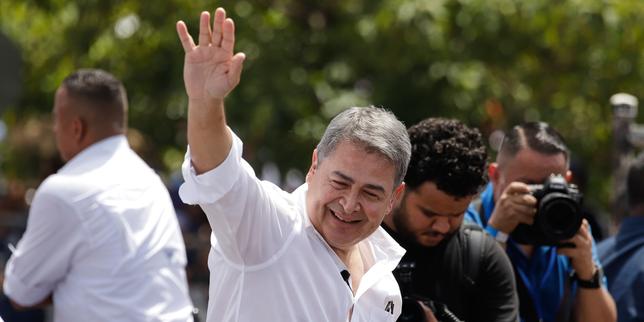
Juan Orlando Hernandez was not supposed to be free.
To understand the magnitude of what happened, we have to look back at the cold fluorescent lights of a New York federal courtroom. The gavel fell. The sentence was handed down: forty-five years behind bars. The charges were heavy, structural, and systemic. Prosecutors painted a picture of a presidency deeply entangled in the machinery of international drug trafficking, turning a sovereign state into a transit lounge for cartels. For many Hondurans who watched their institutions crumble from within, that verdict was a rare moment of external accountability. It was proof, however distant, that impunity had an expiration date.
Then came the stroke of a pen in Washington.
Donald Trump, wielding the sweeping and rarely scrutinized power of the presidential pardon, intervened. Just like that, the architecture of justice collapsed under the weight of executive fiat. The man who was meant to spend decades behind bars was suddenly cleared, his slate wiped clean by a foreign leader whose political calculus operates on an entirely different frequency.
Let us be clear about what this represents. (Note: When I speak of political calculus here, I am using a metaphor for the transactional nature of high-level diplomacy, where human rights and domestic legal struggles are often reduced to mere leverage on a geopolitical chessboard.)
The reaction on the ground in Honduras was not a unified roar. It was a stunned, heavy silence.
I remember talking to a local shopkeeper near the central market shortly after the news broke. He didn't scream or wave his hands. He just wiped down his wooden counter with a damp rag, looked out at the dusty street, and shook his head.
"If justice can be bought or unmade by a signature in a foreign country," he told me, his voice barely rising above the din of passing traffic, "then what does our vote ever mean? What does our suffering ever mean?"
That is the invisible stake in this entire drama. It is not merely about one man walking out of a cell or escaping the consequences of a federal conviction. It is about the erosion of belief. When leaders at the highest levels of global power treat legal verdicts as negotiable terms in a political bargain, they shatter the fragile trust that holds democracies together.
Consider what happens next in a system where accountability is optional.
The message sent to aspiring strongmen across the hemisphere is loud and clear. It tells them that you can bend the rules, leverage state power for illicit gains, and outlast your enemies, provided you have the right friends in high places. It turns international justice into a spectator sport, where the rules change depending on who holds the remote control.
Legal experts scrambled to parse the jurisdiction and the implications. Constitutional purists argued that a foreign pardon holds no moral weight over the sovereignty of a nation’s internal struggles, yet the practical reality remained stubborn and unyielding. Hernandez was cleared by the stroke of a pen, leaving prosecutors, victims, and citizens to pick up the pieces of a broken process.
Trust is hard to build and terrifyingly easy to demolish.
In the neighborhoods of San Pedro Sula and the rural outskirts where families continue to pack their bags to flee northward, the pardon felt like a personal betrayal. They are the ones who live with the ghosts of the corruption that bled the public coffers dry. They are the ones who face the violence spawned by the cartels that operated with impunity. To watch a former president absolved by an outsider without having to face the full, unvarnished judgment of his peers is a stark reminder that the game is rigged from the start.
We often talk about geopolitics as if it were a board game played by faceless giants moving wooden pieces across a map. We quote statistics on extradition treaties, federal sentencing guidelines, and diplomatic immunity. But numbers do not bleed. Bureaucracy does not weep at night.
The true story of the Hernandez pardon is written in the exhaustion of the people who keep showing up to work, keep voting, and keep hoping against all odds that the rule of law might someday apply equally to everyone.
The ink on that pardon has dried. The headlines will inevitably shift to the next crisis, the next election, the next flashpoint. But in the quiet alleyways of Tegucigalpa, the dust has not settled. The question remains hanging in the heavy tropical air, waiting for an answer that no foreign signature can ever provide.