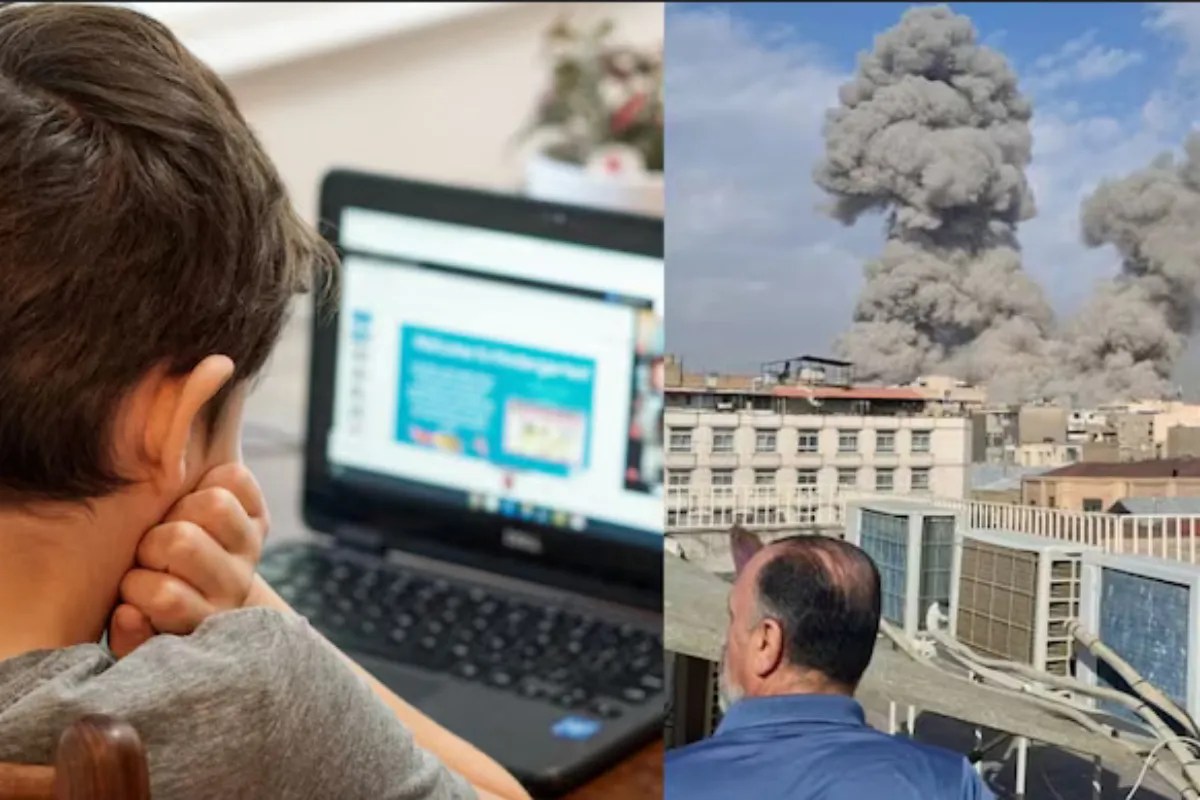
The sun hasn't quite crested the Alborz mountains yet, but the blue light of a smartphone screen is already illuminating Fatima’s face. She is twelve. Normally, this hour is a chaotic symphony of clinking tea glasses, the smell of toasted barbari bread, and the frantic search for a missing math textbook. But today, the house is eerily quiet. There is no bus to catch. There is no heavy backpack to hoist. Instead, Fatima stays under her duvet, staring at a notification that has become the new heartbeat of a nation on edge.
All schools in Iran are moving online starting April 21.
To a casual observer browsing international headlines, this might look like a simple administrative shift or a proactive measure for public health. It isn't. In this part of the world, the closing of a physical school building is a barometer for the atmospheric pressure of war. When the desks are empty and the chalkboards are clean, it means the adults are expecting the sky to fall.
The "ceasefire" discussed in diplomatic circles feels like a thin sheet of glass held up against a hurricane. Everyone is waiting to see if it cracks. While politicians exchange threats and promises over polished mahogany tables, the reality of geopolitical tension filters down into the most intimate spaces of human life: the bedroom of a middle schooler, the kitchen table turned into a makeshift workstation, and the anxious eyes of parents watching the horizon.
Consider the logistics of a ghost city. When a government decides that gathering children in one place is too high a risk, they are acknowledging a terrifying vulnerability. It is a soft mobilization. By moving millions of students to digital platforms, the state clears the streets, reduces the potential for mass-casualty events in public squares, and prepares the civilian population for a period of hunkering down.
Behind every "online login" is a mother like Soraya, who now has to balance her own remote work with the technical glitches of a provincial internet connection. She remembers the sirens from decades ago. She remembers the "War of the Cities." For her, the transition to online classes isn't a digital revolution; it is a haunting echo. She watches her daughter struggle with a slow-loading video of a geometry lesson and wonders if the next sound she hears will be a notification chime or something much louder.
The stakes are invisible until they aren't. We often talk about conflict in terms of throw-weights, missile ranges, and intercepted drones. We rarely talk about the psychological erosion that occurs when a child's education is tethered to the stability of a regional truce. Education requires a belief in the future. It requires the quiet assumption that the world you are studying today will still be there for you to navigate tomorrow. When classes move online because of "security concerns," that assumption begins to fray at the edges.
But why April 21? The timing isn't accidental. It follows a period of intense posturing and a delicate dance of retaliation that has left the Middle East breathless. By shifting the academic calendar into the digital space right now, the Iranian authorities are creating a buffer. They are preparing for a "what if."
What if the ceasefire is just a pause to reload?
The digital classroom becomes a bunker made of bits and bytes. It allows life to have a semblance of a pulse while the body politic prepares for a blow. Students in Tehran, Isfahan, and Shiraz will spend their mornings staring at pixels, trying to focus on literature and science while the shadow of potential escalation looms over their rooftops. It is a strange, modern form of purgatory. You are safe enough to study, but not safe enough to walk to school.
There is a specific kind of exhaustion that comes from living in a state of permanent "almost." It’s the fatigue of the "maybe." The Iranian people are masters of resilience, having navigated decades of sanctions and internal strife, but this particular shift feels different. It feels like a retreat from the physical world. When the squares and playgrounds go silent, the anxiety has nowhere to go but inward.
Think about the teacher, Mr. Mousavi, trying to explain the complexities of Persian poetry through a grainy webcam. He can see the faces of thirty teenagers in small boxes on his screen. He can see the tired curtains in their living rooms and the way they glance toward their windows every time a heavy truck rumbles by outside. He has to pretend that the lesson is the most important thing in the world, even as his own phone vibrates with news alerts about regional troop movements. He is an anchor in a storm that hasn't fully broken yet.
The shift to online learning is often framed as a technical solution, but it is actually a profound human sacrifice. We lose the "third space"—the area outside of home and work where community is built. For these students, school is where they learn who they are away from their parents' worried gazes. By tethering them to the home, the state is effectively narrowing their world to the size of a monitor.
This isn't just about Iran, and it isn't just about a date on a calendar. It is a case study in how modern conflict reorganizes human existence. We no longer just see trenches and tanks; we see the dismantling of the mundane. We see the cancellation of soccer practice. We see the empty university lecture hall. We see the digital migration of a generation that should be out in the air, breathing, arguing, and growing.
The world watches the flight trackers and the satellite imagery. We look at the coordinates of airbases and the silos of defense systems. But if you want to know how close a country is to the edge, don't look at the missiles. Look at the schools.
Look at the silence in the hallways.
The lockers are shut. The lights are off. Somewhere in a quiet apartment in North Tehran, Fatima finally connects to her classroom. Her teacher’s voice crackles through the small speakers, thin and distant. She tries to focus on the history of the Safavids, but her eyes keep drifting to the window, watching a single white bird navigate the vast, unpredictable blue of the morning sky.