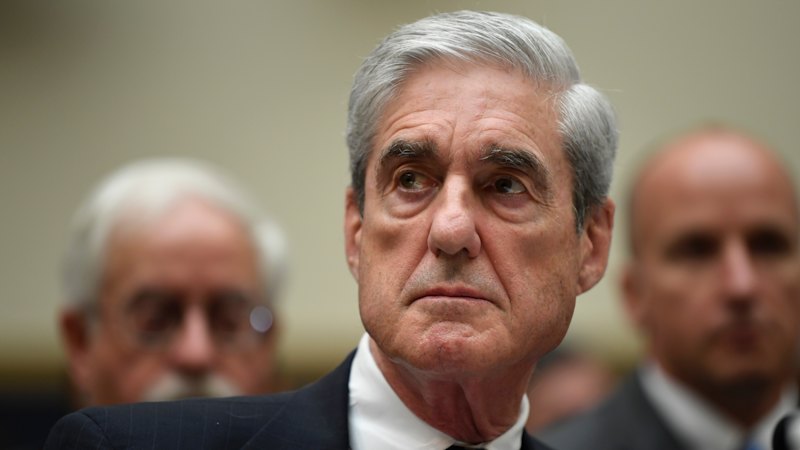
The room was always cold. Not because of the air conditioning in the Department of Justice, but because of the man who sat behind the desk. Robert Mueller did not lean. He did not slouch. He did not offer the easy, performative warmth that defines the political ecosystem of Washington, D.C. To look at him was to look at a statue carved from the granite of a bygone era, a man whose spine seemed forged in the crucible of Vietnam and tempered by decades of prosecutorial rigor. Now, that statue has finally been laid to rest.
Robert Swan Mueller III, the former FBI Director and Special Counsel whose name became a shorthand for the existential tension of American democracy, has died.
To understand the weight of his passing, you have to move past the headlines and the polarized cable news chyrons. You have to look at the human cost of being the country’s ultimate arbiter of truth in an age where "truth" became a matter of partisan choice. Mueller was a man out of time. He was a creature of institutionalism in a decade that set out to burn institutions to the ground.
Imagine a young Marine officer in 1968. The humid, suffocating heat of the Quang Tri Province. The air is thick with the smell of damp earth and cordite. A young Mueller leads his rifle platoon through an ambush, earning a Bronze Star and a Purple Heart. That version of Mueller—disciplined, shadowed by the proximity of sudden death, bound by an unwavering chain of command—is the only version that ever existed. He never really left the battlefield; he just changed the uniform for a dark suit and a white shirt that remained crisply pressed even after an eighteen-hour day.
When he was appointed Special Counsel in 2017 to investigate Russian interference in the presidential election, the nation looked at him and saw a savior or a villain. They were both wrong. Mueller didn't see himself as a protagonist. He saw himself as a process.
The Weight of the Gray Suit
The investigation was a period of national vertigo. Every morning, the country woke up to a new leak, a new tweet, or a new indictment. Yet, from the center of the storm, there was only silence. Mueller didn't do press conferences. He didn't leak. He didn't wink at the camera. In a city where everyone is screaming for attention, his silence was a vacuum that the rest of the world rushed to fill with their own anxieties.
Consider the toll of that silence. For two years, Mueller was the most talked-about man on the planet, yet he remained a ghost. He walked his dog. He went to church. He worked. While the internet deified him with "Mueller Time" candles and others burned him in effigy, he was meticulously cataloging the digital fingerprints of Russian hackers and the financial ledgers of political consultants.
The facts of his investigation were staggering, though they often get lost in the noise of the political fallout. His team secured thirty-four indictments or guilty pleas. They revealed a systematic, "sweeping and systematic" effort by a foreign power to tilt the scales of American preference. They exposed a web of contacts that, while not rising to the legal definition of a criminal conspiracy in the final report, painted a devastating picture of ethical erosion.
But the report itself—a dense, two-volume tome of legal prose—was a Rorschach test.
It was a document written by a man who believed the system would work if you just gave it the right data. He refused to make a traditional "prosecutorial judgment" on whether the President had obstructed justice, citing Department of Justice policy that a sitting president cannot be indicted. To his critics, it was a failure of nerve. To his defenders, it was the ultimate act of institutional loyalty.
He followed the rules to the letter, even as the house was screaming that the rules were being rewritten in real-time.
The Marine and the Machine
There is a specific kind of loneliness in being the "straight man" in a room full of performers. Mueller spent his career as the institutional ballast. He took over the FBI just one week before the Twin Towers fell. He transformed a domestic law enforcement agency into a global counterterrorism machine. He stayed on past his ten-year term because President Obama believed he was the only one who could keep the ship steady during a transition.
He lived by a code that felt almost monastic. No flair. No ego. No "I."
His death marks more than the end of a long and storied career. It marks the fading of a specific American archetype: the non-partisan public servant. We are moving into a world where "neutrality" is viewed as a cloak for hidden agendas. Mueller represented the belief that facts are not blue or red; they are simply stubborn.
He was often criticized for his performance during his 2019 congressional testimony. He seemed frail. He stumbled over some names. He stuck rigidly to the text of his report, refusing to provide the "theatrical" moments that congressmen from both sides of the aisle were hungry for. People whispered that he had lost a step.
But maybe he hadn't lost a step. Maybe he was just finished talking. He had done the work. He had put the findings on the table. In his mind, the job of the citizen was to read it and the job of the politician was to act on it. If they didn't, that wasn't his failure. It was ours.
The Invisible Stakes
Why does the passing of an eighty-one-year-old lawyer matter so much?
Because we are currently litigating the value of the "rule of law" as a concept. Mueller was the living embodiment of that concept. He believed that the law was a series of guardrails that kept the human ego from driving the country off a cliff. When those guardrails are tested, you need someone who won't flinch.
He didn't flinch in Vietnam when the bullets were real. He didn't flinch in the 1990s when he was prosecuting the Gambino crime family or Manuel Noriega. And he didn't flinch when he was tasked with investigating the commander-in-chief.
The human element of Robert Mueller was his relentless, almost terrifying consistency. He ate the same lunch. He wore the same style of watch. He held the same standard for his subordinates as he did for himself. It was a life lived in the service of a structure.
Now that the structure is under more pressure than ever, his absence feels like a missing pillar.
We often want our heroes to be loud. We want them to stand on the ramparts and give speeches that make our blood boil with righteous certainty. Mueller was never that. He was the quiet man in the back of the room making sure the paperwork was correct. He was the one reminding us that the majesty of the law isn't found in the verdict, but in the process.
He died as he lived—without fanfare, away from the cameras, leaving behind a record that will be debated by historians long after the social media posts of his detractors have vanished into the digital ether.
The cold room in the Department of Justice is empty now. The desk is clear. The files are closed. But the questions he raised about the resilience of the American experiment remain scattered across the floor, waiting for someone with a spine of granite to pick them up.
The man is gone. The silence he left behind is deafening.
Would you like me to analyze the specific legal precedents established during Mueller's tenure at the FBI?