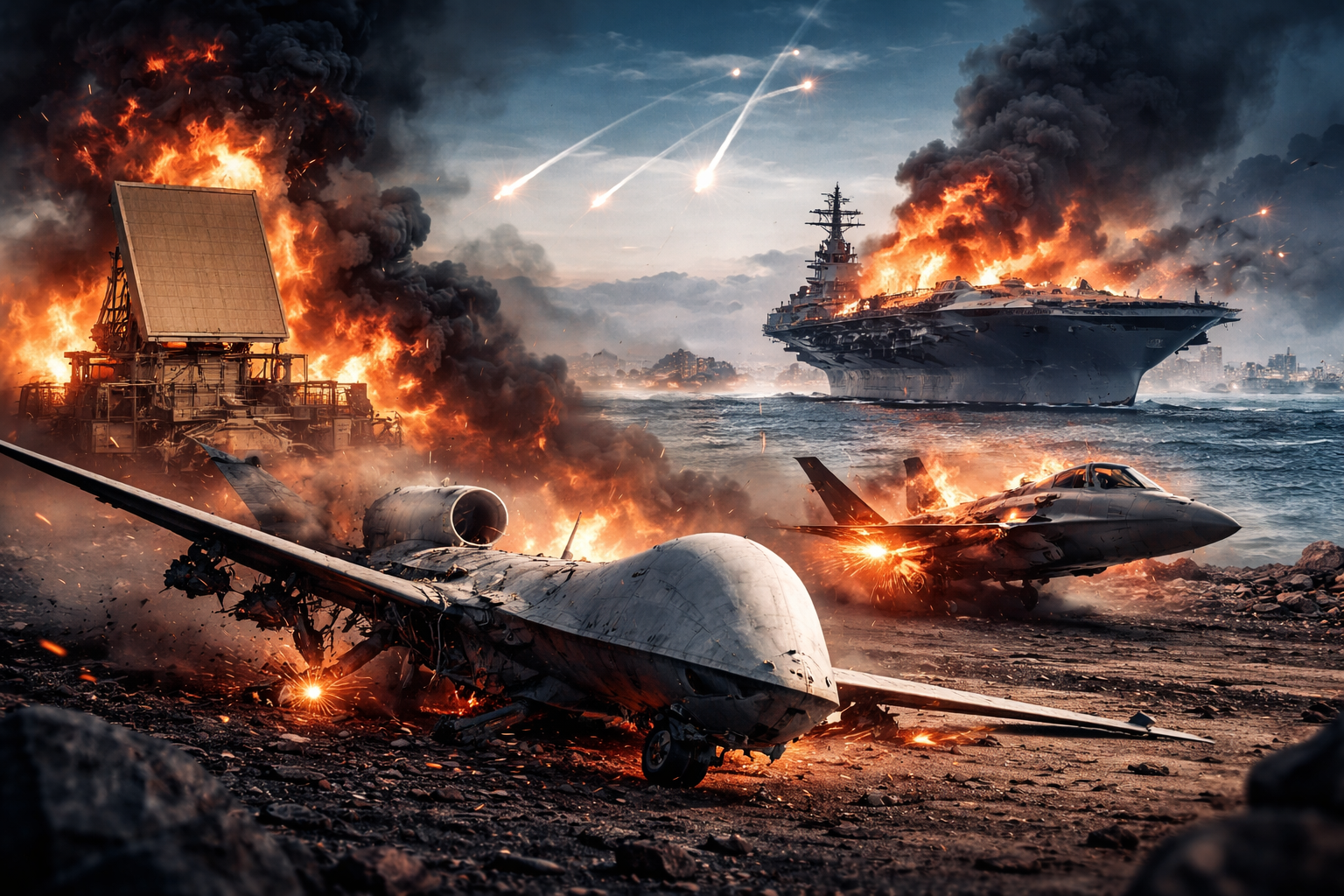
British Prime Minister Keir Starmer has spent the last 48 hours attempting to perform a diplomatic vanishing act. By assuring Cypriot President Nikos Christodoulides that the Sovereign Base Areas (SBAs) of Akrotiri and Dhekelia will not be used for "offensive" strikes against Iran, the UK is trying to un-ring a bell that has been tolling since the March 2 drone strike on RAF Akrotiri. The promise is clear: the bases are now designated for "preventive" and "humanitarian" roles only. However, this distinction is largely a matter of semantics in a region where a hangar hit by a Shahed drone has already proved that geography is destiny.
The Geography of Exposure
For decades, the 98 square miles of British territory on Cyprus were viewed as a strategic crown jewel—a "stationary aircraft carrier" allowing the UK to project power into the Levant and the Middle East without asking for permission. That shifted the moment an Iranian-designed loitering munition punched through a hangar at Akrotiri. When a base is hit, the "offensive versus defensive" debate becomes an academic luxury.
The UK’s current stance is a direct response to a mounting crisis of legitimacy. Cyprus, though not a NATO member, finds itself host to the very assets that make it a bullseye for the Islamic Revolutionary Guard Corps (IRGC). Nicosia has been vocal about its "dissatisfaction" over the lack of warning before the March 2 strikes, and the government spokesperson’s recent statement is less a victory for Cypriot diplomacy and more a desperate attempt by London to keep the lease from being ripped up.
Sovereignty Under Fire
The 1960 treaty that granted Cyprus independence while carving out the SBAs is a relic of decolonization that was never designed for the age of the "kamikaze" drone. Under Annex B of that treaty, the UK has nearly unrestricted rights to use the sites. Yet, the political reality of 2026 has outpaced the legal text.
- The Drone Gap: Despite the deployment of HMS Dragon and Wildcat helicopters armed with Martlet missiles, the March attacks exposed a vulnerability in the base's perimeter.
- The US Entanglement: Starmer’s initial refusal to let Donald Trump use the bases for B-2 bomber sorties created a rift with Washington, only for the UK to pivot 24 hours later to allow "defensive" access.
- The Civilian Risk: With 300,000 British nationals in the Gulf and thousands of families living near the Akrotiri Cantonment, the stakes are not merely military; they are existential for the local population.
The Humanitarian Shield Strategy
By reframing the bases as centers for "preventive measures," the UK is attempting to build a rhetorical shield around its assets. The Ministry of Defence is pivoting its narrative toward the protection of British citizens and the support of regional allies like Jordan and Qatar. This is a survival tactic. If the bases are seen as the launchpad for a decapitation strike against Tehran, the Republic of Cyprus becomes a participant in a war it never joined.
This "humanitarian" pivot also serves to quiet the growing domestic unrest within Cyprus. Protests outside the Presidential Palace in Nicosia have demanded an end to the "colonial" military ties that have suddenly turned a Mediterranean tourist hub into a frontline state. The UK is betting that by promising no offensive action, it can lower the temperature enough to maintain its foothold.
A Fragmented Defense
The arrival of French and Italian naval assets in the Eastern Mediterranean highlights a fragmented European response. While Paris has been quick to show solidarity with Nicosia, London has been caught in a loop of clarification. The UK’s commitment to "enhance the means contributing to preventive measures" essentially translates to more radar, more interceptors, and more "defensive" patrols—all of which Iran has already signaled it views as hostile escalation.
Consider the technical reality of modern air defense. If a Typhoon jet takes off from Akrotiri to intercept a drone over Iraq, is that offensive or defensive? To London, it is a protective act. To Tehran, it is the interference of a foreign power operating from a base on a third-party island. This ambiguity is where the UK’s promise of "no offensive action" begins to fray.
The Cost of the Status Quo
The real danger is not just a second drone strike, but the long-term erosion of the UK-Cyprus relationship. President Christodoulides has already hinted at renegotiating the status of the bases. For the first time since 1974, the partition of the island is not the only threat to Cypriot stability; the presence of the British military is now seen by some as a liability rather than a guarantee of security.
The UK is essentially operating a 20th-century colonial footprint in a 21st-century proxy war. The "sovereignty" of the bases is absolute on paper but conditional in practice. Every time a Martlet missile is fired from a Wildcat helicopter to down a drone, the "humanitarian" label becomes harder to stick.
London’s current strategy is a holding pattern. By assuring Nicosia that the bases won't be used for attacks, Starmer is buying time. But as the conflict between the US, Israel, and Iran intensifies, the definition of "offensive" will be written by the person launching the missiles, not the person hosting the press conference.
Would you like me to look into the specific legal challenges the Cypriot government is considering regarding the 1960 Treaty of Establishment?