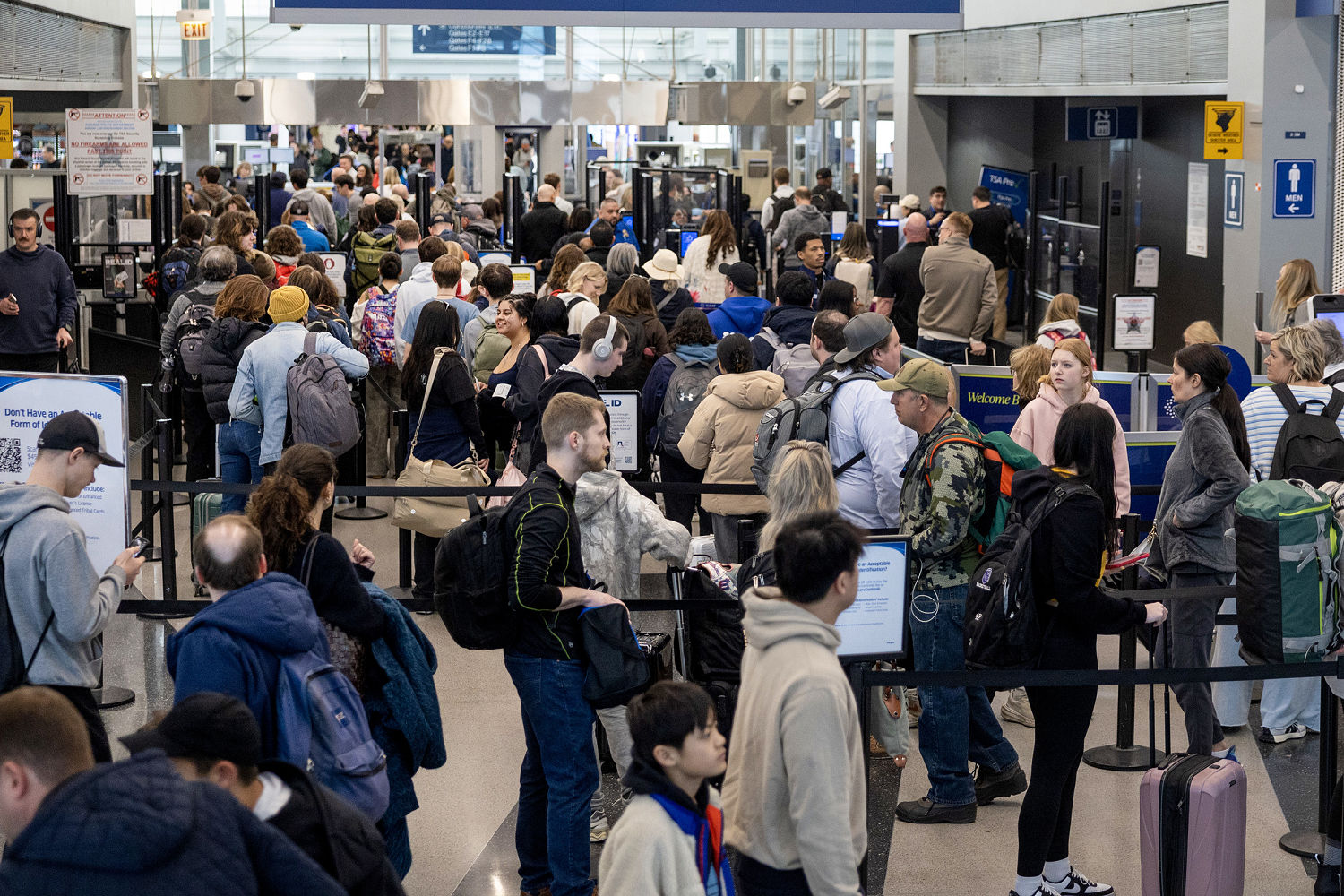
The convergence of a fixed religious calendar, the expiration of academic terms, and a concentrated four-day labor hiatus creates a predictable but poorly managed failure in UK transport infrastructure. While surface-level reporting focuses on the "busiest roads in four years," this metric obscures the underlying mechanics of systemic capacity breach. The Easter bank holiday is not merely a high-volume event; it is a stress test of a multi-modal network operating with zero margin for error.
To understand the 14 million projected leisure journeys, one must analyze the interplay between infrastructure maintenance schedules, the pricing elasticity of rail vs. road, and the geographical bottlenecking inherent to the British motorway system.
The Trinity of Congestion Drivers
The Easter peak is defined by three distinct but overlapping vectors that create a "perfect storm" of kinetic friction on the UK road network.
- The Maintenance Paradox: Network Rail frequently schedules major engineering works during bank holidays to minimize the impact on the Monday-to-Friday professional commuter base. This decision, while logically sound from a GDP-preservation standpoint, forces a massive modal shift. When key arteries like the West Coast Main Line face closures or reduced service, thousands of passengers are displaced onto the M1, M5, and M6. This creates an artificial surge in road volume that the asphalt cannot absorb.
- The Temporal Compression of Leisure: Unlike the Christmas period, which often features a staggered wind-down, Easter is a hard-start event. The majority of the 14 million trips are concentrated into two windows: Thursday afternoon (the "getaway") and Monday afternoon (the "re-entry"). This concentration exceeds the saturation flow rate of major interchanges.
- The Discretionary Trip Multiplier: Professional commuting is predictable and optimized. Leisure travel is chaotic. It involves higher vehicle occupancy, increased luggage weight—affecting fuel efficiency and breakdown rates—and drivers operating on unfamiliar routes. This increases the "incidental probability" of the network, where a single minor collision at a junction like Almondsbury (M4/M5) can trigger a 20-mile ripple effect of stationary traffic.
Quantifying the Saturation Point
Traffic flow follows the principles of fluid dynamics, but with a critical difference: human reaction time creates "phantom" traffic jams. As density increases, the space between vehicles (headway) shrinks. Once a certain threshold is reached, any braking maneuver by a lead vehicle propagates backward as a shockwave.
The M25 (London orbital), the A303 (South West gateway), and the M5 (Midlands to Peninsula) are the primary failure points. During the Easter peak, these routes often exceed their Level of Service (LOS) F, defined as a breakdown in flow where the arrival rate of vehicles at a bottleneck exceeds the discharge rate. When volume-to-capacity (v/c) ratios exceed 1.0, travel times do not increase linearly; they increase exponentially. A 10% increase in vehicles can result in a 50% increase in total delay time.
The Cost Function of the Four-Day Weekend
For the individual traveler, the cost of an Easter journey is not merely the price of fuel—currently inflated by global geopolitical instability—but the "opportunity cost of transit." If a standard three-hour journey to Cornwall extends to seven hours, the traveler has effectively lost 12% of their total holiday time in a non-productive, high-stress environment.
From a macroeconomic perspective, the Easter congestion represents a massive loss in productivity for the logistics and haulage sectors. Heavy Goods Vehicles (HGVs) caught in leisure-driven gridlock face strict tachograph regulations. A driver stuck in M5 traffic for four hours may hit their legal driving limit before reaching their destination, forcing an unplanned 9-hour rest period. This disrupts the Just-In-Time (JIT) supply chains for supermarkets and retailers during one of their highest-demand periods of the fiscal year.
Structural Bottlenecks and Geographic Constraints
The UK's road geography is funnel-shaped, particularly for those heading toward the South West or the Lake District.
- The M5/M4 Interchange: This serves as the primary valve for travelers from London and the Midlands heading to Devon and Cornwall. The design of these junctions was not predicated on the current 40-million-vehicle fleet size.
- The A303 Single-Carriage Chokepoints: Sections of the A303 near Stonehenge remain a structural vestige that cannot handle modern surge volumes. It acts as a physical "restrictor plate" on the flow of traffic to the West Country.
- The Dover/Eurotunnel Corridor: For those heading to the continent, the interplay between enhanced post-Brexit border checks and peak holiday volume creates a distinct failure mode. The "buffer zones" for HGVs and tourist cars often overlap, leading to total paralysis of the Kent road network.
Behavioral Biases in Route Selection
The ubiquity of GPS-based navigation apps (Google Maps, Waze) has introduced a new variable: The Braess Paradox. This theorem suggests that adding more paths to a network can sometimes slow down the overall flow. When a primary motorway stalls, thousands of drivers are simultaneously rerouted by algorithms onto secondary "B-roads."
These local roads lack the lane width and junction capacity to handle diverted motorway volumes. The result is "micro-gridlock" in rural towns, which prevents emergency services and local residents from moving, while failing to actually save the diverted driver significant time. The algorithm prioritizes the individual's "shortest path" without accounting for the collective degradation of the network.
Mitigation Limitations and Technical Realities
There are no immediate infrastructure "silver bullets." Smart Motorways, once touted as a solution, have faced significant public and political backlash due to safety concerns regarding the loss of the hard shoulder. While "All Lane Running" increases theoretical capacity by 25-33%, it removes the "safety valve" for broken-down vehicles, which are a primary cause of Easter delays.
The reliance on Variable Message Signs (VMS) to manage flow is a reactive, rather than proactive, tool. By the time a sign warns of a "60-minute delay," the queue has already grown beyond the point of effective diversion.
Strategic Recommendations for Navigating the Peak
The only way to bypass the systemic failure of the Easter road network is to decouple from the "Standard Departure Window." A strategic traveler or logistics manager must apply the following logic:
- The Counter-Cyclic Departure: If the peak occurs on Thursday between 14:00 and 19:00, the only viable windows for "free-flow" are 03:00 to 07:00 on Friday morning or after 20:00 on Thursday. Any deviation into the core travel window results in a 2x to 3x travel time multiplier.
- The Modal Pivot: Where rail routes are operational, the "Value of Time" (VOT) calculation often favors rail, despite higher ticket prices and potential overcrowding. The absence of congestion-related delay risk (assuming no engineering works) provides a predictable arrival window that the road network lacks.
- The Geography of Avoidance: Avoid the "Primary Artery" (M1, M5, M6) in favor of long-distance "A-road" alternatives only if the primary route's v/c ratio exceeds 1.5. This is only viable if the A-road route does not intersect with major urban centers or existing maintenance zones.
The structural gridlock of the 2026 Easter bank holiday is a failure of demand management, not just a failure of road capacity. Until the UK implements a dynamic road-pricing model or radically shifts its engineering work cycles, the four-day weekend will remain a study in kinetic friction. The optimal strategy is to avoid the network entirely during its 48-hour peak saturation or to operate in the "dead zones" of the early morning hours, where the flow remains laminar rather than turbulent.
Would you like me to map the specific planned engineering works on the West Coast Main Line for the upcoming bank holiday?