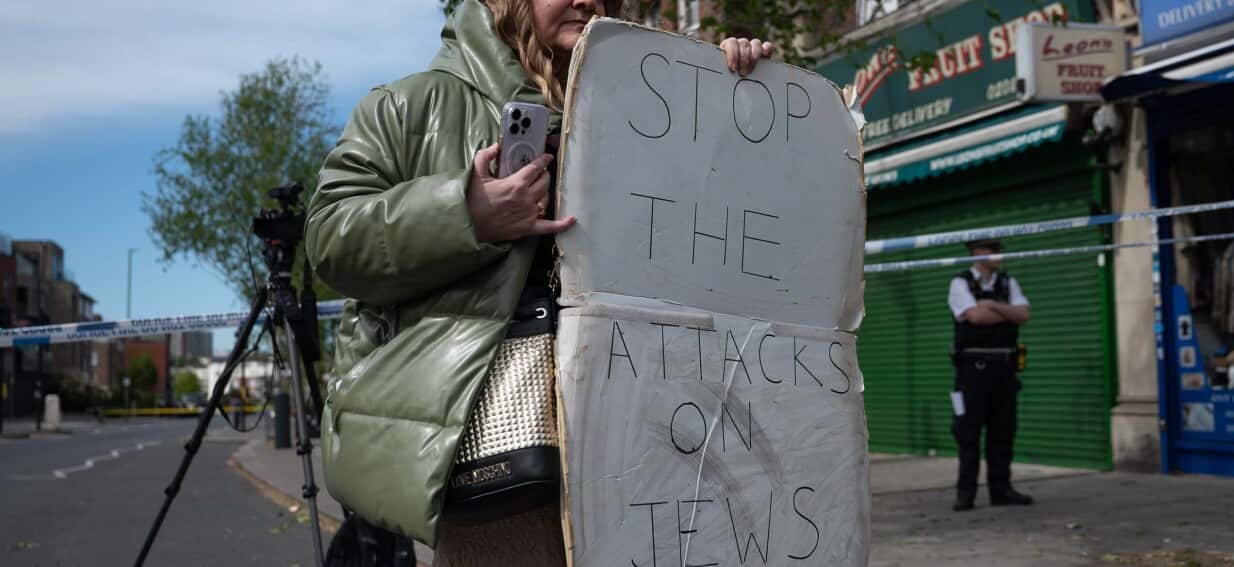
The recent assault in Golders Green was not a random outburst of street violence. It was a calculated signal. When a knife-wielding individual targeted a kosher supermarket in the heart of London’s Jewish community, the immediate headlines focused on local hate crimes. However, intelligence circles and security analysts are tracking a much darker pattern. This incident marks the physical manifestation of a sophisticated, state-sponsored campaign orchestrated by Iran to project power far beyond the borders of the Middle East. By utilizing a network of proxy actors and digital radicalization tools, Tehran has found a way to strike at the domestic security of Western nations without ever deploying a single uniformed soldier.
The Architecture of Plausible Deniability
Iran has mastered the art of the "cut-out." In the world of espionage, a cut-out is a mechanism or person used to create a barrier between the sponsor of an action and the person carrying it out. For years, the Islamic Revolutionary Guard Corps (IRGC) focused on traditional military proxies like Hezbollah in Lebanon or the Houthis in Yemen. That strategy has shifted. We are now seeing the rise of "Unit 840," a secretive branch of the IRGC’s Quds Force tasked with planning and executing operations against Western targets and Iranian dissidents abroad.
The genius of this approach lies in its messiness. Instead of sending highly trained assassins who might be caught and linked back to Tehran, the regime is recruiting low-level criminals, radicalized loners, and gang members. These individuals often have no direct communication with Iranian officials. They are moved like chess pieces through encrypted apps and middle-men located in third-party countries. When an attack happens in a place like Golders Green, the perpetrator looks like a "lone wolf." This allows the Iranian state to maintain a layer of deniability while reaping the benefits of the terror such acts instill in the local population.
Digital Radicals and the Telegram Pipeline
The radicalization process has moved away from mosques and community centers into the deep recesses of the internet. Iranian-linked groups have built a massive infrastructure on platforms like Telegram and Discord. These channels don't just spread propaganda; they provide tactical advice. They share maps of sensitive locations, instructions on how to bypass local security, and encouragement for individuals to "take a stand" for the cause.
Data harvested from cyber-intelligence firms shows a massive spike in Persian-language bot activity targeting European and UK demographics following major geopolitical shifts. These bots don't just post slogans. They identify individuals who are already posting inflammatory content and nudge them toward violence. This is targeted psychological engineering. By the time someone walks into a shop in North London with a weapon, they have been conditioned by a steady diet of curated misinformation and violent rhetoric designed specifically to trigger an emotional response.
Recruitment of the Disenfranchised
Why does this work? The Iranian intelligence apparatus preys on the fringes of society. They look for men with a history of petty crime or mental instability who feel alienated from their host country. To these individuals, the "cause" offers a sense of purpose. Intelligence reports suggest that in some cases, cash payments are funneled through cryptocurrency to the families of those who carry out these "missions." It turns a localized act of violence into a transaction.
The Failure of Traditional Surveillance
Western intelligence agencies are built to fight organized networks. They are experts at tracking bank transfers, monitoring known safe houses, and intercepting communications between high-level targets. They are significantly less effective at stopping a man with a kitchen knife who decided to act forty-eight hours after reading a post on an encrypted forum.
The London Metropolitan Police and MI5 are currently facing a "volume" problem. There are too many potential threats to monitor them all 24/7. Iran knows this. By flooding the zone with low-level threats and constant digital noise, they force security services to spread their resources thin. This creates gaps. While the police are investigating a dozen "persons of interest" in one borough, a new threat emerges in another, completely under the radar.
Mapping the Iranian Footprint in the UK
The IRGC doesn't just operate through shadowy figures in dark alleys. They have a legitimate presence through cultural centers, schools, and charitable organizations. While many of these institutions perform genuine community work, security officials have long warned that some serve as hubs for the IRGC’s "Soft War." This involves the spread of the Islamic Republic’s ideology and the identification of potential recruits.
Recent parliamentary debates have centered on whether to proscribe the IRGC as a terrorist organization. Proponents argue this would give police more power to shut down these front organizations. Opponents fear it would sever all diplomatic ties and lead to a direct escalation with Tehran. This hesitation is exactly what the Iranian regime counts on. They operate in the "gray zone"—the space between peace and open war—where the rules of engagement are unclear.
Economic Warfare by Proxy
The goal isn't just to kill or injure. It is to destabilize. Every time an attack like the one in Golders Green occurs, it puts a strain on the social fabric of the city. It increases the cost of security for religious institutions. It forces the government to divert funds from public services into counter-terrorism.
Furthermore, these incidents are used as leverage in international negotiations. When Iran faces tougher sanctions or diplomatic pressure, the frequency of "unconnected" incidents in Western capitals tends to rise. It is a quiet, brutal form of blackmail. Tehran is effectively telling the West: "If you squeeze us at home, we will make your own streets unsafe."
The Technological Arms Race
The battlefield is increasingly shifting toward the use of consumer technology for state-sponsored terror. We are seeing the use of drones for surveillance and the exploitation of open-source intelligence (OSINT) by Iranian operatives to track the movements of their targets. Publicly available information, such as social media check-ins and business directories, is being used to build target packages for individuals who have never set foot in Iran.
Cyber-security firms have identified several hacking groups, such as "Charming Kitten" and "Phosphorus," which are directly linked to the Iranian government. These groups don't just steal data; they conduct "doxing" operations, releasing the private addresses of activists and community leaders to encourage physical harassment or attacks. The Golders Green incident is the end of a long chain of events that often begins with a phishing email or a compromised social media account.
Breaking the Cycle of Impunity
The current strategy of treating these events as isolated criminal acts is failing. A shopkeeper in London or a student in Paris should not be a casualty in a geopolitical chess match. To address this, there must be a fundamental shift in how Western governments view the Iranian threat.
First, the "gray zone" operations must be met with clear consequences. If an attack can be traced back to Iranian digital recruitment or financial support, the response should not just be a police investigation. It requires diplomatic and economic retaliation against the sponsors. Second, there needs to be a much more aggressive effort to disrupt the digital pipelines. This isn't just about deleting accounts; it’s about infiltrating these networks to identify the handlers before they can activate their "lone wolves."
The Iranian regime has shown it is willing to play a long game. They are patient, they are resourceful, and they are increasingly bold. The attack in Golders Green was a test of resolve. It was an attempt to see how much the UK would tolerate before pushing back. If the response remains confined to local courtrooms and police reports, we can expect the frequency and severity of these "shadow" attacks to increase.
The security of Western cities now depends on recognizing that the front line of the Middle Eastern conflict is no longer a desert thousands of miles away. It is the high street, the community center, and the digital devices in our pockets. Dealing with this reality requires more than just increased police patrols. It requires the courage to name the sponsor and the will to dismantle the infrastructure that makes these attacks possible. Every day of inaction is an invitation for the next signal from Tehran to be much louder and much bloodier.