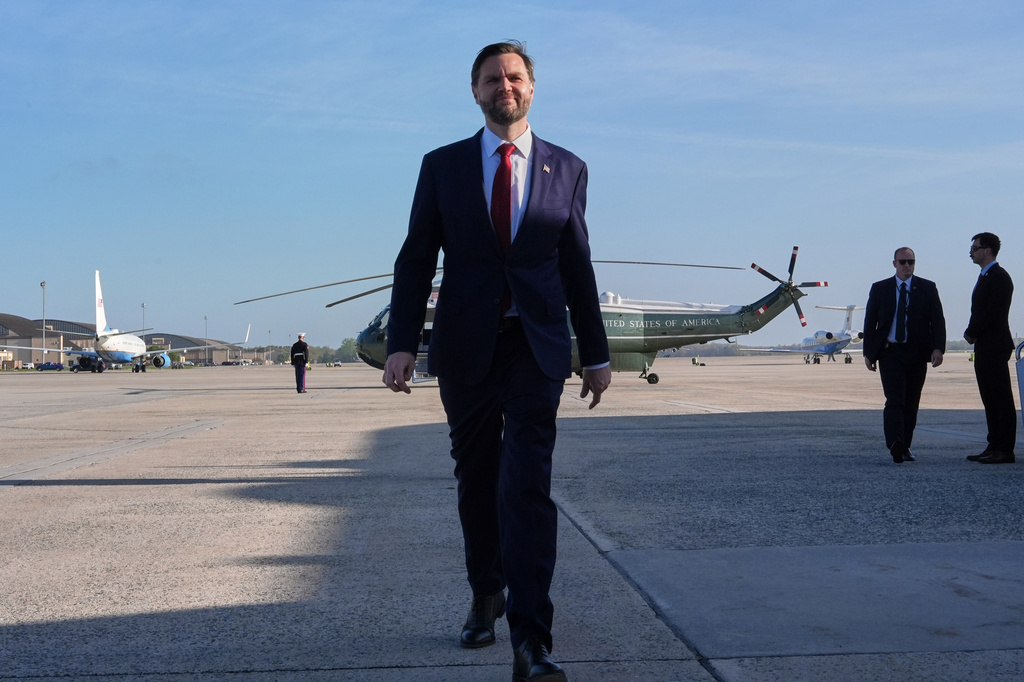
The headlines are vibrating with the usual adrenaline. "Vance warns Iran not to 'play' the US." It sounds tough. It sounds like a scene from a 1980s action flick where the hero boards a plane while adjusting his aviators. The media is eating it up, framing this as a high-stakes showdown of wills.
They are missing the point entirely.
The "don't play us" rhetoric isn't a strategy. It is a performance. While the pundits obsess over the optics of American "strength," they are ignoring the cold, hard mechanics of how international leverage actually functions. In the world of high-stakes diplomacy, the moment you tell someone not to "play" you, you’ve already admitted they have the cards to do so.
The Myth of the Tough Guy Negotiator
We have a collective obsession with the "alpha" negotiator. We think that if a leader just scowls hard enough or uses aggressive verbs, the opponent will fold like a cheap suit. I have seen this mistake play out in boardroom wars for twenty years. The guy who yells the loudest is usually the one with the weakest hand.
In the context of the Middle East, "tough talk" is often a distraction from a lack of clear objectives. When JD Vance warns Iran, he isn't speaking to Tehran. He is speaking to a domestic audience in Ohio and Pennsylvania. Tehran doesn't care about a "don't play us" warning. They care about enrichment levels, proxy logistics, and the price of crude.
Negotiation isn't about personality; it’s about asymmetry.
If you want to understand why this current approach is flawed, you have to look at the Opportunity Cost of Posturing. Every minute spent on theatrical warnings is a minute not spent on quietly dismantling the financial networks that actually keep the IRGC (Islamic Revolutionary Guard Corps) afloat. Noise is the enemy of effectiveness.
Why "Strength" is Often a Liability
The "lazy consensus" among political analysts is that the U.S. lost its way because it wasn't "scary" enough. The fix, they claim, is a return to swagger.
This is fundamentally wrong.
True power in the 21st century is quiet, economic, and systemic. When you lead with threats, you signal your boundaries. You tell the opponent exactly where your "red lines" are, which gives them a roadmap of exactly how far they can push without triggering a response. It is a gift to their intelligence services.
Imagine a scenario where a CEO goes on CNBC and warns a hostile takeover artist, "Don't you dare try to buy my shares." What happens? The stock price moves, the vultures circle, and the CEO looks desperate. A smart CEO doesn't warn; they implement a poison pill in silence.
The U.S. should be the poison pill, not the shouting CEO.
The Sanctions Delusion
One of the most frequent "People Also Ask" queries regarding Iran is: "Do sanctions actually work?"
The honest, brutal answer? Only if they are a scalpel. We have been using them as a sledgehammer for decades, and all we’ve managed to do is build a "Resistance Economy" that is increasingly decoupled from the Western financial system.
- Sanctions create shadow markets.
- Shadow markets empower the most radical elements of a regime.
- Radical elements have no incentive to negotiate.
By doubling down on the rhetoric of "maximum pressure" without a clear off-ramp, we aren't starving the beast; we are making it leaner and meaner. We are forcing Iran into the arms of Beijing and Moscow, creating a bloc that is increasingly immune to the U.S. dollar. This isn't winning. It is tactical success masking a massive strategic failure.
Stop Asking if They Are "Playing" Us
The premise of the question is flawed. Of course they are playing us. Everyone is playing everyone. That is the definition of international relations.
The real question is: What are we playing for?
If the goal is "total victory" or "regime change," then warnings are useless. You need a full-scale kinetic commitment that the American public has zero appetite for. If the goal is "stability," then "don't play us" is a counter-productive ego trip. Stability requires the boring, unglamorous work of creating mutual dependencies.
It is far harder to "play" a partner who is integrated into your own survival than it is to play an enemy who is standing on the other side of a fence shouting insults.
The High Cost of the "Negotiation" Flight
Vance departing for negotiations is framed as a bold move. In reality, the most successful negotiations in history were 90% finished before the principal ever stepped on a plane. The "Summit" is the victory lap, not the race.
When you fly into a room with the "don't play me" energy, you are walking into a trap. You have set a bar for "toughness" that you now have to meet, or you look weak. You have painted yourself into a corner where any compromise looks like a retreat.
I’ve seen high-level M&A deals fall apart because one side felt the need to "win" the press release. They got the headline, but they lost the deal. The US is currently at risk of winning the news cycle and losing the century.
The Actionable Pivot: Strategic Silence
If we wanted to actually disrupt the status quo, we would stop the warnings. We would stop the televised departures.
- Weaponize Ambiguity: The most terrifying thing for a regime like Iran is not knowing where the U.S. stands. Clear warnings provide comfort. Silence provides anxiety.
- Focus on the Plumbing: Stop talking about "freedom" and start talking about maritime insurance, port logistics, and digital currency rails. That is where the war is won.
- Accept the Nuance: Iran is not a monolith. There are factions within the state that are at each other's throats. Loud American threats force those factions to unite.
The "tough talk" from Vance is a gift to the hardliners in Tehran. It validates their narrative that the "Great Satan" is unyielding and aggressive. It silences the internal critics who want a different path.
We are literally doing their PR for them.
The Brutal Truth Nobody Admits
The reason we keep falling for this "tough guy" routine is that it’s easy. It’s easy to understand. It’s easy to clip for social media. It makes us feel like we are in control.
But we aren't in control. We are reactive.
Real authority doesn't need to bark. If you have to tell someone you’re the boss, you aren't the boss. If you have to tell a nation not to "play" you, you’ve already lost the psychological high ground.
Stop cheering for the performance. Start looking at the scoreboard. And right now, the scoreboard shows a U.S. foreign policy that is more concerned with looking strong than being effective.
The plane has taken off. The warnings have been issued. The cameras are rolling. And the underlying reality hasn't shifted an inch.
Get off the plane and start doing the math.