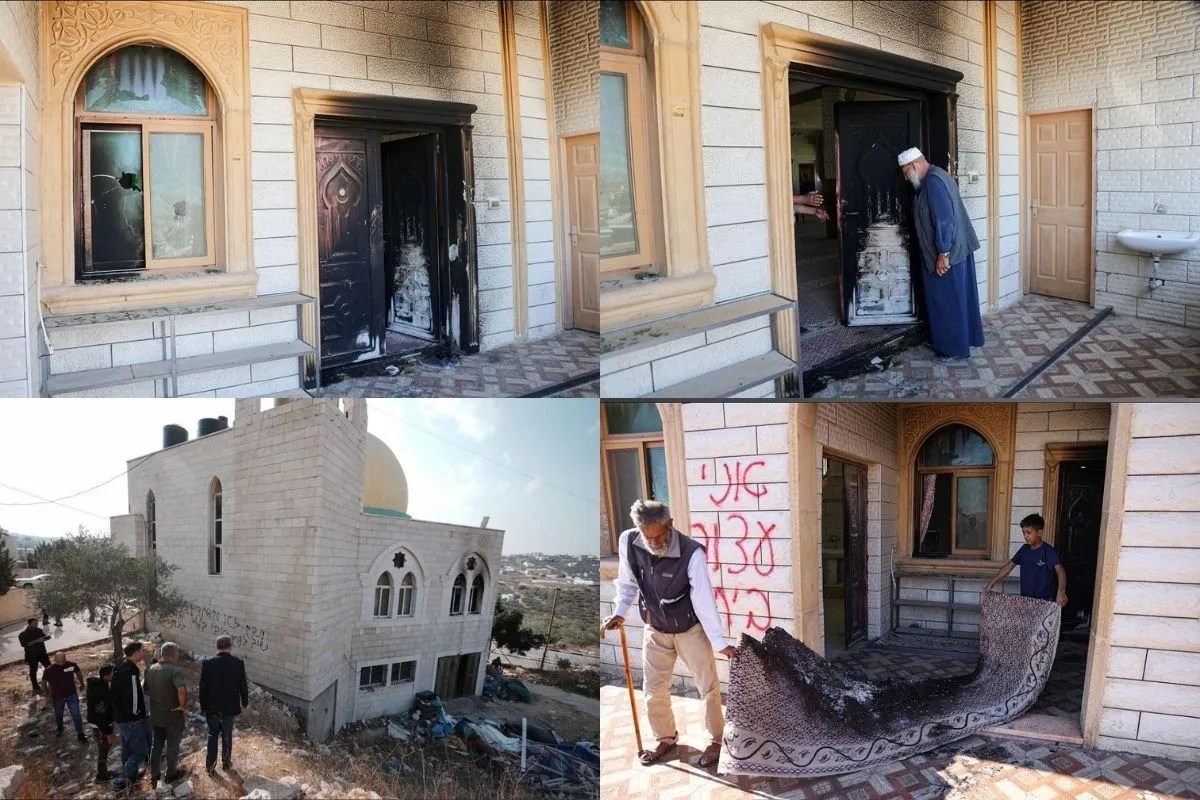
The tension in the occupied West Bank reached another boiling point when a mosque in the northern village of Bazariya, northwest of Nablus, was targeted in a midnight arson attempt. Attackers tried forcing open the doors of the Nur Al-Din Zengi Mosque, and when that failed, they set fire to an exterior annex and plastered the surrounding walls with hostile, racist slogans.
This isn't an isolated incident. It is part of a grinding, systematic pattern of escalation that has turned everyday places of worship into flashpoints. According to United Nations tracking, settler violence in the West Bank hit record highs, documenting well over 1,400 violent incidents involving casualties or property damage within a single year. When you look closely at the ground reality, the situation reveals a total breakdown of civil safety for Palestinian communities.
The Anatomy of West Bank Mosque Attacks
Let's look at how these operations typically unfold. Groups of unauthorized settlers move under the cover of darkness into rural Palestinian villages like Bazariya, Jibiya, or Qusra. They target infrastructure that holds deep communal and spiritual value.
In the Bazariya incident, documentation from local residents and the official Palestinian news agency Wafa showed that the attackers couldn't breach the main sanctuary doors, so they torched an adjacent room. Spray-painting hateful graffiti in Hebrew on walls has become a signature calling card of these assault squads, echoing the infamous "price tag" tactics designed to intimidate locals and punish entire communities.
Palestinian ministries and religious authorities, including the Ministry of Awqaf, have repeatedly labeled these assaults dangerous provocations meant to inflame religious sensitivities. Yet, investigations rarely yield public accountability or swift arrests from the military authorities governing the territory, leaving residents to deal with the aftermath alone.
Why This Regional Flashpoint Matters Now
The conflict in the West Bank doesn't stay neatly contained within local village borders. It feeds into a wider regional pressure cooker.
- Spiking Casualties: Official figures show that since the wider regional flare-ups intensified, more than 1,150 Palestinians have been killed across the West Bank and East Jerusalem, with thousands injured and roughly 22,000 detained.
- International Alarm: Global bodies and Western governments have started issuing strict travel warnings, urging citizens to completely rethink travel to the West Bank due to unpredictable military operations and militant settler actions.
- Systemic Displacement: Rights groups point out that these localized acts of arson and vandalism serve a broader strategic purpose: making rural Palestinian agricultural land unlivable, thereby clearing the way for illegal settlement expansion.
Breaking the Cycle of Impunity
Condemnations from international institutions arrive like clockwork after every burned carpet or charred doorway, but they change very little on the ground. Islamic organizations like Al-Azhar have routinely classified these mosque arsons as explicit terrorist acts, yet the legal vacuum protecting perpetrators remains intact.
If you're tracking the Middle East, don't view these church and mosque attacks as random acts of teenage vandalism. They are coordinated, politically charged intimidation campaigns. Until real enforcement reaches the hills of Nablus and Ramallah, the ashes outside these village mosques will keep piling up.