The radio does not care about your ideology. It cares about frequency, altitude, and the thin ribbon of air keeping two hundred tons of metal from kissing the earth.
When a pilot speaks into that mic, the words travel at the speed of sound through copper and atmosphere, landing in the headset of a controller who is staring at a green blip on a glass screen. To the controller, you are a coordinate. To the passengers sipping lukewarm tomato juice in row twenty-four, you are the low hum of an engine and a soft voice promising a smooth descent into Dubai.
Then came the phrase.
In revenge for Gaza.
Five words. Spoken not by an insurgent in a trench, not by a digital avatar on an encrypted forum, but by a co-pilot sitting on the flight deck of a commercial airliner, gripping the controls of a machine designed for transit, not translation.
Let us strip away the jargon. Let us look at what happens when the global nervous system gets short-circuited by grief.
The Weight of a Headset
Imagine sitting in the right seat. The flight deck of a modern passenger jet is not a glamorous lounge; it is a quiet, sterile office bathed in the soft green and amber glow of flight management computers. It smells of stale coffee, ozone, and recycled air. Outside, there is only the midnight purple of the stratosphere and the distant, indifferent stars.
You have trained for thousands of hours. You know stall speeds by heart. You can recite emergency checklists in your sleep. You have memorized every warning horn, every circuit breaker, every protocol designed to keep human emotion entirely out of the equation.
And yet, emotion is heavy. It leaks through the seams.
When geopolitical fractures thousands of miles below ripple upward into the flight level, they do not arrive as abstract policy debates. They arrive as a pulse. A tightening in the chest. A sudden, terrifying realization that the world you left behind on the tarmac is burning, while you are suspended six miles high in a pressurized tube, expected to maintain a professional, cheerful demeanor for people who just want to watch a movie and sleep.
We talk about aviation safety in terms of titanium bolts, redundant hydraulic lines, and rigorous checklists. We check the tires. We test the radar. But we rarely talk about the fragility of the human operating system.
The Anatomy of a Breaking Point
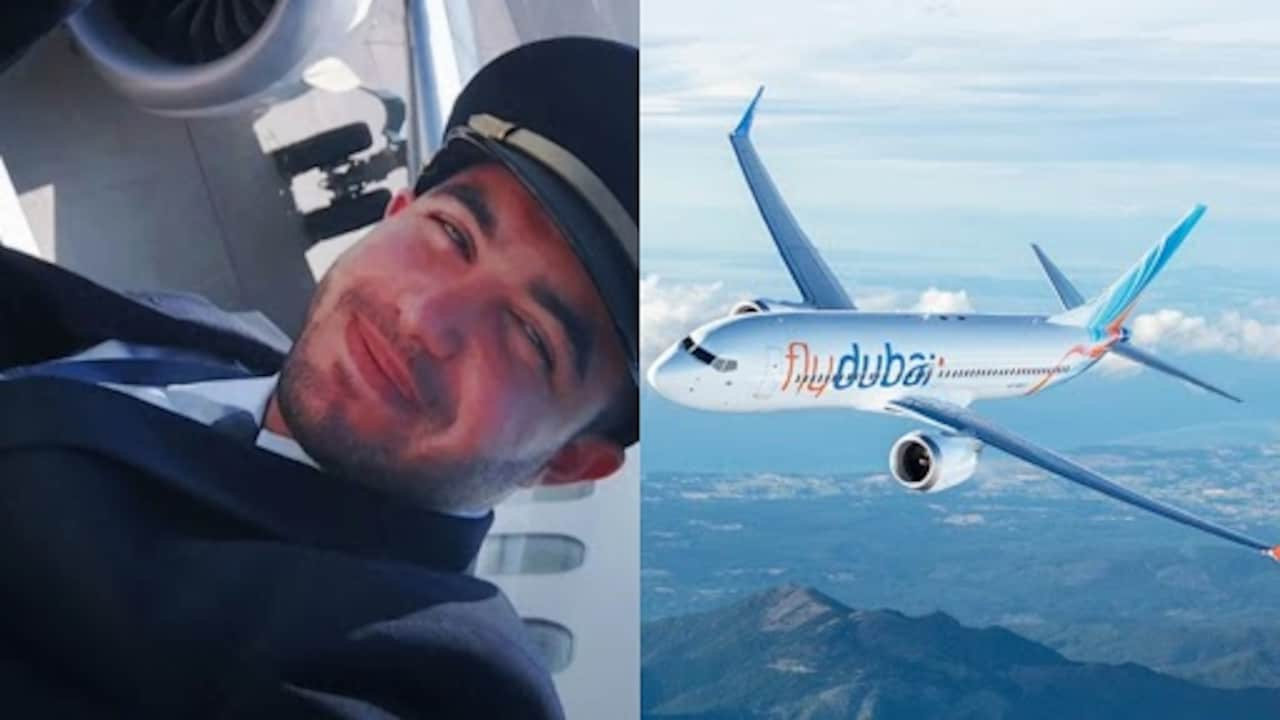
The flydubai incident off the coast of Oman was not a mechanical failure. The engines did not surge. The wings did not shear off in a thunderstorm. The failure happened in the wet machinery between the pilot's ears.
Human beings are terrible at compartmentalization when the walls of the compartment catch fire.
Consider what it means to watch screens all day long—whether you are sitting in a living room in Muscat or a cockpit crossing the Arabian Sea. The images stream in continuously. Rubble. Dust. Small shoes in the street. Smoke rising against a pale blue sky. The human brain was never evolved to witness the collective trauma of an entire planet in real-time while simultaneously trying to calculate fuel burn and crosswind corrections.
We expect pilots to be statues. We demand that they become air-breathing autopilot systems, entirely devoid of political awakening, rage, sorrow, or despair.
That is an impossible design specification.
When the co-pilot allegedly uttered those words over the radio frequency—words that instantly shattered the mundane rhythm of air traffic control—it was a manifestation of a terrifying modern truth: nobody is out of reach. The wars we wage on the ground board the plane with us. They sit in the jumpseat. They rest their hands on the yoke.
The Invisible Shield
Aviation is perhaps the most heavily regulated human endeavor in history. Every second of flight is logged, recorded, and scrutinized by black boxes and ground stations. There are two people in that cockpit specifically to watch each other—a system of mutual verification known as cross-monitoring. If one pilot drifts into a daydream, the other brings them back. If one pilot makes an erratic control input, the other counters it.
It is a system built entirely on distrust of human perfection.
Yet, even the best cross-monitoring systems struggle when the anomaly is verbal, ideological, and sudden. How do you check a pilot's internal monologue? How do you install a circuit breaker for despair?
You cannot.
Instead, the industry relies on screening, psychological evaluations, and peer support programs. But these are blunt instruments. They catch the obvious fractures—the deep depressions, the erratic behaviors. They rarely catch the slow erosion of a person's faith in the fairness of the world. They do not measure how many times a human being can watch catastrophe unfold on a glowing rectangle before something inside them snaps and demands to be heard, even if the venue is completely insane.
The Echo After the Descent
The plane landed. The passengers disembarked, most of them entirely unaware of the words that had rippled through the radio waves, carrying a localized storm into the sterile domain of international aviation. They grabbed their carry-ons, checked their phones for missed messages, and walked out into the humid terminal air.
The machinery functioned. The metal held.
But the narrative did not end at the gate.
Because what happened on that flight deck forces us to confront a deeply uncomfortable reality about the modern world: the walls we build to separate our professional lives from our political realities are made of tissue paper.
We like to think of travel as an escape. We board planes to cross borders, to flee our routines, to pretend for a few hours that we exist in a neutral zone above the conflicts of the earth. But the earth reaches up. It touches the radio waves. It whispers through the headset.
We are living through an era where distance has been utterly destroyed. There is no remote airspace left. Every cockpit is wired directly into the collective agony of the globe.
The question is not whether a pilot can fly the plane. Any trained professional can pull back on the yoke and manage a descent profile.
The real question is how long humanity can continue to tear itself apart on the ground while expecting the people steering the sky to remain entirely untouched by the fallout.