Some voices are built for whispering secrets across crowded rooms. Others are forged in the white-hot furnace of a smoky Montreal club at two in the morning, designed to punch right through concrete, smoke, and shattered expectations. Sass Jordan had the second kind.
It was a voice that did not ask for your attention; it demanded your soul.
When news broke that the powerhouse vocalist, the fierce blues-rock queen of Canadian music, had passed away at the age of 63, the silence that followed felt unnatural. A world accustomed to hearing her roar—whether tearing through the grooves of her breakthrough album Racine or holding court as a sharp-tongued, fiercely honest judge on Canadian Idol—suddenly found itself grappling with a quiet that simply did not fit her energy.
To understand what Montreal lost, what the world of rock and roll lost, you have to go back to a time when guitar strings were thick with sweat and authenticity was the only currency that mattered.
The Sound of Unfiltered Thunder
Music in the late 1980s and early 1990s was undergoing a strange identity crisis. Synthesizers were invading pop charts, slick production was sanding down the rough edges of human performance, and record executives were desperately searching for the next shiny, manufactured commodity.
Then came Sass Jordan.
Born in Birmingham, England, but raised in the culturally rich and artistically restless streets of Montreal, she didn't fit neatly into the era's glossy pop molds. She was too gritty for top-40 radio, too blues-soaked for bubblegum pop, and too uncompromisingly herself to play the industry game by anyone else's rules. When she stepped up to a microphone, she channeled the ghosts of Janis Joplin and Robert Plant, wrapped in a fierce, modern attitude that belonged entirely to the nineties.
Her 1988 debut album, Tell Somebody, didn't just introduce a new artist; it announced a force of nature. The title track became an anthem, driven by a voice that sounded like it had gargled bourbon and gravel and loved every second of it. It earned her a Juno Award for Most Promising Female Vocalist in 1989, but anyone who watched her live knew "promising" didn't scratch the surface. She had already arrived.
The Montreal Pulse
Cities have soundtracks, and Montreal’s is notoriously complex. It is a collision of old-world European charm and hard-edged North American grit, a bilingual metropolis where art is treated not as a luxury, but as a vital organ.
Sass Jordan was the physical embodiment of that spirit. She carried the city's bilingual soul in her cadence and its uncompromising artistic independence in her bones. To walk down St. Catherine Street in the early nineties with a Sass Jordan cassette winding through a portable player was to feel invincible. Her music wasn't background noise. It was a companion for late-night drives, broken hearts, and moments of fierce, stubborn defiance against a world that wanted you to color inside the lines.
Her career was defined by moments of creative fearlessness. There was her unforgettable 1992 sophomore album, Racine, which yielded hits like "Make You a Believer" and "Gimme," solidifying her place on the global map. There was her powerhouse duet with Joe Cocker, "Trust in Me," for the Bodyguard soundtrack—a massive cultural phenomenon that exposed her raw, emotive vocal prowess to millions of unsuspecting listeners worldwide.
She didn't chase trends. If a record label suggested she soften her image or commercialize her sound, she pushed back. That refusal to compromise earned her the enduring respect of her peers, even if it occasionally kept her from the dizzying, stadium-filling heights of some of her contemporaries. She was a musician's musician. A singer's singer.
The Truth Teller in the Primetime Spotlight
By the mid-2000s, television audiences across Canada came to know a different side of Sass. As a judge on Canadian Idol, she brought a refreshing, terrifying level of honesty to a format usually dripping in polite television artifice.
She wasn't there to coddle hopeful contestants or read off cue cards written by focus groups. If a singer lacked conviction, she told them. If someone stepped onto the stage and poured their actual blood, sweat, and tears into a performance, she lit up like a neon sign.
“You have to mean it,” her expressions and critiques seemed to say. “If you don't believe the words coming out of your mouth, why the hell should anyone else?”
That uncompromising standard is rare. It comes from a place of profound respect for the craft. She knew how hard the road was. She had lived the endless van rides, the late-night soundchecks in dive bars, the vocal cord strains, and the grueling machinery of an industry that often chews up artists and spits them out. When she offered praise, it mattered because it was earned.
The Final Chord
At 63, an artist should still have plenty of miles left on the road. There should have been more smoky blues albums, more intimate acoustic tours, more sharp observations delivered with that signature, infectious laugh.
The abruptness of her passing makes the silence deafening.
We live in a culture obsessed with polish, auto-tune, and algorithmic perfection. We smooth away every imperfection until art begins to look like plastic. Sass Jordan was an antidote to that sterility. She was magnificent because she was flawed, powerful, vulnerable, and completely, fiercely human.
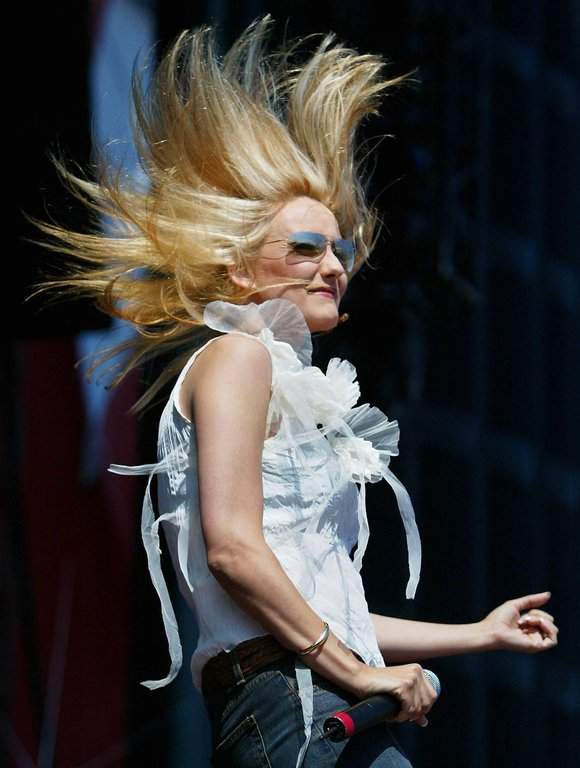
When you listen to Racine today, or watch old footage of her tearing through a live set with her hair flying and her eyes locked on the back row of the theater, you realize something important. People forget the charts. They forget the award nominations and the industry politics.
They remember how an artist made them feel in the dark.
Sass Jordan made us feel alive, awake, and unafraid to turn up the volume. The voice has stopped roaring, but the echo will rattle the walls of Canadian rock history for a very long time.