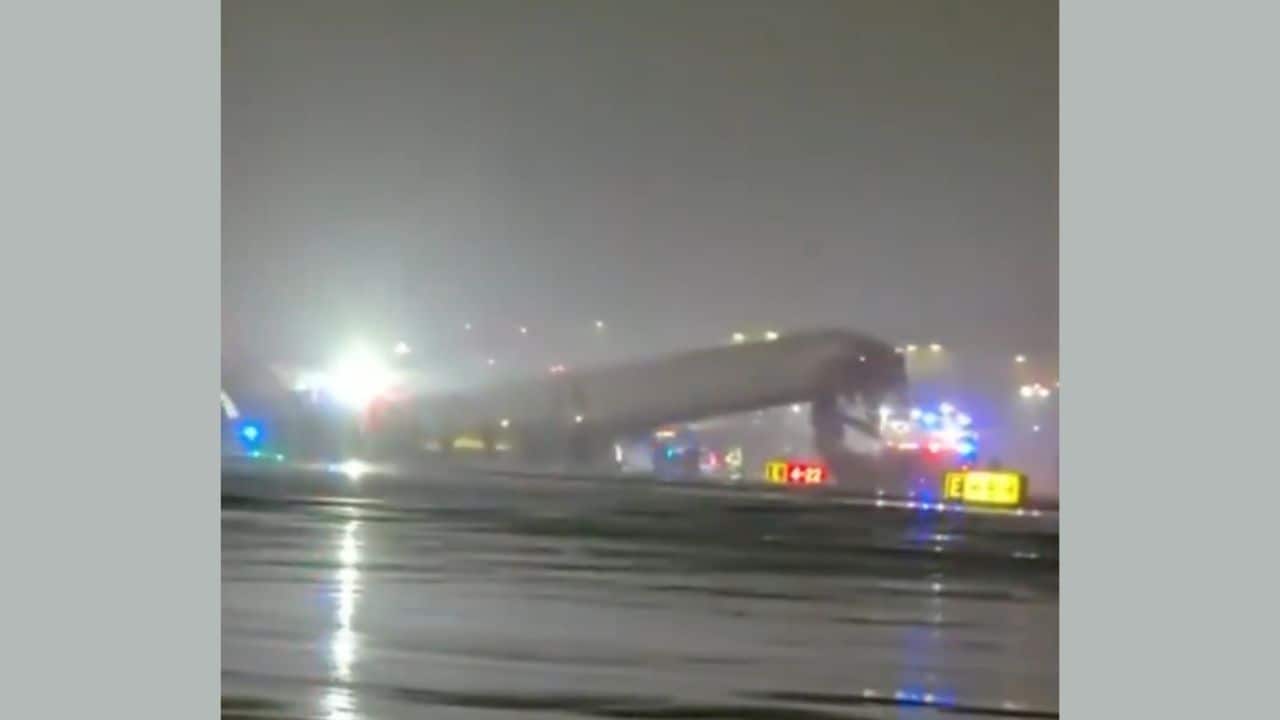
Ground control is the most stressful job you've never thought about. It happened again at LaGuardia. A commercial jet and a FDNY firetruck occupied the same piece of asphalt at the same time, and the results were predictably chaotic. When an airplane crashes with a firetruck at LaGuardia Airport in New York, the immediate reaction is panic. We see the flashing lights, the crumpled metal, and the headlines about several feared injured. But the real story is about how a system designed for "zero failure" managed to break down in one of the most crowded pieces of airspace on the planet.
LaGuardia is a postage stamp. It's tiny, congested, and notoriously difficult for pilots to navigate even on a sunny day. Adding a high-speed emergency vehicle into that mix creates a recipe for a runway incursion that most aviation experts have been warning about for years. This isn't just a freak accident. It's a symptom of an overstrained infrastructure trying to keep up with 2026 travel demands.
The Anatomy of a Runway Incursion
A runway incursion is basically any occurrence at an aerodrome involving the incorrect presence of an aircraft, vehicle, or person on the protected area of a surface designated for the landing and take-off of aircraft. In this case, we're talking about a massive physical impact. Reports indicate the firetruck was responding to a separate, minor issue when it crossed paths with the taxiing or departing aircraft.
You have to understand the communication loop. The pilot talks to the tower. The truck driver talks to a different frequency or dispatcher. If those two lines of communication don't sync up within a split second, people get hurt. The impact at LaGuardia sent shockwaves through the terminal. Several passengers and crew members were treated for injuries ranging from severe jolts to lacerations. The firetruck didn't fare much better.
The sheer physics of a jet engine or a wing clipping a heavy-duty rescue vehicle is terrifying. Even at low taxi speeds, the kinetic energy is massive. Most people think crashes only happen at 500 miles per hour. They're wrong. A 40-ton aircraft moving at 20 knots can crush a vehicle like a soda can.
Why LaGuardia is a Safety Nightmare
If you've ever flown into LGA, you know the feeling. It's tight. The runways are short. The taxiways feel like a crowded parking lot at a suburban mall on Black Friday. According to the Federal Aviation Administration (FAA), LaGuardia consistently ranks as one of the most challenging environments for ground movement.
- Space Constraints: Unlike JFK or Newark, LGA doesn't have the luxury of wide-open buffer zones. Everything is packed together.
- Traffic Volume: The airport handles nearly 30 million passengers a year. The pressure to keep "wheels up" leads to a frantic pace.
- Construction Fatigue: The constant "New LaGuardia" renovations have changed taxi patterns frequently, sometimes confusing even seasoned ground crews.
When the firetruck and the plane collided, the airport's emergency response was immediate, but the damage was done. The Port Authority of New York and New Jersey closed the affected runway, causing a ripple effect of delays across the East Coast. It's a reminder that a single mistake in Queens can ruin a business trip in Chicago or a vacation in Florida.
The Role of Ground Radar Technology
We have the tech to prevent this. It's called ASDE-X (Airport Surface Detection Equipment, Model X). It's a high-resolution radar system that's supposed to alert controllers when two objects are on a collision course. If it worked perfectly, this accident wouldn't have happened.
Sometimes the alerts come too late. Sometimes there's "alert fatigue" where controllers hear so many pings they momentarily hesitate. We don't know the specifics of the data logs yet, but the National Transportation Safety Board (NTSB) is already pulling the tapes. They'll look at the transponder data from the firetruck and the cockpit voice recorder from the plane. They'll want to know if the truck driver had explicit clearance to cross that line.
What Happens to the Injured
The phrase "several feared injured" is a placeholder for the reality of medical trauma. In these collisions, the most common injuries aren't from fire—they're from the sudden stop.
Whiplash is a big one. Passengers aren't usually buckled tightly while taxiing. When the plane hits a stationary object, their bodies keep moving. We're also seeing reports of anxiety-induced medical episodes. Imagine looking out your window and seeing a firetruck disappear under the wing. That stays with you.
The crew members often take the brunt of it. They're usually standing or prepping the cabin during taxi. A sudden impact can throw a flight attendant against a bulkhead with enough force to break bones. The FDNY members in the truck also face significant risks. Those trucks are built like tanks, but they aren't meant to be T-boned by a Boeing or Airbus.
The Fallout for Travelers
If you're flying today, check your app. Don't just head to the airport. When a runway closes at LGA, the "ground stop" is usually immediate. Flights already in the air are diverted to Philly or diverted back to their origin.
It's not just about the one plane. It's about the gate it was supposed to use, the crew that was supposed to fly the next leg, and the maintenance teams that now have to inspect every inch of that runway for debris. Foreign Object Debris (FOD) is a silent killer in aviation. A single bolt left on the runway from the firetruck can be sucked into the engine of the next departing jet. The cleanup is meticulous and slow.
Taking Accountability for Ground Safety
The NTSB doesn't play around. They'll likely issue a preliminary report within weeks, but the full investigation takes a year. We need to stop looking at these as "unfortunate accidents" and start seeing them as systemic failures.
Why was a vehicle in the path of a moving jet?
Was there a language barrier or a radio malfunction?
Did the tower give a "clear to cross" when they shouldn't have?
These are the hard questions. Honestly, it's a miracle this doesn't happen more often given how much we push the limits of our airports. We're obsessed with more flights and lower prices, but we rarely talk about the ground crews working in the dark, in the rain, trying to coordinate a dance of giants.
Check your flight status through the official airline carrier website rather than third-party trackers. If your flight was canceled due to this incident, you're entitled to a refund or rebooking, though "acts of God" or "extraordinary circumstances" clauses might complicate your claim for hotel compensation. Keep every receipt. If you were on the plane involved, contact a representative immediately to document any physical discomfort. Impact injuries often don't show up until the adrenaline wears off 24 hours later.