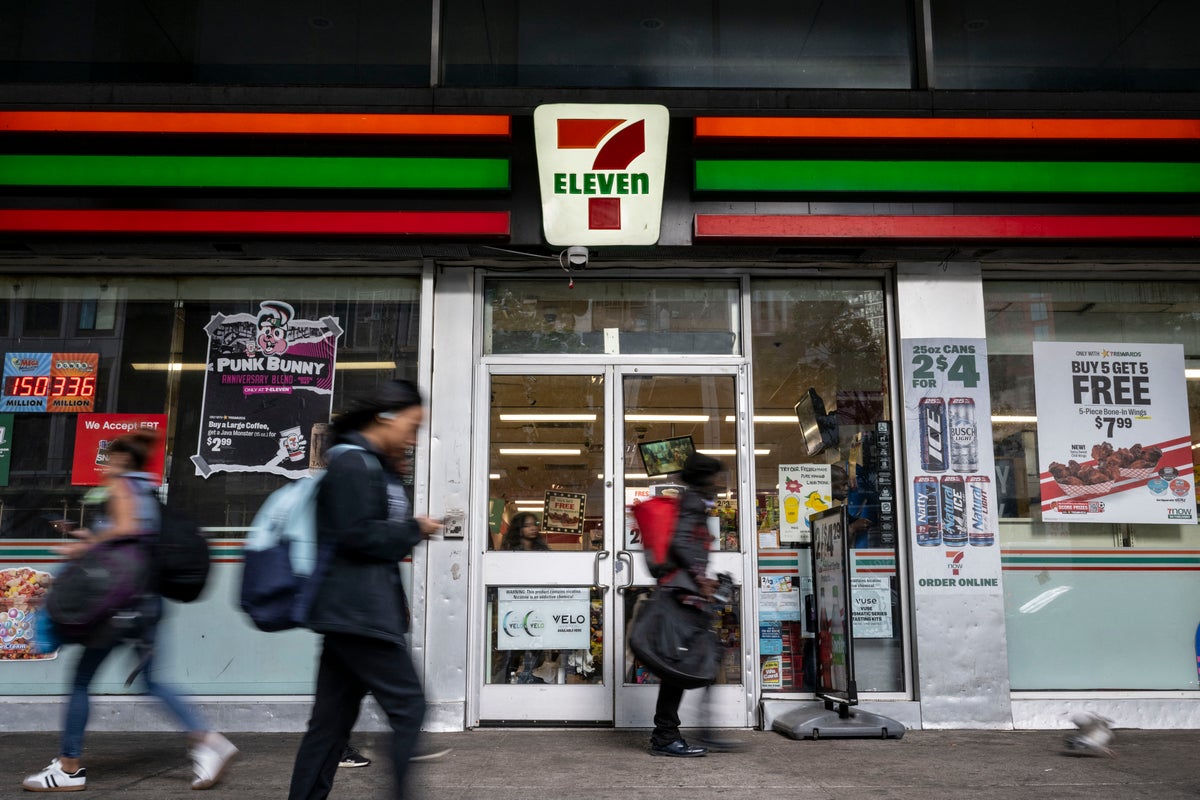
7-Eleven is hacking away at its own footprint. It's not a sign of the apocalypse for the convenience king, but it's a massive shift that'll change where you grab your Slurpee. Seven & i Holdings, the Japanese parent company, recently dropped the news that they're shuttering 444 underperforming locations across North America. If you think this is just another retail "death spiral" story, you're looking at it wrong.
The reality is that 7-Eleven is struggling with a weird mix of inflation, shifting tobacco habits, and a desperate need to stop smelling like old hot dogs. They’re closing these doors because the "grab a pack of smokes and a lottery ticket" business model is dying. People don't shop like that anymore. 7-Eleven knows it.
The Numbers Behind the Store Closures
Let's look at the cold data. The company cited a "pullback" by lower-income consumers as a primary reason for the closures. When bread and eggs cost a fortune, people stop making "convenience" runs where every item has a 30% markup. Cigarette sales, once the backbone of the corner store, have plummeted for 26 consecutive months.
Retail experts at firms like GlobalData have pointed out that 7-Eleven’s massive network—roughly 13,000 stores in the U.S. and Canada—has become bloated. Some locations are literally across the street from each other. They’re cannibalizing their own sales. By cutting the bottom 3% of their fleet, they’re freeing up capital to fix the stores that actually make money.
Inflation is Hitting the Slurpee Hard
It’s not just about cigarettes. Foot traffic has dipped significantly. The company reported a 7.3% drop in traffic in August alone. When gas prices fluctuate and grocery bills stay high, the impulsive "I'll just grab a snack while I pump gas" behavior disappears. 7-Eleven is feeling the burn because they've historically relied on those tiny, frequent transactions.
The New Store Format is All About Food
The stores staying open won't look like the 7-Eleven you remember from 1998. The company is pivoting toward what they call "Evolution Stores." I’ve stepped into a few of these, and honestly, it’s a bit jarring at first. They’re ditching the cramped aisles for "Laredo Taco Company" counters and "Sipping & Snacks" stations.
They want to be a restaurant that happens to sell gas. That’s the play. They’re chasing the "Wawa" or "Buc-ee’s" model. If you’ve ever been to a Wawa in Pennsylvania or a QuikTrip in the South, you know the vibe. You go there because you actually want the food, not because you’re desperate.
What You Will Find Inside an Evolution Store
- Fresh Food Focus: They’re installing kitchens. We’re talking made-to-order tacos, spicy chicken sandwiches, and actual fresh pastries.
- Premium Coffee: No more scorched sludge in a plastic carafe. They’re installing bean-to-cup machines that grind every cup fresh.
- Digital Integration: Massive touchscreens for ordering and expanded "7NOW" delivery hubs.
- Alcohol Variety: Some locations are testing "The Roost," an in-store craft beer and wine section.
Why This Transition is Necessary for Survival
7-Eleven is currently defending itself from a massive takeover bid by Alimentation Couche-Tard, the owners of Circle K. To stay independent, Seven & i Holdings has to prove to shareholders that they can actually grow their margins in North America. They can't do that while paying rent on 444 locations that lose money every single day.
The "New 7-Eleven" is a gamble on the idea that Americans want high-quality food from a gas station. It sounds crazy if you grew up on roller-grill taquitos, but the data says otherwise. Convenience stores that prioritize fresh food see higher margins and more loyal customers.
The Identity Crisis
There's a risk here. 7-Eleven has always been the "everyman" store. If they go too upscale, they risk alienating the people who just want a cheap cup of joe and a pack of gum. But they don't have much of a choice. The middle ground is a dangerous place to be in retail right now. You either win on extreme value or you win on a "premium" experience.
Mapping the Impact on Your Neighborhood
Which stores are going dark? The company hasn't released a full public list of every single address yet, but the pattern is clear. They’re targeting older, smaller "legacy" stores that don't have the physical space to install kitchens or expanded beverage bars. If your local 7-Eleven feels like a time capsule from the 80s and doesn't have a parking lot bigger than a few spots, its days are likely numbered.
They’re also looking at regions where competition is fiercest. In areas where Circle K or Casey’s General Store have moved in with modern facilities, 7-Eleven's older shops just can't compete.
How to Navigate the 7-Eleven Shakeup
If your go-to morning stop is on the chopping block, you’re going to have to adjust your routine. But don't just find the next closest 7-Eleven. Look for the ones branded as "Evolution" sites. The experience is night and day.
Stop thinking of 7-Eleven as a place to buy cigarettes and soda. Start thinking of it as a fast-casual dining spot that also has an ATM. Download the 7Rewards app if you haven't. They’re pouring millions into loyalty discounts to keep people coming back despite the higher prices of fresh food.
Check your local listings over the next few months. If a store near you closes, a "Super 7-Eleven" is probably planned for a location three blocks away with twice the square footage and a taco stand. The era of the dingy corner store is ending, and frankly, it’s about time.
7-Eleven is trimming the fat to survive a hostile takeover and a changing economy. It sucks if your local spot closes, but the stores that remain will actually be places you want to spend time in. This isn't a retreat; it's a total reimagining of what convenience means in 2026.
The move is bold. It's risky. But in a world where you can get almost anything delivered to your door in thirty minutes, a convenience store has to offer something more than just "being there." It has to be good.