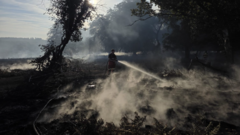
The media treats every single wildfire containment like a championship victory. Smoke clears, firefighters pack up their hoses, press releases go out, and the public breathes a collective sigh of relief. Another crisis averted. Another pristine tract of timber saved from the ashes.
It makes for comforting television. It is also completely wrong.
By treating every blaze in the New Forest and beyond as an unmitigated emergency to be snuffed out instantly, we are engineering a much larger catastrophe. Decades of zero-tolerance fire suppression policies have transformed resilient ecosystems into ticking time bombs. We are not protecting nature. We are hoarding fuel, choking biodiversity, and guaranteeing that the next fire will not be a manageable burn, but an unstoppable inferno.
The Lazy Consensus of Total Suppression
The standard narrative surrounding forest management relies on a comfortable, highly marketable illusion. The public assumes that a good forest is a green forest, untouched by flame, and that any smoke on the horizon represents a failure of state infrastructure.
This mindset treats fire as an external invader rather than an essential ecological process. Look at the data compiled by forest ecologists over the past thirty years. When you aggressively suppress low-intensity fires year after year, you do not stop fires from happening. You simply delay them.
Instead of regular, low-severity cleansings that clear out underbrush and recycle nutrients into the soil, you get an accumulation of dead wood, dense brush, and ladder fuels that bridge the forest floor to the canopy.
I have walked through these artificially protected zones after decades of strict non-burn policies. The understory is a tangled, suffocating graveyard of dead timber. When a fire finally breaches the perimeter—and physics dictates that it eventually will—it does not creep along the grass. It explodes into a crown fire, hot enough to sterilize the soil, melt rock, and incinerate centuries-old root systems.
Suppressing the small fire is the exact mechanism that births the mega-fire.
The Mechanics of Natural Purging
Forests evolved with fire. Many species of flora do not just survive flames; they demand them. Certain pinecones remain sealed in resin for decades, waiting for the thermal shock of a fire to melt the bond and release their seeds onto freshly scorched, nutrient-rich ash.
When we deny a forest its natural fire cycle, we break the evolutionary loop.
[Strict Fire Suppression]
       │
       ▼
[Fuel Accumulation & Dense Underbrush]
       │
       ▼
[Higher Canopy Vulnerability]
       │
       ▼
[Catastrophic Mega-Fire]
Without fire, shade-tolerant species crowd out fire-resistant giants. The forest floor becomes choked. Moisture vanishes because too many competing plants are drinking from the same shallow water table. The entire system becomes brittle, stressed, and profoundly vulnerable to disease and insect infestations.
When officials celebrate the full containment of a forest fire, they are often celebrating the preservation of a sick patient. They are locking in an ecosystem state that is chemically primed to burn twice as hot the moment a stray cigarette butt, lightning strike, or glass shard focuses the sun.
Redefining Success in Wildland Management
If our primary metric of success remains 100 percent containment, we will continue to lose millions of acres to high-severity burns. The objective must shift from stopping fires to managing them.
This requires an uncomfortable cultural pivot. It means letting fires burn under controlled meteorological conditions. It means deploying prescribed burns aggressively during damp seasons to consume excess fuel before summer heat turns the woods into tinder.
Critics always point to the immediate risks. Controlled burns can escape. Smoke causes temporary air quality issues in nearby towns. Politicians panic over the optics of a hazy weekend.
Let us be entirely transparent about the downsides. Prescribed fire management is messy. It requires precise atmospheric forecasting, immense labor, and the willingness of local governments to absorb short-term public criticism for long-term ecological gain. There is no risk-free option here. The choice is not between a smoke-free forest and a burning forest. The choice is between frequent, low-intensity, managed fires or infrequent, catastrophic, uncontrollable disasters.
Dismantling the Myth of Pristine Wilderness
The modern obsession with a static, unchanging wilderness is a human invention, not an ecological reality. Forests are dynamic, cyclical entities. They are designed to burn, collapse, regenerate, and repeat.
When human intervention freezes this cycle in amber, we create an unnatural equilibrium. We value the aesthetic of green leaves today over the survival of the forest tomorrow.
The next time a headline blares that a major forest fire has been fully contained, do not cheer. Ask what the fuel load will look like five years from now. Ask how many dead trees were left standing to feed the next monster.
Stop treating every spark as an enemy. Start treating the refusal to burn as the real threat.