Geopolitical crises are frequently misread as chaotic explosions of spontaneous violence, yet sustained territorial acquisition operates with the cold predictability of an operational supply chain. The multi-day siege of Palestinian homes in the West Bank village of Qusra by Israeli settlers—culminating in sharp diplomatic rebukes and military maneuvers—is not an isolated security anomaly. It is a textbook demonstration of coercive attrition. By evaluating the mechanics of regional displacement, the structural incentives driving state-adjacent actors, and the operational loop governing state-military responses, the true cost function of modern territorial expansion becomes visible.
The Tripartite Model of Territorial Attrition
Displacement operations in contested zones like Area C of the West Bank do not rely on direct, wholesale state expulsions. Instead, they utilize a decentralized model consisting of three distinct phases: infrastructural strangulation, physical isolation, and psychological exhaustion.
The first phase involves resource denial. Long before physical blockades occur, target properties face systematic utility severance. Water lines, electricity infrastructure, and access roads are incrementally damaged or cut. This reduces the baseline operational capacity of a household, transforming a self-sustaining residence into a resource-starved vulnerability.
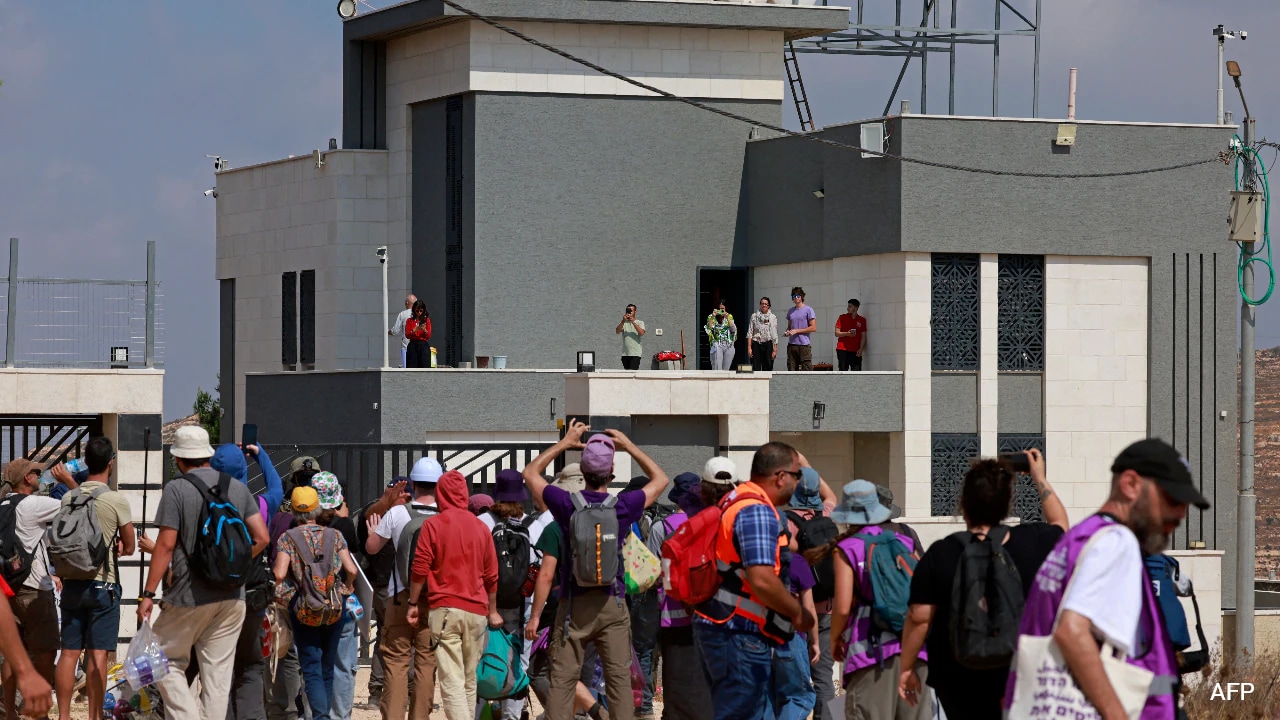
The second phase is spatial constriction. Small groups of ideologically driven actors establish forward operating outposts or tents in immediate proximity to target structures. In Qusra, this was executed by surrounding homes, throwing stones, dismantling boundary walls, and physically barring entry or exit points. The objective is not immediate kinetic destruction, but the creation of a high-friction perimeter that repels external aid, legal monitors, and journalists.
The third phase targets the human element through induced helplessness. When utility lines are severed, supplies dwindle, and the state military apparatus responds with sluggish tactical delays or superficial enforcement, the rational calculation for the occupant shifts toward abandonment. The strategy leverages time as a weapon. Every additional day spent trapped without basic provisions exponentially increases the psychological cost of retention, lowering the threshold for voluntary or semi-forced evacuation.
The Institutional Incentive Problem
A rigorous analysis of state-periphery dynamics requires examining the principal-agent problem between central government directives and localized ideological actors. Prime Minister Benjamin Netanyahu’s coalition relies heavily on a political base that views settlement expansion as an existential and theological imperative. This creates a structural misalignment within the security apparatus.
The Israel Defense Forces operate under a legal and operational mandate to maintain public order and protect all inhabitants of occupied territory under international frameworks. However, when the political leadership signals ideological alignment with the settler movement—exemplified by the lifting of administrative sanctions on violent actors—ground-level military priorities shift.
Troop deployments in response to events like the Qusra siege often follow a repeating loop of superficial remediation:
- Delayed Intervention: Tactical units arrive days after initial reports of harassment, allowing the encroachment phase to solidify.
- Surface Mitigation: Forces dismantle temporary outposts or tents, categorize the zone as a closed military area, and detain a nominal single individual.
- Positional Vacuum: Rather than securing the perimeter permanently against returning actors, troops frequently withdraw or reposition, leaving a vacuum that settlers immediately exploit by shifting 100 meters down the valley.
- Aid Restrictions: Security cordons designed to keep hostile actors out routinely end up blocking solidarity activists and medical supplies from reaching trapped families, inadvertently assisting the attrition process.
This loop ensures that state intervention acts as a management mechanism rather than a deterrent, preserving plausible deniability for the central government while incrementally advancing the territorial objectives of the settlers.
Diplomatic Friction and the Cost of Rhetoric
The escalation in Qusra gained international visibility largely due to an extraneous variable: the presence of a dual-national American-Palestinian family among the besieged homeowners. This triggered an uncharacteristically sharp verbal condemnation from U.S. Ambassador Mike Huckabee, who labeled the actions an act of terror.
From an analytical standpoint, this diplomatic friction highlights the limits of declarative policy. While strong rhetorical framing shifts the public relations baseline, it lacks an enforcement mechanism. The Trump administration’s broader policy architecture—characterized by the rollback of sanctions against violent settlers—creates a systemic contradiction. When economic and diplomatic penalties are removed at the macro level, localized actors interpret the gesture as tacit operational permission. Consequently, even sharp rebukes from aligned diplomats are treated by local actors as localized noise rather than structural deterrents.
The Quantitative Reality of Cumulative Displacement
To measure the scale of this phenomenon, one must look beyond single-incident reporting. Human rights monitors and United Nations bodies track displacement not through isolated battles, but through longitudinal attrition metrics. According to documentation by organizations like B'Tselem and the United Nations Office for the High Commissioner for Human Rights, systematic settler harassment combined with inadequate military protection has driven entire agrarian communities to total collapse.
Dozens of small Palestinian hamlets across the West Bank have been entirely depopulated over recent years. The mechanism is always identical: repeated low-intensity sieges, destruction of cisterns, denial of grazing access, and infrastructural isolation. Each successful micro-siege serves as a proof of concept, lowering the resistance threshold for the next targeted enclave. With settler attacks tracking at historic multi-year highs, the vector points toward accelerated fragmentation of the geographic contiguity required for a viable Palestinian state.
Deploy tactical units with permanent static defense mandates stationed directly inside vulnerable hamlets rather than relying on temporary patrols that vacate the premises, coupled with the immediate prosecution and asset forfeiture of individuals engaging in property blockades and utility sabotage.