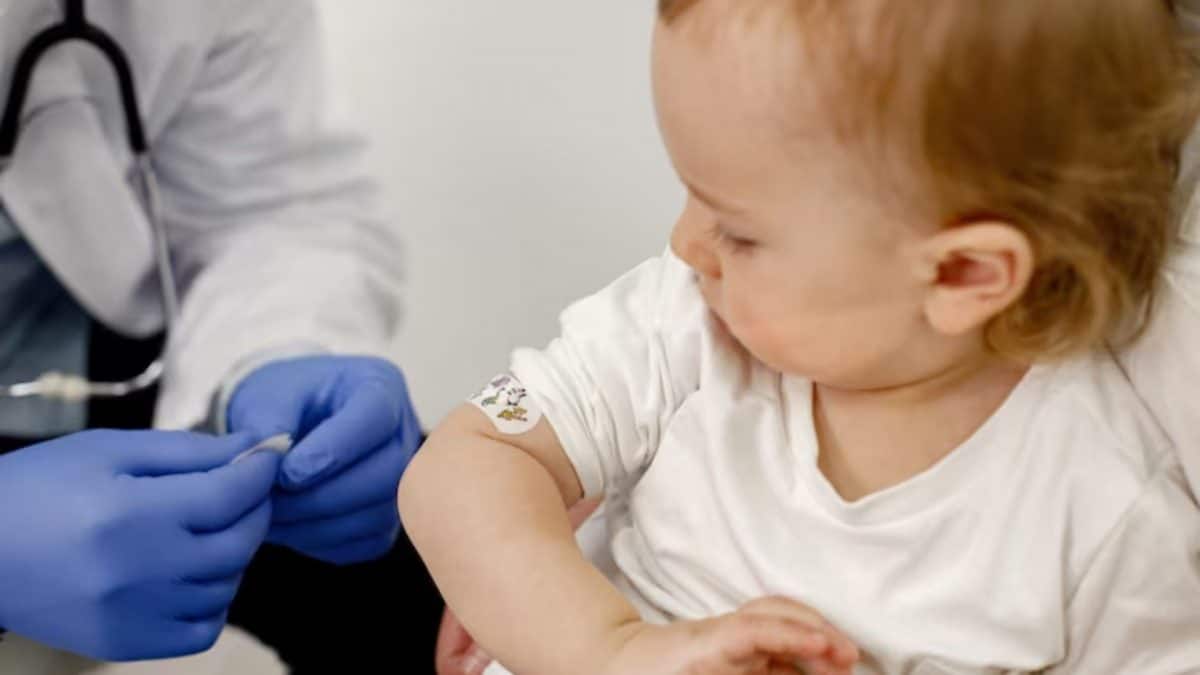
The current panic over state funding for childhood immunizations is a classic case of looking at the thermometer and blaming the weather. Journalists and policymakers are currently wringing their hands over the CDC’s shifting "Vaccines for Children" (VFC) guidelines, terrified that if a state doesn't step in to pick up the tab, the entire public health infrastructure will crumble.
They are wrong.
The "lazy consensus" suggests that making vaccines "free" is the only way to ensure access. In reality, the obsession with a zero-dollar price tag at the point of service has created a stagnant, fragile delivery system that prioritize administrative box-checking over actual health outcomes. We have spent decades building a Rube Goldberg machine of federal subsidies and state mandates, only to find that when one gear shifts at the CDC, the whole contraption grinds to a halt.
The Myth of the Price Barrier
The standard argument goes like this: if parents have to pay a dime, they won't vaccinate. This ignores the reality of modern healthcare economics. For the vast majority of insured Americans, the Affordable Care Act already mandates $0 copays for ACIP-recommended vaccines. The "funding gap" everyone is screaming about isn't about the cost of the serum; it’s about the bloated administrative overhead of a system that can’t function without a federal nipple to suckle on.
I have seen state health departments burn through millions in "outreach" grants while the actual logistics of their cold-chain storage remain stuck in the 1990s. We aren't fighting a cost problem. We are fighting a convenience and trust problem. By making the conversation entirely about "keeping shots free," we ignore the fact that a "free" vaccine is useless if a working-class parent has to lose half a day's wages to sit in a dingy county clinic because the local pharmacy isn't "enrolled" in the specific state program.
Centralization is a Single Point of Failure
The CDC’s recent moves to tighten VFC eligibility should have been a wake-up call. Instead, it triggered a desperate scramble for state-level band-aids. When you centralize the purchasing and distribution of medicine under a single federal or state entity, you create a massive bottleneck.
Compare this to any other sector of the economy. If a specific brand of toothpaste becomes hard to find at a subsidized government store, people go to a different store. In the vaccine world, we have created a "Universal Purchase" model in many states where the government is the only buyer.
When the government is the only buyer, innovation dies.
- Logistics stagnate: There is no incentive for a state-run warehouse to adopt the real-time tracking tech used by companies like Amazon or UPS.
- Provider burnout: Doctors are forced to act as unpaid inventory managers for the state, navigating Byzantine audit requirements just to keep a vial of MMR in the fridge.
- Market Distortion: Manufacturers focus on winning the giant government contract rather than improving the patient experience or developing more stable, easier-to-transport formulations.
The Hidden Cost of "Free"
Let’s dismantle the "People Also Ask" obsession with "Who pays for vaccines?" The answer is always you. You pay through federal taxes, state taxes, or inflated insurance premiums. There is no such thing as a free lunch, and there is certainly no such thing as a free biologic.
By hiding the cost, we’ve stripped the consumer of any power. Imagine a scenario where, instead of the state buying every dose, we gave that money directly to families in the form of a health-restricted digital wallet.
If a parent could take $100 and spend it at a high-end pediatric boutique, a 24-hour pharmacy, or a mobile van that comes to their workplace, the market would shift overnight to meet them. Instead, we force them to play by the rules of a bureaucracy that treats patients like cattle to be tagged.
The Expertise Gap: What "Public Health Experts" Won't Tell You
I've sat in the rooms where these "access" programs are designed. The focus is never on the user. It is always on "compliance."
We use the term Active Immunity to describe what the vaccine does to the body, but we treat the public with Passive Logistics. We expect people to be passive recipients of a top-down mandate. True authoritativeness in health isn't about how many doses you can buy in bulk; it’s about how many of those doses actually end up in arms without compromising the financial stability of the local pediatric practice.
Currently, many pediatricians actually lose money on every state-supplied vaccine they administer because the "administration fee" paid by Medicaid or the state doesn't cover the cost of the specialized fridge, the data entry into the state registry, and the time spent arguing with parents who read something scary on a message board.
The Contrarian Solution: Decentralize or Die
If states really want to "ensure access," they should stop trying to be wholesalers. They should get out of the warehouse business entirely.
- Dismantle the Universal Purchase Model: Allow private markets to handle the logistics. Let the giants of global shipping—the people who can move a package from Shanghai to a New York doorstep in 48 hours—handle the cold chain.
- Subsidize the Provider, Not the Product: Instead of the state buying the vaccine, let the doctor buy it. Then, have the state provide a "vulnerability kicker" payment to the doctor for every uninsured or underinsured patient they treat. This turns a liability into an asset for the clinic.
- Kill the Paperwork: The "administrative burden" is the single greatest barrier to vaccination. If we spent half the money we spend on "vaccine hesitancy" billboards on automating the reporting systems, the "access" problem would evaporate.
The Brutal Truth About Equity
We hear the word "equity" thrown around in every press release from state health departments. But "free" is not the same as "equitable."
A "free" vaccine located three bus transfers away in a clinic that closes at 4:00 PM is a slap in the face to a single mother working two jobs. That isn't access; it’s a performance. If we actually cared about equity, we would stop obsessing over the CDC's budget and start obsessing over the Total Cost of Access.
The Total Cost of Access includes:
- Childcare costs for other siblings during the appointment.
- Transportation expenses.
- Opportunity cost of missed work.
- The "Trust Tax": The psychological cost of dealing with a system that feels cold, clinical, and mandatory.
The competitor's article wants you to think the "crisis" is a lack of government funding. The real crisis is a lack of imagination. We are clinging to a 1950s distribution model in a 2026 world.
Stop Funding the Pipeline, Start Funding the Person
We are currently witnessing the slow-motion collapse of the public health consensus. People are skeptical of institutions, and rightly so. When the institution’s only answer to a shifting landscape is "give us more tax money so we can keep doing exactly what we’ve been doing," the skepticism hardens.
The "controversial" reality is that a tiered, market-driven system with a robust, direct-to-consumer safety net would outperform our current bureaucratic mess in every metric—coverage, speed, and cost-effectiveness.
But that would require state officials to give up control. It would require "public health advocates" to admit that the private sector is better at logistics than they are. And it would require a level of honesty about the "free" myth that most people simply aren't ready for.
You don't fix a broken system by pouring more concrete into the foundation. You fix it by tearing it down and building something that actually serves the people it claims to protect.
Stop asking how we can keep the shots free. Start asking why the system is so inefficient that "free" is the only thing it has left to offer.
Stop defending the status quo and start demanding a system that values a parent's time as much as it values a bureaucrat's spreadsheet.
Would you like me to analyze the specific budgetary breakdowns of the top five states currently fighting these CDC changes to show you exactly where the "administrative waste" is hidden?