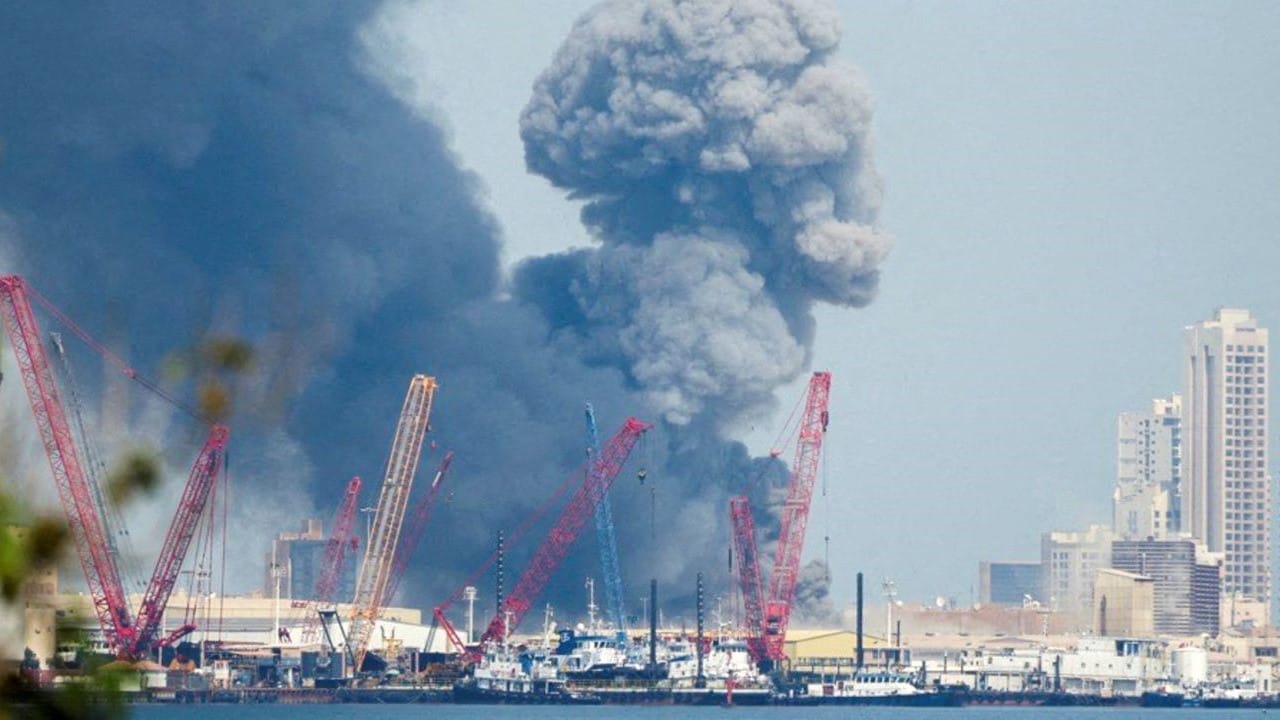
The initiation of direct, high-intensity kinetic operations against the Iranian state by the United States and Israel marks a definitive shift in the Middle Eastern security architecture. By targeting command-and-control infrastructure and the leadership cadre itself, this campaign signals the termination of the "gray zone" era—a period defined by proxy friction and constrained retaliatory cycles. Understanding the global reaction requires mapping the divergence between stated diplomatic norms and the underlying strategic realities driving this escalation.
The Strategic Triad of International Response
The international community's response functions as a reaction to three distinct, competing variables: the imperative of regional stability, the pursuit of non-proliferation, and the preservation of sovereign immunity.
The Alignment of Core Security Interests: Nations such as Australia and Canada have prioritized the containment of Iran’s nuclear ambitions and the disruption of state-sponsored militancy. Their alignment with the U.S.-Israeli objective functions as a high-stakes calculation: the short-term chaos of an active conflict is weighed against the long-term systemic risk of a nuclear-armed Iranian state. For these actors, the "cost function" of a wider war is lower than the potential cost of Iranian nuclear breakout.
The Diplomatic Defensive: The response from France, Germany, and the United Kingdom reflects a dual-track strategy. While these nations maintain public condemnation of Iranian aggressive actions and share concerns regarding nuclear non-proliferation, their emphasis on a "negotiated solution" serves as a structural hedge. By positioning themselves as mediators, they mitigate the risk of being viewed as active participants in a regime-change operation, thereby maintaining diplomatic optionality should the conflict reach a stalemate.
The Revisionist Counter-Position: Russia and China have framed the operation as a violation of sovereignty. This stance is less about the specifics of the Iran conflict and more about defending the principle of non-interference. For these powers, the U.S.-led operation represents a challenge to the existing international order, as it prioritizes unilateral security mandates over U.N. Security Council authorization.
Analyzing the Escalation Mechanism
The primary friction point identified by observers is the breakdown of the "restraint-for-stability" bargain. Previously, the U.S. and Israel maintained operational limits to avoid full-scale war, banking on the assumption that Iran would choose self-preservation over total escalation. The current reality reveals that this assumption has been rendered obsolete.
The Iranian retaliation—striking U.S. and allied assets across the Gulf—transforms the conflict from a targeted operation into an asymmetric regional confrontation. The tactical logic here is clear: Iran aims to increase the operational costs for the U.S. and its regional partners to a level that forces a recalibration of the Western strategy.
Sovereignty and the New Rules of Engagement
The silence of several Middle Eastern states regarding the U.S.-Israeli strikes provides a window into a hidden reality: a quiet, tacit acceptance by regional actors who view the dismantling of Iranian influence as a primary security objective. While these nations publicly advocate for de-escalation to preserve their own diplomatic cover, their restraint reveals a calculated indifference to the survival of the current Iranian regime.
The structural danger lies in the unpredictable nature of the power vacuum. If the leadership decapitation strikes succeed in neutralizing the central command, the resulting decentralization of the Iranian military apparatus—specifically the IRGC—could lead to a fractured, volatile environment. In this scenario, the risk is not just a high-intensity war between state actors, but the proliferation of "lost" capabilities to non-state actors who are not constrained by the logic of state-level negotiation.
Strategic Outlook
The path forward hinges on the attrition of Iran’s remaining offensive capabilities and the durability of the current U.S.-led coalition. The objective of the campaign has moved beyond mere deterrence; it is now an attempt to impose a new reality.
For the U.S. and its partners, the immediate requirement is to sustain the intelligence advantage that allowed for the initial success of these strikes. The critical vulnerability is not the kinetic battlefield, but the capacity of the coalition to manage the economic fallout of prolonged maritime disruption in the Strait of Hormuz. Any strategic pivot will likely require a move from aerial interdiction to sustained maritime security operations to ensure global energy flows remain undisturbed while the regime’s structural integrity is further pressured.
The next move is a coordinated pressure campaign to formalize the new security alignment in the Gulf before Iranian retaliatory momentum can reorganize into a coherent defensive front.