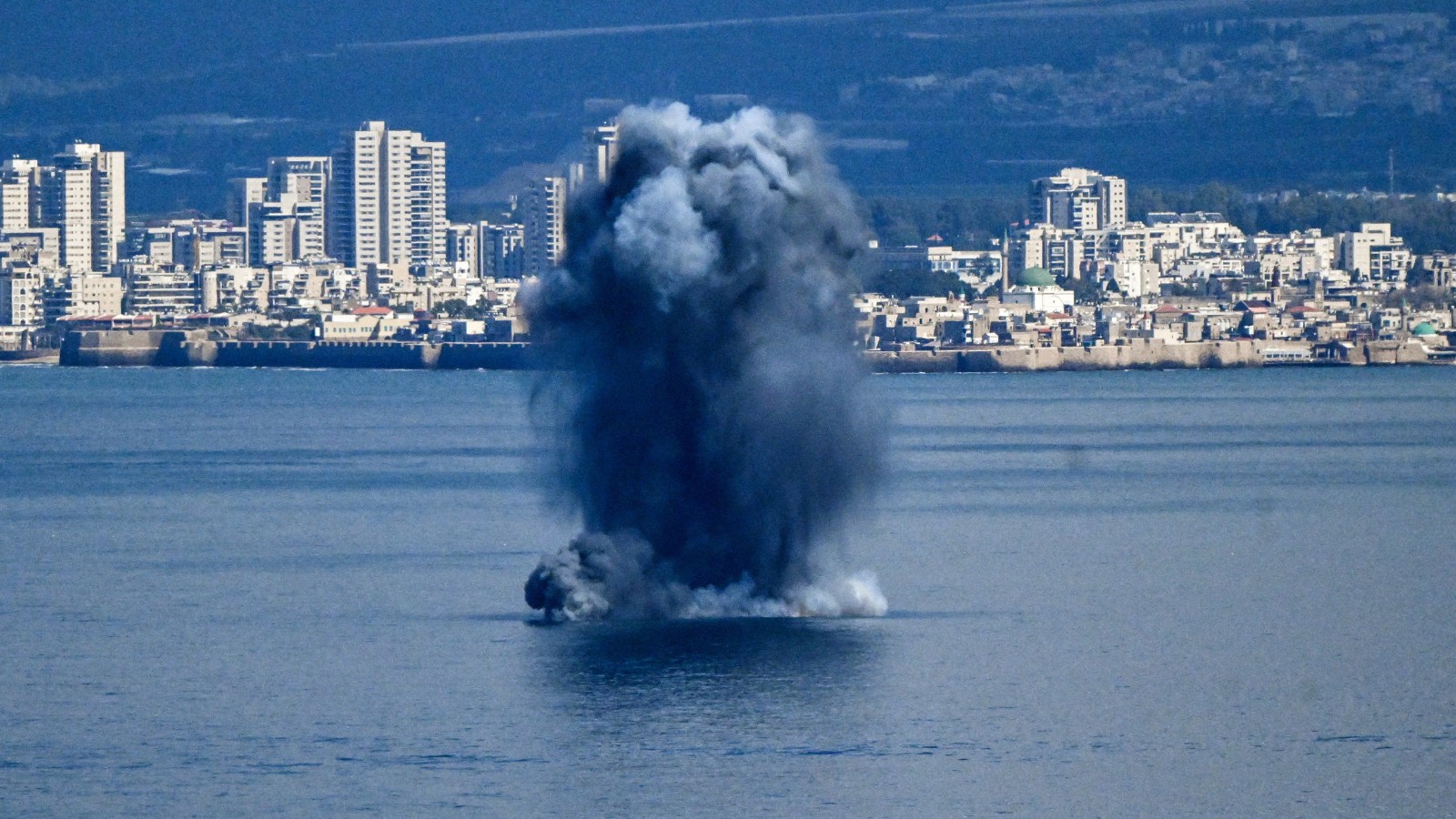
The recent coordinated military strikes by Israel and the United States against Iranian targets represent a fundamental shift from "shadow warfare" to "explicit kinetic signaling." This transition breaks a decades-old status quo where conflict was managed through proxies and deniable sabotage. To understand the global outcry for de-escalation, one must analyze the strategic logic of the strike, the failure of previous containment models, and the specific structural risks now facing the global energy and security architectures.
The Triad of Strategic Objectives
Military actions of this scale are never purely punitive; they are calculated moves within a broader game theory framework. The joint operation aimed to achieve three distinct outcomes, which can be categorized as the Deterrence Triad.
- Degradation of Force Projection: The primary tactical goal was the neutralization of specific Iranian capabilities—likely related to drone manufacturing, ballistic missile storage, or command-and-control infrastructure. By removing these assets, the coalition increases the "marginal cost of aggression" for Tehran.
- Credibility Restoration: Following months of regional instability and proxy attacks on maritime trade, the strike serves as a "commitment signal." It demonstrates that the "red lines" established by Washington and Jerusalem are not merely rhetorical but are backed by a ready-to-use military apparatus.
- Intelligence Dominance Display: Executing a precision strike deep within sovereign territory suggests a high level of penetration within Iranian internal security. The psychological impact on the adversary’s leadership often outweighs the physical damage to hardware.
The Mechanism of Escalation Dominance
The concept of "Escalation Dominance" is central to this friction. It is the ability to increase the stakes of a conflict in a way that the opponent cannot match, thereby forcing them to de-escalate or face unacceptable losses.
Israel and the US are currently betting that Iran lacks the conventional capacity to respond at the same "rung" of the escalation ladder. However, this logic assumes a rational-actor model that may not account for internal political pressures within the Islamic Revolutionary Guard Corps (IRGC). If the IRGC perceives that a non-response signals terminal weakness, they may be forced into a "irrational" counter-strike to ensure domestic survival.
The Asymmetric Response Loop
Iran’s historical doctrine does not favor direct conventional parity. Instead, they utilize an asymmetric loop:
- Maritime Chokepoints: Leveraging the Strait of Hormuz to spike global insurance premiums for tankers.
- Proxy Activation: Coordinating multi-front pressure via Hezbollah in Lebanon, the Houthis in Yemen, and militias in Iraq.
- Cyber Infrastructure Attacks: Targeting soft civilian infrastructure in the West or Israel to create domestic political pressure.
The Economic Cost Function of Regional Instability
World leaders calling for de-escalation are not merely motivated by humanitarian concerns; they are managing a complex economic cost function. A full-scale kinetic conflict between Israel and Iran would trigger a global "Supply Chain Shockwave."
Brent Crude Volatility
The energy market operates on a "fear premium." Even without a physical disruption in oil flow, the perceived risk of a closed Strait of Hormuz adds $10 to $20 per barrel to Brent Crude prices. For G7 economies struggling with lingering inflationary pressures, a sustained energy spike represents a direct threat to GDP growth and political stability.
The Insurance and Freight Variable
Shipping companies have already begun rerouting vessels around the Cape of Good Hope to avoid the Red Sea. A direct Iran-Israel conflict expands the "High Risk Area" to the entire Persian Gulf. This increases:
- Fuel Consumption: Adding 10-14 days to transit times.
- War Risk Premiums: These can jump from 0.01% to over 1% of a vessel's value in a matter of hours.
- Container Scarcity: As ships spend more time at sea, the global "turnaround" rate of containers drops, leading to shortages in unrelated markets like consumer electronics and automotive parts.
Structural Failures of the Previous Diplomacy Model
The current crisis exposes the exhaustion of the "Integrated Containment" strategy used over the last decade. This model relied on a mix of economic sanctions and the Joint Comprehensive Plan of Action (JCPOA) framework. The breakdown occurred because the incentives were misaligned.
The "Sanction Saturation" point has been reached. When an economy is already under maximum pressure, the threat of additional sanctions loses its deterrent power. Iran has developed a "Resistance Economy" characterized by "gray market" oil sales to East Asian refineries and deepened trade ties with the BRICS+ bloc. This economic insulation allows Tehran to absorb hits that would have been catastrophic ten years ago.
The Role of Global Power Brokers
The calls for restraint from Beijing and Moscow are not monolithic. They represent a "Bipolar Friction" in regional management.
- China's Energy Security: As the largest importer of Iranian oil, China views de-escalation as a necessity for its own industrial output. However, it also benefits from the US being "bogged down" in a Middle Eastern quagmire, which diverts American naval assets away from the Indo-Pacific.
- Russia's Strategic Diversion: Moscow benefits from a higher oil price and the redirection of Western munitions from the European theater to the Levant. Their calls for peace are structurally performative, intended to position Russia as a "rational mediator" in the Global South.
Risks of Miscalculation in Automated Defense Systems
A significant, often overlooked variable is the role of automated and semi-autonomous defense systems. As both sides deploy advanced AI-driven air defense (such as the Iron Dome and its successors) and autonomous loitering munitions, the "decision window" for human intervention shrinks.
If an autonomous system misinterprets a test flight or a non-combatant drone as an incoming ballistic threat and triggers a massive kinetic response, the resulting "Accidental Escalation" could bypass traditional diplomatic backchannels. The speed of modern warfare has outpaced the speed of traditional de-escalation diplomacy.
The Proliferation of Multi-Domain Conflict
The conflict is no longer confined to the physical geography of the Middle East. It has evolved into a "Multi-Domain" struggle.
- The Information Domain: State-sponsored "influence operations" on social media platforms are designed to polarize Western domestic audiences, turning foreign policy into a wedge issue for upcoming elections.
- The Space Domain: Both Israel and Iran have satellite capabilities. The targeting of reconnaissance or communication satellites would represent a "blindness strike" that could precede a much larger ground or air campaign.
- The Subsea Domain: The vulnerability of undersea internet cables in the Mediterranean and the Persian Gulf remains a critical "black swan" risk. Cutting these cables would disrupt global financial markets more effectively than any missile strike.
Operationalizing De-escalation
For de-escalation to move from a "diplomatic wish" to a "functional reality," the international community must move beyond statements and into "Structural Guardrails." This involves:
- Hotline Re-establishment: Direct military-to-military communication lines between the coalition and Tehran to prevent accidental triggers.
- Sanction Flexibility: Offering "surgical relief" on specific humanitarian or non-dual-use goods in exchange for measurable "freeze" periods in proxy activity.
- The "Third Party Shield": Utilizing regional actors like Oman or Qatar as verified neutral zones for technical-level negotiations on maritime safety.
The current situation is a "High-Entropy State." The system naturally tends toward chaos unless constant energy—in the form of active, high-stakes diplomacy—is applied to keep it in a state of controlled tension.
The strategic play for global observers is to monitor the "Exchange Ratio" of the next 48 hours. If Iran responds with a proportional, "face-saving" strike on an empty or low-value target, the cycle may reset to a low-boil status. If, however, the response targets high-value civilian or economic hubs, the region enters a "Non-Linear Escalation" phase where traditional diplomatic tools will become obsolete. Global entities should immediately initiate "Geopolitical Stress Tests" on their supply chains, assuming a 20% increase in energy costs and a 30% delay in East-West maritime logistics for the next fiscal quarter.