Tehran has delivered an ultimatum to the International Atomic Energy Agency. Routine nuclear monitoring cannot continue while Iranian atomic facilities remain under active military threat. The warning effectively suspends the international community's real-time visibility into one of the world's most sensitive enrichment programs, turning technical verification into a high-stakes geopolitical hostage.
For years, the public debate around Iran’s nuclear file has fixated on enrichment percentages and stockpile weights. That focus misses the real story. When inspectors lose access, the numbers stop mattering because nobody outside Tehran can verify them. A centrifuge cascade spinning at 60 percent purity is a known variable when cameras are rolling and seals are intact; without those tools, every underground hall becomes a black box.
The Anatomy of a Verification Blackout
Nuclear safeguards are not built on trust. They rely on a dense, physical architecture of containment and surveillance designed by the International Atomic Energy Agency (IAEA) to detect the diversion of fissile material before a weapon can be assembled. When Iran conditions this access on security guarantees, it is dismantling a system engineered specifically to prevent miscalculation during a crisis.
The mechanics of this oversight are mundane yet irreplaceable. Inspectors rely on tamper-indicating metal seals applied to cylinders of uranium hexafluoride, automated flow meters attached to enrichment cascades, and hardened digital cameras transmitting encrypted data back to Vienna. Under standard Comprehensive Safeguards Agreements, a state must allow inspectors to verify that declared nuclear material stays within peaceful channels.
When cameras go dark or memory cards are withheld, a phenomenon known in nonproliferation circles as continuity of knowledge breaks down. Rebuilding that continuity is vastly harder than maintaining it. If an inspector loses sight of a centrifuge hall for three weeks, they cannot simply walk back in on day twenty-two and take Tehran's word on how much gas was fed through the machines in the interim. Reconstructing historical production requires invasive environmental swiping, isotopic forensics, and audit trails that can take months to process—assuming full cooperation is ever restored.
Why Military Threats Trigger Safeguards Paralysis
To understand why Tehran is pulling the plug on monitoring now, you have to look at the intersection of physical vulnerability and intelligence warfare. Over the past several years, Iranian nuclear sites—including facilities at Natanz and Karaj—have suffered sabotage, cyberattacks, and overt military strikes. From the perspective of Iran’s Supreme National Security Council, every piece of granular data collected by international monitors represents a potential targeting package for foreign intelligence services.
Tehran has repeatedly accused the IAEA of failing to condemn strikes on safeguarded facilities while simultaneously demanding exhaustive transparency from the target of those attacks. In Iranian strategic doctrine, allowing foreign inspectors to map the exact layout, power redundancies, and material flows of hardened underground sites during an active conflict is tantamount to aiding the adversary.
There is also a cold diplomatic calculus at work. Iran possesses very few non-military levers capable of forcing Western capitals and regional rivals to reconsider military escalation. Shutting off monitoring is an asymmetric countermeasure. It imposes an immediate intelligence cost on Washington, Brussels, and Jerusalem without requiring Iran to fire a single ballistic missile or immediately announce a sprint toward a nuclear device. By threatening to blind the watchdog, Tehran signals that military pressure will not buy security; it will only purchase blindness.
The Technical Blind Spots That Worry Vienna
The immediate danger of a monitoring freeze is not necessarily an overnight dash to a bomb. Building a deliverable nuclear weapon requires more than fissile material; it demands weaponization, miniaturization, and delivery integration—steps that carry massive technical and detection risks. The real peril lies in breakout ambiguity.
Consider how a modern enrichment facility operates. Using advanced IR-6 centrifuges, operators can reconfigure cascades to enrich uranium from low reactor-grade levels up to weapons-grade (90 percent) in a matter of days rather than months. When IAEA inspectors are on-site, their presence acts as an early-warning tripwire. Without them, outside intelligence agencies must rely on overhead satellites, signals intercepts, and human sources—methods notoriously poor at measuring the exact isotopic purity of gas flowing inside steel pipes buried beneath mountains.
The Underground Shift
The geography of Iran's program compounds this problem. Over the last decade, Tehran has steadily moved its most sensitive enrichment operations deep underground, most notably at the Fordow Fuel Enrichment Plant and newly excavated tunnels near Natanz. These facilities are hardened against conventional bunker-busting munitions.
Once enrichment moves beneath hundreds of feet of solid rock, remote sensing becomes almost useless for verifying material balances. Satellite imagery can track trucks entering a tunnel portal or monitor electrical substation loads, yet it cannot tell an analyst whether the centrifuges inside are spinning at 5 percent, 60 percent, or 90 percent. That distinction rests entirely on physical verification by IAEA personnel.
Historical Precedents and the North Korea Parallel
We have seen this movie before, and the ending is rarely reassuring. In 1994, and again in 2002 and 2009, North Korea systematically expelled IAEA inspectors, disabled surveillance cameras, and removed seals from its Yongbyon nuclear complex during periods of acute military tension with the United States.
Each time Pyongyang cited external threats to justify blinding the agency, the international community lost another layer of visibility. By the time diplomacy attempted to restart, North Korea had already separated enough plutonium to test its first nuclear device. Once a state crosses the threshold from monitored ambiguity to unmonitored capability, the diplomatic leverage shifts permanently.
A critical difference separates Tehran from Pyongyang, however. North Korea withdrew entirely from the Nuclear Non-Proliferation Treaty (NPT) in 2003, severing its legal obligations. Iran remains a party to the treaty, maintaining that its program is strictly peaceful and that its fatwa against nuclear weapons remains intact. Tehran’s strategy is more calibrated: it seeks to dial down transparency incrementally—suspending voluntary protocols first, then restricting inspector designations, and finally halting routine monitoring under the umbrella of self-defense—while stopping just short of a formal treaty exit that would trigger automatic global sanctions and unified military retaliation.
The Counter-Argument From Western Capitals
Diplomats in Vienna and Washington view Tehran’s security rationale as a convenient pretext rather than a genuine legal defense. Under international nuclear law, a state's obligations under its Comprehensive Safeguards Agreement do not evaporate during periods of heightened tension or even armed conflict.
The IAEA Board of Governors has consistently maintained that safeguards are an unconditional legal commitment, not a discretionary favor granted when the geopolitical weather is calm. From the Western perspective, linking routine verification to regional security guarantees turns the entire nonproliferation regime upside down. If any country facing military pressure can legally evict UN inspectors, the NPT loses its value precisely when the world needs it most—during a crisis where miscalculation could spark a regional war.
Intelligence officials also point out a glaring contradiction in Tehran’s argument. The IAEA’s reporting mechanisms are strictly compartmentalized; inspectors do not hand over facility blueprints to foreign militaries. Furthermore, the physical locations of Natanz, Fordow, and Isfahan are already known to every major intelligence service on earth via commercial satellite imagery. What the IAEA provides is not targeting data, but assurance—proof that Iran is not building a weapon. By removing that assurance, Tehran actively increases the likelihood of the very military strikes it claims to fear, as adversaries are forced to plan against worst-case scenarios rather than verified facts.
The Dangerous Math of Worst-Case Planning
When intelligence agencies lose hard data, they replace it with worst-case assumptions. That is an iron law of national security analysis.
Suppose, as a hypothetical example, an enrichment hall normally monitored twice a week goes dark for forty-five days. Analysts in Washington and Tel Aviv will not assume the centrifuges were idling for maintenance. They will calculate the maximum theoretical output of every installed machine running at peak efficiency over those forty-five days, and brief political leaders on that upper-bound figure.
This dynamic creates a self-fulfilling prophecy of escalation. Military planners facing a black box begin updating strike options based on the assumption that a breakout could already be underway. Tehran, observing heightened military readiness and reconnaissance flights, feels further vindicated in keeping inspectors out and hardening its sites. Both sides lock into an escalatory spiral driven entirely by the absence of a few dozen technicians carrying radiation detectors and seal pliers.
What Actually Happens When the Watchdog Walks Away
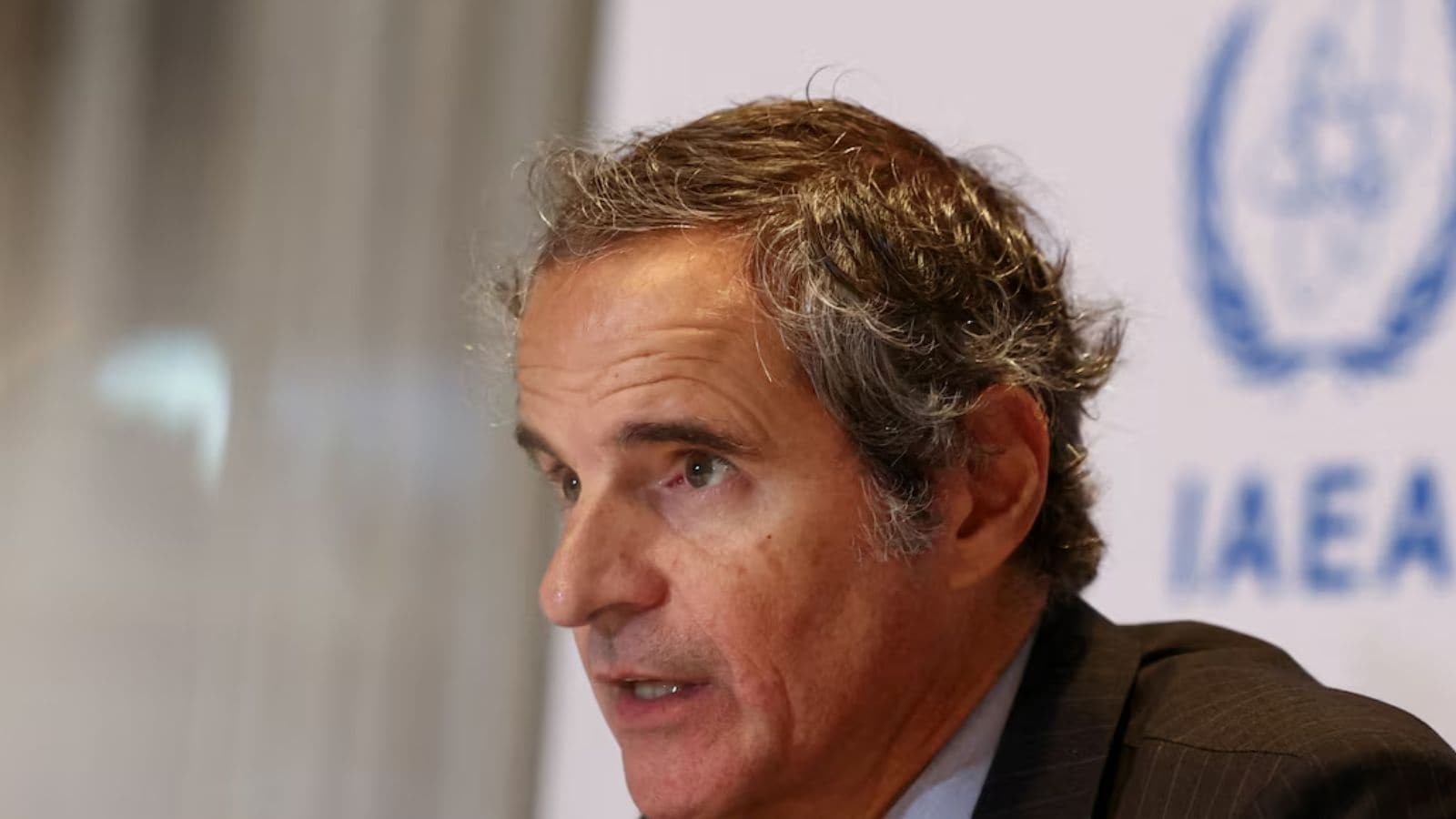
The IAEA cannot force its way through the gates of Natanz. Director General Rafael Grossi and his team possess legal authority, technical expertise, and diplomatic clout, but they have no army. When a host nation declares that safety conditions or security threats preclude monitoring, the agency’s options narrow rapidly to bureaucratic escalation.
First comes a special report to the IAEA Board of Governors detailing the loss of continuity of knowledge. Next follows a formal resolution finding the state in non-compliance with its safeguards obligations. That finding triggers a referral to the United Nations Security Council, unlocking the diplomatic machinery for snapback sanctions and international isolation.
Yet every step of that bureaucratic ladder takes weeks or months, while centrifuges spin in real time. Worse, a Security Council referral often prompts Tehran to retaliate by cutting off whatever residual access remains, completing the blindfold.
The Quiet Erosion of Global Nonproliferation
The stakes extend far beyond the Persian Gulf. Other threshold states are watching how this standoff resolves. If Tehran successfully uses military tension to suspend intrusive verification without suffering decisive consequences, it writes a playbook for every future proliferator.
Countries in East Asia and the Middle East—many of whom are already debating the reliability of American security umbrellas—will take note that safeguards agreements can be paused whenever regional temperatures rise. The credibility of the IAEA depends on the principle that verification is continuous, objective, and insulated from political bargaining.
Right now, that principle is failing the stress test. Until diplomatic channels establish a baseline of physical security around nuclear infrastructure, or until Tehran decides that the risk of an unverified breakout outweighs the vulnerability of transparency, the cameras will remain off and the world will be guessing in the dark.