Every time dark clouds gather over Nairobi, Mombasa, or the Tana River basin, the media machine cranks up the exact same tragedy porn. Journalists dust off interviews with tearful flood survivors, slap the terrifying label of "El Niño" onto the headline, and frame the resulting devastation as an unavoidable act of God.
It is lazy journalism. Worse, it is dangerous political cover. Discover more on a similar issue: this related article.
Blaming El Niño for Kenya’s recurring flood disasters is like blaming gravity when a poorly built bridge collapses. Gravity is a constant physical reality. You engineer around it. When water washes away entire neighborhoods, destroys billions of shillings in agricultural output, and displaces hundreds of thousands of citizens, the weather did not fail Kenya. Kenya’s urban planners, drainage engineers, and land cartels failed Kenya.
The Weather Scapegoat
Let us look at the meteorology without the panic. The El Niño-Southern Oscillation (ENSO) is a well-documented, cyclical warming of sea surface temperatures in the central and eastern equatorial Pacific Ocean. For East Africa, a positive ENSO phase reliably correlates with enhanced rainfall during the October-to-December "short rains" season. Additional analysis by Reuters delves into related views on the subject.
Notice the keyword there: reliably.
The Kenya Meteorological Department (KMD) and the IGAD Climate Prediction and Applications Centre (ICPAC) track these oceanic anomalies months in advance. Satellites monitor sea surface temperatures daily. Atmospheric models map moisture transport across the Indian Ocean Dipole (IOD) long before a single drop hits the Rift Valley.
There is nothing surprising about El Niño. In 1997, heavy rains crippled the country. In 2015, warnings rang out for months. In 2023, the exact same cycle repeated, catching municipalities flat-footed yet again. When a crisis repeats on a predictable multi-year schedule and the response remains "bracing for impact" with sandbags and prayers, you do not have a meteorological emergency. You have an institutional competence crisis.
Follow the Concrete, Not the Clouds
If you want to understand why Nairobi turns into a navigable river after two hours of heavy rain, stop looking at the sky and start looking at land registries.
I have walked through construction sites in Kilimani, Kileleshwa, and along the Nairobi River basin where high-rise apartment complexes sit directly atop historical riparian reserves. These wetlands and riverbanks are nature’s shock absorbers. During intense precipitation, riparian zones absorb excess runoff, slow down water velocity, and allow percolation into the water table.
Over the last three decades, rampant real estate speculation has paved over these sponges.
- Impervious Surfaces: Replacing red soil and savannah grass with asphalt, concrete, and tiled roofs prevents water from soaking into the ground. Instead of infiltrating the soil, 90% of rainfall becomes immediate surface runoff.
- Riparian Encroachment: Developers routinely secure questionable approvals to build walls and foundations right up to the water's edge, choking natural river channels into narrow bottlenecks.
- Stormwater Amnesia: Urban expansion in satellite towns like Syokimau, Kitengela, and Ruaka has exploded without parallel investment in trunk drainage networks. Developers build roads without culverts, or build culverts that dead-end into neighboring plots.
When you seal a watershed in concrete and narrow the river exits, water has nowhere to go except sideways into living rooms and storefronts. Calling that an "El Niño disaster" is a linguistic sleight of hand that lets corrupt permitting officials off the hook.
The Economics of Victimhood vs. The Math of Prevention
Mainstream coverage loves the human-interest angle of survivors recalling their losses. Empathy sells newspapers, and human suffering deserves genuine compassion. Yet focusing exclusively on survivor trauma traps the public in a cycle of fatalism. It conditions citizens to view themselves as helpless victims of climate whims rather than taxpayers owed functional civil engineering.
Look at the financial absurdity of Kenya’s current approach.
Government agencies routinely scramble to mobilize billions of shillings in emergency relief funds after the waters rise. Money goes toward temporary camps, food drops, emergency medical tents, and patching washed-out tarmac. Weeks later, the water recedes, the cameras leave, and the exact same clogged storm drains remain choked with plastic waste and silt.
Compare that reactive bleed to proactive infrastructure investment. According to global benchmarks from the World Bank and the Global Commission on Adaptation, every dollar invested in resilient infrastructure yields roughly four dollars in avoided damages and economic benefits.
Where the Drainage System Actually Breaks
To fix a broken machine, you have to open the hood. Kenya’s flood vulnerability comes down to three specific operational failures:
- Solid Waste Mismanagement: Nairobi generates thousands of tons of garbage daily, a massive fraction of which goes uncollected. Plastic bags, bottles, and organic debris wash directly into open storm drains. Even a newly built culvert fails within one rainy season if it is plugged solid with uncollected municipal trash.
- Disconnected Master Plans: The Nairobi Integrated Urban Development Master Plan (NIUPLAN) laid out clear frameworks for stormwater management. However, enforcement remains fragmented between county governments, the National Environment Management Authority (NEMA), and the Water Resources Authority (WRA). When agencies pass the buck, builders pour concrete.
- Siltation of Dams and Reservoirs: Upstream deforestation in water towers like the Mau Forest and Aberdares accelerates soil erosion. Heavy rains wash millions of tons of topsoil into major hydroelectric and water supply dams along the Tana River. Silt reduces dam storage capacity, forcing operators like KenGen to release massive volumes of water during peak rains to prevent dam failure—which directly inundates downstream communities in Garissa and Tana River counties.
Notice how none of those three points involve Pacific Ocean temperatures. They are management failures.
Dismantling the "Climate Change Excuse"
Whenever local infrastructure fails, officials quickly pivot to global climate change. They argue that extreme weather events are becoming more frequent and intense due to carbon emissions from industrialized nations.
Let us be ruthlessly honest about the science here. Anthropogenic climate change does increase the atmosphere’s moisture-holding capacity—roughly 7% more water vapor per degree Celsius of warming, per the Clausius-Clapeyron relation. Warmer oceans supercharge storm intensity.
However, using global warming as a shield for local negligence is intellectual dishonesty.
The Netherlands sits largely below sea level, facing rising ocean tides and massive river inflows from the Rhine and Meuse. Yet the Dutch do not spend every autumn interviewing flood survivors. After the devastating 1953 North Sea flood, they engineered the Delta Works—a comprehensive system of dams, sluices, locks, dikes, and storm surge barriers designed to withstand 1-in-10,000-year storm events.
Singapore experiences torrential tropical downpours year-round. Rather than blaming El Niño, Singapore built the Marina Barrage, underground detention tanks, and a network of widened canals that double as public parks during dry weather.
Kenya does not need Dutch budgets to clear silt from culverts, enforce existing riparian buffer laws, or collect municipal garbage. Treating climate change as an excuse for clogged drains insults the intelligence of every citizen wading through knee-deep sewage to get to work.
What People Get Wrong About Flood Preparation
If you search online for how Kenyans should prepare for El Niño, you will find the same recycled, patronizing advice: boil your drinking water, avoid walking through moving water, move to higher ground, buy waterproof boots.
That is survival advice for the final ten minutes before a wave hits. It does nothing to solve the structural problem.
Question: Should Kenyans buy flood insurance to protect their businesses and homes?
The Brutal Truth: For most small businesses and homeowners in flood-prone zones, standard insurance will not save you. Insurance companies employ actuaries who read the exact same topographical maps as engineers. Properties built on recognized floodplains or encroaching on riparian reserves are either priced out of coverage entirely or excluded under fine-print clauses regarding "illegal structures" and "lack of maintenance." Relying on an insurance payout when your foundation sits on a wetland is a financial fantasy.
Question: Can early warning SMS alerts prevent flood deaths?
The Brutal Truth: Alerts fail when people have nowhere to go and no economic safety net. Telling an informal settlement resident in Mathare or Mukuru to "evacuate to higher ground" via text message ignores economic reality. If leaving your shack means losing your only physical assets to looting, and the government offers no secure, dignified transit or shelter, people will stay and risk the water. Early warnings without physical evacuation infrastructure are just digital cover for authorities to say, "We told you so."
Question: Does dredging rivers stop flooding?
The Brutal Truth: Dredging alone is a temporary band-aid that often makes downstream flooding worse. Digging out a river channel speeds up water flow in that specific section, shooting a higher volume of water faster at the next bottleneck downstream. Unless you pair channel maintenance with upstream reforestation, permeable urban surfaces, and retention basins, dredging is just moving the disaster five kilometers down the road.
The Uncomfortable Downside of My Own Argument
Demanding ruthless enforcement of urban planning laws and demolition of riparian encroachments carries a steep, painful price tag—and pretending otherwise would be dishonest.
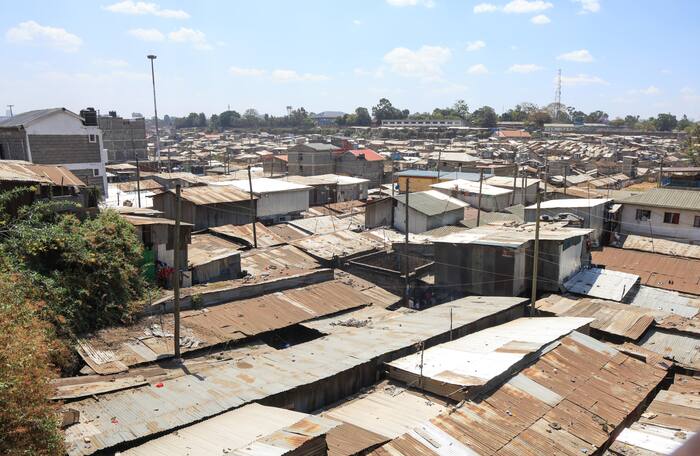
If the Kenyan government actually enforced the 30-meter riparian buffer rule tomorrow with zero exceptions, tens of thousands of people would lose their homes and livelihoods overnight. Bulldozers would not just hit luxury apartments owned by politically connected developers; they would tear through informal settlements housing the working poor who were pushed onto marginal riverbanks because the formal housing market priced them out.
Furthermore, retrofitting a sprawling, already-built metropolis like Nairobi with deep-tunnel stormwater systems costs hundreds of billions of shillings. That money has to come from somewhere—meaning higher taxes, diverted budgets from healthcare or education, or deeper sovereign debt.
There is no painless, overnight engineering fix. Choosing resilience means accepting immediate economic friction and political backlash today to avoid catastrophic collapse tomorrow.
What Actually Needs to Happen Before the Next Downpour
Stop waiting for the Ministry of Interior to issue press releases about emergency blankets. Real flood mitigation requires aggressive, unglamorous municipal execution:
- Weaponize Satellite Mapping for Tax and Demolition: Use high-resolution satellite imagery to map every structure sitting inside natural drainage corridors. Revoke occupancy certificates for commercial buildings blocking waterways and mandate owner-funded demolition or structural retrofitting (such as elevating ground floors into open floodable stilts).
- Decentralize Stormwater Retention: Mandate that every new commercial development and residential estate over a quarter-acre install underground rainwater harvesting and detention tanks. Force properties to hold their own roof runoff on-site for 24 hours after a storm before releasing it into public drains.
- Turn Waste Collection into a Drainage Defense Force: Pay youth groups and private contractors per ton of plastic and silt cleared from primary and secondary storm drains before the rainy season starts, tying final payment to post-storm flow performance.
- Re-engineer Roads as Water Conduits: Stop paving roads flat without cambers or side-drains. Every kilometer of newly tarmacked road must include engineered bioswales—vegetated ditches that filter pollutants and slow down runoff—rather than bare dirt shoulders that wash straight into culverts as mud.
El Niño is just warm water in the Pacific Ocean sending extra moisture toward the East African coast. Rain is a resource that agricultural economies pray for. Turning a predictable season of abundant water into a recurring national trauma is not the fault of the weather. It is a choice made every single day a building permit is stamped without a drainage plan.