Seventy-four.
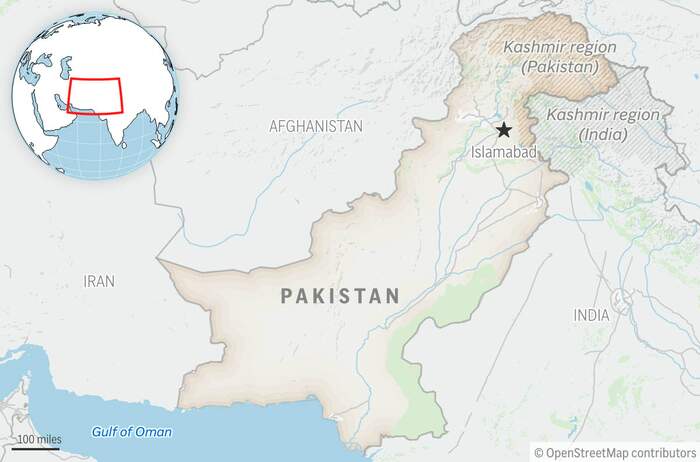
In the sterile vocabulary of a military press release, seventy-four is a triumph, a clean integer printed in black ink on white paper to prove that the state is winning a war in the dark. When Pakistan’s military media wing announces that its forces have killed seventy-four militants in intelligence-based raids across the rugged borderlands of Khyber Pakhtunkhwa and Balochistan, the number lands on morning news desks like a heavy stone dropped into still water. Readers scan the headline over cooling tea, register the scale of the operation, and move on to the sports page or the weather forecast.
Numbers do that to us. They flatten the jagged, terrifying topography of human conflict into something neat enough to fit inside a push notification.
To understand what seventy-four actually means, you have to leave the air-conditioned briefing rooms of Rawalpindi and climb into the limestone folds of the Sulaiman Mountains just before dawn, when the cold clings to your teeth and the wind carries the sharp, resinous scent of burning juniper wood. You have to sit on a woven charpai inside a mud-brick compound where the tea glasses rattle on their saucers every time a helicopter rotor beats the thin air two valleys over.
Consider a hypothetical teacher—let us call him Tariq—living in a small town near the Afghan frontier, a place where the state’s authority has always felt less like a permanent roof and more like a borrowed umbrella. For Tariq, the war is never an abstract debate about counterterrorism strategy or cross-border sanctuary. It is the sudden, inexplicable silence of a classroom when three boys fail to show up because their uncles heard rumors of an impending cordon-and-search operation. It is the way his wife lowers her voice after sunset, as if the thick mud walls of their courtyard might still carry whispers out into the dark orchards where armed men move like shadows between irrigation ditches.
The Geography of Invisible Frontlines
When outsiders try to picture modern warfare, they often imagine two distinct armies facing each other across a scarred field, separated by trenches, razor wire, and clear flags. That picture is entirely wrong for the borderlands of western Pakistan.
Think of this insurgency instead as a persistent, subterranean fungal network beneath an ancient forest. You can walk across the forest floor on a crisp morning and see nothing amiss—just pine needles, quiet streams, and villagers herding goats along narrow shale paths. Yet beneath the soil, miles of microscopic threads are quietly connecting, drawing nutrients from neglected roots, and waiting for the first heavy rain to push toxic mushrooms through the surface. When security forces launch intelligence-based operations, they are not charging across an open field; they are digging blindly into rocky earth in the middle of the night, trying to sever those threads before they choke the life out of an entire district.
The geography itself fights on the side of whoever wishes to hide. Spanning roughly 2,600 kilometers, the porous frontier separating Pakistan and Afghanistan slices through some of the most punishing terrain on earth—sheer granite ridges, labyrinthine caves, and dry riverbeds that turn into roaring torrents within minutes of a mountain storm. For centuries, empires from the British Raj to the Soviet Union tried and failed to draw a hard, impermeable line across these passes. Today, armed groups like the Tehreek-e-Taliban Pakistan and separatist insurgents in Balochistan exploit every fold of that stone.
I still remember the first time I stood at a checkpoint along a mountain pass in the northwest, watching a young soldier no older than twenty-two inspect the axles of a brightly painted Bedford truck. His knuckles were cracked raw from the dry winter wind, and his eyes darted constantly from the driver’s nervous hands up toward the jagged ridgeline looming a thousand feet above us. Up there, any cluster of boulders could conceal a spotter with a cheap pair of binoculars and a long-range rifle. Down here, the soldier had to decide in three seconds whether the man behind the steering wheel was a fruit merchant trying to get his pomegranates to Peshawar before they rotted, or a courier smuggling detonators packed inside crates of bruised apples.
That impossible calculus defines every hour of these raids.
Why Intelligence-Based Operations Replaced Full-Scale Wars
If you look back a decade, Pakistan’s military campaigns looked vastly different. In operations like Zarb-e-Azb in North Waziristan, the state deployed tens of thousands of troops, heavy artillery, and fighter jets to clear entire valleys. Those campaigns succeeded in dismantling fixed militant strongholds, destroying bomb-making factories, and driving armed networks out of major population centers.
Yet victory in asymmetric warfare rarely stays bought.
Following the sweeping political shifts in neighboring Kabul in 2021, militant networks found fresh breathing room, access to abandoned Western weaponry, and renewed ideological momentum. Instead of holding territory openly—which would make them easy targets for airstrikes—insurgents fractured into small, agile cells of five to fifteen fighters. They melted into mountain villages, hijacked local disputes, and struck at night against isolated police posts, polio vaccination teams, and construction crews building roads meant to connect remote valleys to the national economy.
You cannot use a sledgehammer to swat hornets inside a crowded room without bringing down the ceiling.
That reality forced a painful tactical evolution toward intelligence-based operations—the exact kind of surgical, high-risk raids behind the headline of seventy-four dead militants. Rather than displacing hundreds of thousands of civilians with heavy bombardment, small teams of elite commandos, frontier corps scouts, and intelligence operatives rely on intercepted radio chatter, human informants, and thermal drone feeds to pinpoint specific hideouts.
On paper, it sounds clean. In practice, it is terrifyingly intimate.
A raid begins hours before midnight, often with soldiers hiking miles on foot over loose scree in total darkness so the rumble of armored vehicles does not echo off canyon walls and alert sentries. By the time troops surround a compound, exhaustion has already settled deep into their calves and lungs. Nobody knows with certainty what waits behind the heavy wooden gate. Is it a high-value commander sleeping beside a stockpile of Russian-made grenades, or a terrified family whose livestock pen was commandeered at gunpoint two hours earlier by men who threatened to shoot their eldest son if they made a sound?
The Weight Inside the Compound
Here is the part that rarely survives the journey into a three-paragraph wire report: the agonizing ambiguity of the human cost.
When an intense firefight erupts at three in the morning inside a stone compound, bullets do not carry moral compasses. Tracer rounds streak across courtyards like angry red hornets; stun grenades shatter the eardrums of everyone within fifty yards; dust chokes the air until soldiers and insurgents alike are firing at muzzle flashes in near-total blindness. When the smoke finally clears and seventy-four bodies are counted across multiple simultaneous raids, the military’s official statement notes the recovery of assault rifles, rocket-propelled grenades, and communication gear.
What the statement cannot capture is the quiet terror lingering in the neighboring houses at sunrise.
Let us return to Tariq, our hypothetical schoolteacher, waking up to the acrid smell of cordite drifting over his courtyard wall. His eight-year-old daughter asks why the window glass rattled all night, and he has to invent a gentle lie about thunder in the high passes because telling her the truth would steal whatever small fragment of childhood she still possesses. Later that morning, as he walks past the riddled walls of the targeted compound, he feels a complicated, suffocating mix of emotions that outsiders almost never understand.
He is relieved—deeply,viscerally relieved—that the men who extorted shopkeepers and planted roadside bombs near his school will no longer terrorize his town. At the same time, he feels a cold knot of dread in his stomach. Because in tight-knit tribal communities bound by ancient codes of hospitality and blood vengeance, every militant killed in a raid has cousins, brothers, and childhood friends sitting at village funerals. Grief, when left untended in impoverished valleys where young men have few jobs and fewer prospects, becomes the easiest currency for recruiters to spend.
I have spoken with elders from these districts who describe living between two grinding stones. If they cooperate with security forces to identify militant hideouts, they risk waking up to a handwritten warning nailed to their front door—or worse, a quiet ambush on the road back from Friday prayers. If they remain silent out of fear, their valleys remain trapped in a cycle of checkpoints, curfews, and economic stagnation that drives away doctors, engineers, and investment.
The Invisible Stakes Beyond the Mountains
It is tempting for someone reading the news in Lahore, London, or New York to view a firefight in Pakistan’s western borderlands as a distant, localized tragedy. That illusion dissolves the moment you trace the economic and geopolitical arteries running straight through those contested hills.
Consider what is actually buried beneath and built across these unstable regions. Balochistan, where many of these raids occur, holds vast reserves of copper, gold, and natural gas, alongside the deep-water port of Gwadar—a linchpin of regional trade corridors meant to link landlocked Central Asia to global shipping lanes. In Khyber Pakhtunkhwa, massive hydroelectric projects and transit highways depend on basic physical security to keep engineers on site and international lenders from pulling out.
Every time an ambush halts a convoy or a raid shuts down a district for three days, the ripple effects travel thousands of miles. Inflation ticks upward in crowded urban markets when fruit and vegetable trucks are stranded behind military cordons. Foreign investors hesitate before signing contracts, depriving an already strained economy of the foreign currency it desperately needs to import medicine, fuel, and industrial machinery. Even global public health hangs in the balance: the remote valleys along the Afghan border remain the last stubborn strongholds of the wild poliovirus on earth, largely because health workers cannot safely knock on doors when armed factions view every stranger as a spy.
The war in these mountains is not a side story. It is the central fault line determining whether a nation of more than two hundred and forty million people can build a stable future or remains perpetually tethered to crisis management.
What Victories Do Not Solve
I have to be honest about something that troubles anyone who has watched this conflict unfold over twenty years: no army, no matter how brave its soldiers or precise its intelligence, can shoot its way to permanent peace.
Killing seventy-four militants disrupts imminent attacks. It buys precious weeks of quiet for towns that have endured far too many funerals. It proves that the state refuses to surrender sovereignty over its rugged peripheries, and it honors the sacrifice of young soldiers who leave their own families behind in Punjab, Sindh, or Gilgit to patrol freezing ridges for modest pay.
Yet tactical victories are like painkillers given to a patient with a broken bone—they dull the immediate agony so the body can breathe, but they do not set the fracture.
Real, durable healing requires a harder, slower kind of courage. It demands transparent governance in border districts where citizens too often encounter the state only through the barrel of a rifle or the delay of a bureaucratic permit. It requires functional courts that settle land and water disputes within months rather than decades, stripping insurgents of their favorite claim that only their harsh brand of vigilante justice can protect ordinary villagers from local corruption. It requires cross-border diplomacy firm enough to ensure that neighboring soil is never used as a staging ground for bloodshed, paired with schools and vocational clinics that give a sixteen-year-old boy in Waziristan or Turbat a reason to pick up a wrench or a laptop instead of a Kalashnikov.
Without those foundations, the mountain passes will keep swallowing young men, and the morning newspapers will keep printing new numbers.
Back in our hypothetical valley, afternoon light eventually slants golden and low across the terraced fields, softening the harsh gray of the limestone cliffs. Tariq unlocks the heavy iron gate of his small schoolhouse, sweeps away a layer of fine dust that settled over the wooden desks during the night’s commotion, and places a fresh piece of white chalk on the ledge of the blackboard—waiting for the sound of small footsteps coming up the path.