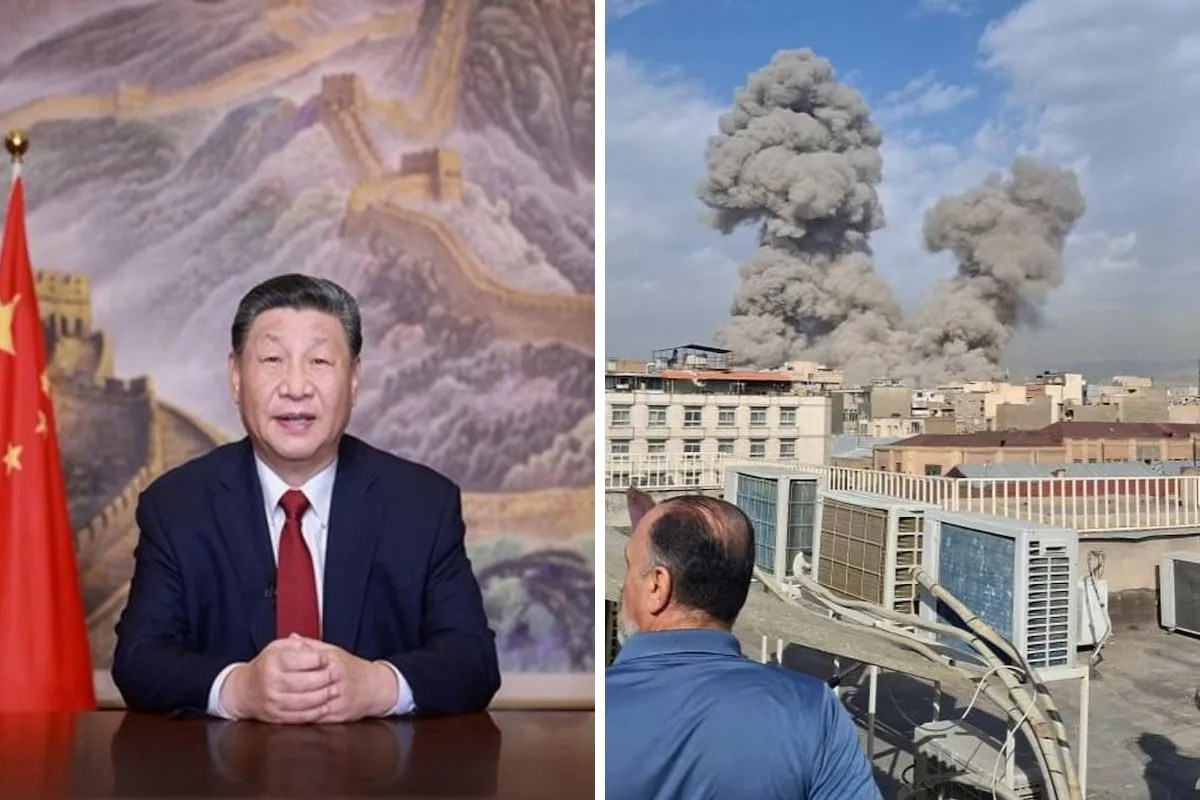
The map of the Middle East just got shredded. On February 28, 2026, the world woke up to a reality many thought was a relic of the early 2000s: a full-scale, coordinated military assault by the United States and Israel against the Islamic Republic of Iran. This wasn't a "surgical strike" or a "limited engagement." It's a decapitation strategy designed to end 47 years of clerical rule in a single weekend.
If you're trying to figure out if this is just another headline or the start of a global shift, look at the numbers. More than 1,200 bombs were dropped in the first 24 hours. The Israeli Air Force flew its largest combat sortie in history—200 jets over central and western Iran. President Trump didn't mince words, calling for the Iranian people to "take over" their government. For the first time since 1979, the "regime change" card isn't being played under the table; it's the only card on the table.
The end of an era in Tehran
The most significant development isn't the destroyed missile silos or the charred remains of the Iranian navy. It's the death of Ayatollah Ali Khamenei. Iranian state media and the White House have confirmed that the 86-year-old Supreme Leader was killed when missiles struck his compound in the Pasteur district of Tehran.
Think about the vacuum that creates. Khamenei ruled with an iron fist since 1989. He had no designated successor. By targeting the "leadership window"—a moment when top commanders and clerics were gathered—the US and Israel didn't just hit a building; they wiped out the decision-making brain of the state.
Reports indicate that along with Khamenei, the commander of the Revolutionary Guard (IRGC), Mohammad Pakpour, and Defense Minister Aziz Nasirzadeh were also killed. This is a total collapse of the command structure. When Trump tells Iranians to "seize control of your destiny," he’s betting on the fact that the IRGC won't have anyone left to take orders from.
Operation Genesis and Epic Fury by the numbers
Military planners in Washington and Tel Aviv aren't playing around. The operation—codenamed Operation Genesis by Israel and Operation Epic Fury by the US—used a terrifying mix of high-tech and "low-cost" weaponry.
- 500 military targets hit in the opening waves.
- B-2 stealth bombers were used to crack open fortified underground ballistic missile facilities.
- Task Force Scorpion Strike deployed one-way attack drones for the first time in a major conflict.
- Tomahawk missiles and HIMARS launchers saturated air defenses, making the sky safe for those 200 Israeli jets.
The goal isn't just to stop a nuclear program. It’s to "raze the missile industry to the ground," as Trump put it on Truth Social. They’re dismantling the physical ability of Iran to project power in the region.
The regional blowback has already started
Don't think for a second that this is contained within Iran's borders. The retaliatory strikes have been swift and messy. Iran’s remaining forces launched hundreds of missiles and drones across the Gulf.
We’re seeing reports of:
- Civilian casualties in Israel: A missile strike in Beit Shemesh killed nine people.
- Chaos in Dubai: Fires broke out at the Burj Al Arab and Fairmont hotels after Iranian strikes.
- US base attacks: Bases in Bahrain, Qatar, and Kuwait have been targeted, though US officials claim minimal damage so far.
- Economic paralysis: Oil markets are bracing for a 10% price spike, and major airlines have grounded flights across the region.
It’s a grim reality. Australia has already issued a "Do Not Travel" warning for the entire region. If you're anywhere near the Persian Gulf right now, the advice is simple: shelter in place.
Why this isn't like 2003
Critics are already pointing to the Iraq War as a warning. But there’s a massive difference here. In 2003, the US spent months building a "coalition of the willing" and debating at the UN. This time, Trump and Netanyahu bypassed the red tape entirely. They saw a "window of opportunity" based on intelligence that Khamenei would be in one spot, and they took it.
There's also the internal factor. Iran has been simmering with dissent for years. The "Woman, Life, Freedom" protests of 2022 and the economic riots of 2024 left the regime brittle. Trump is counting on the Iranian public to do the "nation-building" themselves. It’s a high-stakes gamble. If the people don't rise up, or if the IRGC remnants hold onto power, we’re looking at a protracted, bloody insurgency that could last years.
What happens when the dust settles
The immediate focus is the "three-phase plan" the IDF outlined to achieve total air superiority. Once the air defenses are gone, the focus shifts to the internal security apparatus. They’re hitting the IRGC Ground Forces headquarters in Tehran—the guys responsible for keeping the population in check.
If you’re watching this from home, keep an eye on the Strait of Hormuz. There are signs Iran has started targeting maritime traffic. If the world’s oil chokepoint closes, the economic fallout will hit your gas station faster than you can imagine.
This isn't a drill, and it isn't a bluff. The US and Israel have committed to a path that has no "undo" button. Whether this leads to a "New Middle East" or a decade of regional chaos depends entirely on what happens in the streets of Tehran over the next 72 hours.
For now, stay informed on local travel advisories and monitor global energy markets. The situation is moving faster than the news cycle can keep up with.