The sea around the Matanzas shoreline has a specific way of sounding when the tide hits the limestone shelves. It is a rhythmic, low-frequency thrum that masks almost everything else. If you are standing on the salt-crusted rocks at three in the morning, the world feels empty. You might believe, for a moment, that the only things moving in the Florida Straits are the currents and the shadows of reef sharks.
You would be wrong.
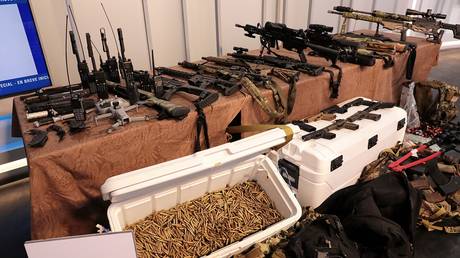
In late 2023, that silence was punctured by the mechanical whine of an outboard motor and the heavy splash of waterproof crates hitting the shallows. When Cuban authorities finally opened those crates, they didn't just find steel and gunpowder. They found a snapshot of a modern, shadow-state insurgency. The haul was a "trove" in the most literal sense: 30 long guns, including high-caliber sniper rifles, thousands of rounds of ammunition, and enough tactical gear to outfit a small, professional hit squad.
But to look at the photos of the rifles laid out on white tablecloths is to miss the ghost in the machine. This wasn't a desperate, ragtag collection of Cold War leftovers. This was an expensive, calculated insertion of force.
The Anatomy of an Infiltration
Picture a man named "Luis." He is a hypothetical composite of the individuals the Cuban Ministry of the Interior (MININT) claims were involved in this plot—men reportedly living in South Florida, fueled by a mixture of ancestral trauma and modern radicalization. Luis doesn't see himself as a criminal. He sees himself as a catalyst.
To get thirty rifles across one of the most heavily patrolled stretches of water in the Western Hemisphere, you need more than a fast boat. You need a deep understanding of the gaps in radar coverage. You need the kind of logistics that are usually reserved for high-end narcotics trafficking.
The weapons seized weren't chosen for a long-term guerrilla campaign in the Sierra Maestra. They were chosen for precision. We are talking about modern optics, NVG-compatible sights, and semi-automatic platforms designed for urban environments. The "armed infiltration" wasn't meant to hold territory. It was meant to puncture the sense of security that the Cuban state projects to its people and the world.
The stakes are invisible until the first shot is fired.
The Logistics of a Ghost Ship
Moving $100,000 worth of hardware from a suburban garage in Miami to a desolate beach in Matanzas requires a terrifying level of mundane planning.
- Procurement: In a state where you can buy an AR-15 as easily as a microwave, the initial purchase is the easy part. The difficulty lies in the "straw" buys—using clean backgrounds to mask the ultimate destination of the metal.
- Waterproofing: Saltwater is the enemy of the firing pin. Every rifle found was vacuum-sealed or encased in specialized polymer shells.
- The Transit: Small vessels, often "Go-Fast" boats or modified pleasure craft, wait for specific weather windows. They don't run with lights. They use GPS waypoints to drop "dead drops" in the water for locals to pick up, or they risk the landing themselves.
When the Cuban government displayed these items, they weren't just showing off captured loot. They were sending a message to Washington. The presence of these weapons on Cuban soil is a physical manifestation of a diplomatic nightmare. Cuba claims these cells are organized and funded by groups in the United States. The U.S. government, meanwhile, maintains its stance on counter-terrorism while navigating the complex domestic politics of the Florida diaspora.
The Technology of the Silent Threat
Consider the technical reality of a sniper rifle equipped with a modern suppressor.
In the hands of a trained operator, a .308 caliber round can travel nearly a mile with lethal accuracy. On an island where the internal security forces rely heavily on presence and intimidation, a single undetected shooter represents a catastrophic shift in the power dynamic.
The gear seized included advanced communication devices—encrypted radios and satellite-linked hardware. This tells us that the "infiltrators" weren't planning on working alone. They were the vanguard of a network. They were setting up a "mesh," a way to communicate outside the state-controlled ETECSA telecommunications grid.
This is where the news reports get it wrong. They focus on the bullets. They should be focusing on the batteries and the antennas. A gun can kill a person, but an encrypted network can kill a regime's ability to control the narrative.
The Weight of the Metal
There is a psychological toll to this kind of "trove." For the average citizen in Havana or Matanzas, the sight of these weapons on the nightly news is a jarring reminder of how fragile the peace is.
The Cuban economy is currently gasping for air. Food shortages, power outages, and the slow grind of inflation have turned the island into a tinderbox. Into this environment, you introduce thirty professional-grade rifles. It is like throwing a lit match into a room filled with gas fumes.
The "armed infiltration" is rarely about winning a war. It is about creating a "spectacle of vulnerability." If a small group can land a crate of rifles on a beach and move them inland, what else can they do? It forces the state to divert its already thin resources toward internal crackdowns, which in turn breeds more resentment among the populace. It is a feedback loop of instability.
The guns are the hardware. The resentment is the software.
The Missing Piece of the Puzzle
What we don't see in the photos is the human cost of the "why."
Every weapon seized represents a person who decided that the only way forward was through violence. Whether you view them as "terrorists" (the Cuban state’s label) or "freedom fighters" (the label used by their supporters), the reality is the same: the political process has failed so completely that people are willing to die—or spend life in a Cuban prison—for a crate of steel.
This isn't just about Cuba. This is a story about the export of American gun culture into a geopolitical vacuum. It is about the ease with which private citizens can now wage small-scale wars across international borders using the tools of modern commerce.
The beach in Matanzas is quiet again. The tide still hits the limestone with that same rhythmic thrum. But the silence is different now. It is heavy. It is the silence of a house where someone has hidden a secret under the floorboards.
The weapons are locked in a government vault, but the intent that brought them there is still out on the water, somewhere between the neon lights of Miami and the dark, crumbling seawalls of Havana, waiting for the next weather window.
The metal is cold, but the conflict is white-hot.


