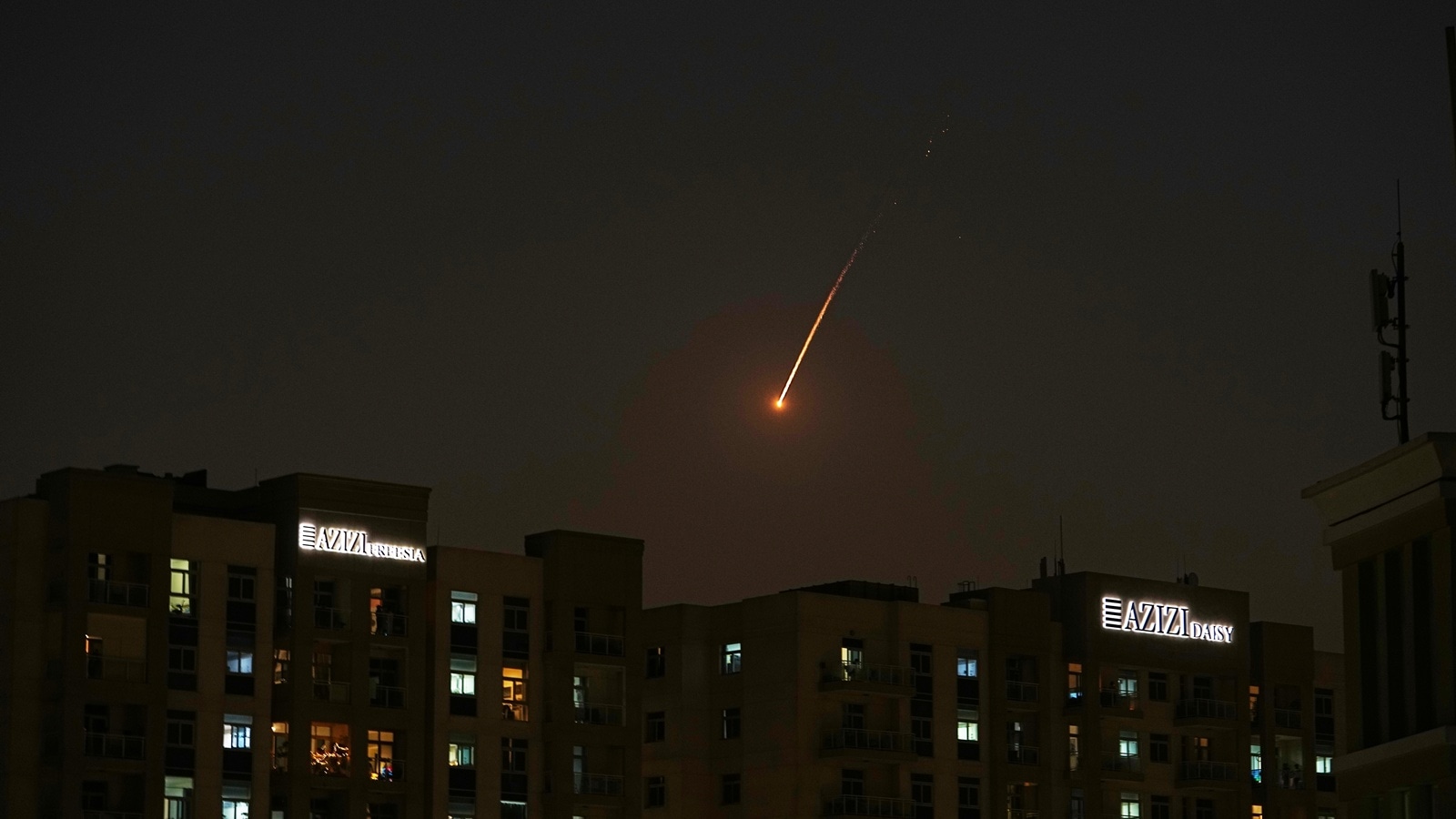
The air in Dubai on a Tuesday evening usually carries a specific scent. It is a mixture of expensive oud, desalinated sea salt, and the faint, metallic hum of a city that never stops building. On this particular night, however, there was something else. Friction. A collective holding of breath that stretched from the marble lobbies of the Marina to the dusty cafeterias of Al Quoz.
News travels in Dubai via WhatsApp pings and frantic refreshes of social media feeds. The headlines were jagged: drones in the air, missiles crossing borders, a regional shadow suddenly stretching long over the desert. For anyone living in a conflict zone, this is a terrifying reality. For Dubai, a city built on the very idea of safety, stability, and the defiant middle finger it points toward the impossible, it was a moment of existential tension.
The question wasn't just about safety. It was about the image.
In the center of the city stands the Burj Khalifa. It is more than just a building. It is a 828-meter tall needle that stitches the clouds to the earth, a silver monument to human ego and engineering. Every night, it performs. It flashes. It dances. It serves as a beacon for millions of tourists who come to stand at its base, necks craned, eyes reflecting a million LEDs.
But as the reports of Iranian strikes began to ripple through the digital world, a quiet doubt began to circulate among the crowds gathered at the Dubai Mall fountains. Would they turn it off? Would the city dim its lights, go into a crouch, and wait for the storm to pass?
To dim the lights would be logical. It would be cautious. It would also be a confession that the dream was fragile.
Consider Sarah, a hypothetical traveler who had saved for three years to bring her daughter to see the fountains. They stood on the promenade, Sarah’s hand gripping her phone, watching the news alerts. Around her, the air was thick with the chatter of a hundred different languages, all of them suddenly hushed. People weren't looking at the sky for fireworks anymore. They were looking for something else.
The stakes of a flickering light bulb in a skyscraper might seem trivial compared to the geopolitics of the Middle East. They aren't. In the currency of the 21st century, perception is the gold standard. Dubai’s entire economy is a masterpiece of belief. People fly here because they believe it is a sanctuary. They invest here because they believe the future is being written in these coordinates.
If the Burj Khalifa went dark, that belief would flicker.
Instead, at the stroke of the hour, the music began.
It wasn't a somber tune. It was the usual, booming, cinematic orchestral swell that accompanies the world’s most famous water dance. The fountains erupted, 22,000 gallons of water shooting 150 meters into the air, caught in the white-hot glare of projectors. And then, the Burj Khalifa itself ignited.
It didn't just light up. It pulsed. It wore its colors with a stubborn, almost arrogant brilliance.
Watching the lights continue their scheduled choreography while the region's headlines turned red was a study in cognitive dissonance. It felt like watching a tightrope walker continue their routine while a gale-force wind began to blow. You want to yell at them to get down, but you can’t help but be mesmerized by the fact that they refuse to fall.
This isn't just about a light show. It’s about the psychology of the "Business as Usual" doctrine. The UAE has mastered a specific type of resilience that is often misunderstood by the West. It is not an ignorance of danger, but a refusal to be defined by it. By keeping the lights on schedule, the city was sending a signal more powerful than any diplomatic statement. It was a visual declaration of normalcy in an abnormal time.
The technical reality of this is staggering. The Burj Khalifa's facade is covered in 1.2 million LED lights. Each one is a pixel in a massive, vertical screen. To keep this system running requires a small army of technicians, engineers, and programmers. On this night, they weren't just running a show; they were maintaining a perimeter of light.
But why does it matter to the rest of us?
Because we live in an era of constant, low-grade dread. Whether it’s geopolitical shifts, economic instability, or the next global health crisis, the "lights" of our civilization often feel like they are about to go out. We look for anchors. We look for places that refuse to flinch.
When Sarah saw the lights hit the spire of the Burj, she didn't see a target. She saw a ceiling. A limit to how much the chaos of the world was allowed to interfere with a Tuesday night. She took a photo. Thousands of people took photos. Within minutes, the image of a glowing, defiant tower was competing with the images of grainy missile launches on every social media platform in the world.
The narrative changed. The story was no longer just about the strikes; it was about the city that stayed awake.
There is a specific kind of bravery in the mundane. We often reserve the word for soldiers or heroes, but there is a quiet, commercial bravery in a hotel clerk checking in a guest with a smile while the world feels like it's tilting. There is bravery in a pilot landing a plane on a schedule that refuses to be broken. There is bravery in a city that decides its fountain show is non-negotiable.
Of course, the skeptics will argue that this is just a facade. They will say that LEDs cannot stop gravity or steel. They are right, in a literal sense. But humans don't live in a literal world. We live in a world of stories.
The story Dubai told that night was one of continuity. It reminded the residents—the millions of expats who have moved their lives, their savings, and their families to this patch of sand—that the contract remained valid. The contract says: Work hard, build something, and we will provide the stage where you are safe to do it.
As the night progressed, the panic began to subside. The pings on the phones became less frequent. The crowds at the mall moved from the promenade back into the air-conditioned luxury of the shops. The "updates" became history.
What remained was the afterglow.
If you walk through Downtown Dubai today, the Burj Khalifa looks the same as it did a week ago. But for those who were there, who saw it glowing while the horizon felt uncertain, the building has changed. It is no longer just a feat of engineering or a tourist trap.
It is a lighthouse.
It stands as a reminder that even when the sky grows heavy with the weight of old grievances and new weapons, there are places that choose to define themselves by the light they cast, rather than the shadows they fear. The show must go on, not because the show is more important than reality, but because the show is the reality we have chosen to build.
The tower stood tall, a silver ghost in the desert heat, waiting for the next hour to strike, ready to do it all again.