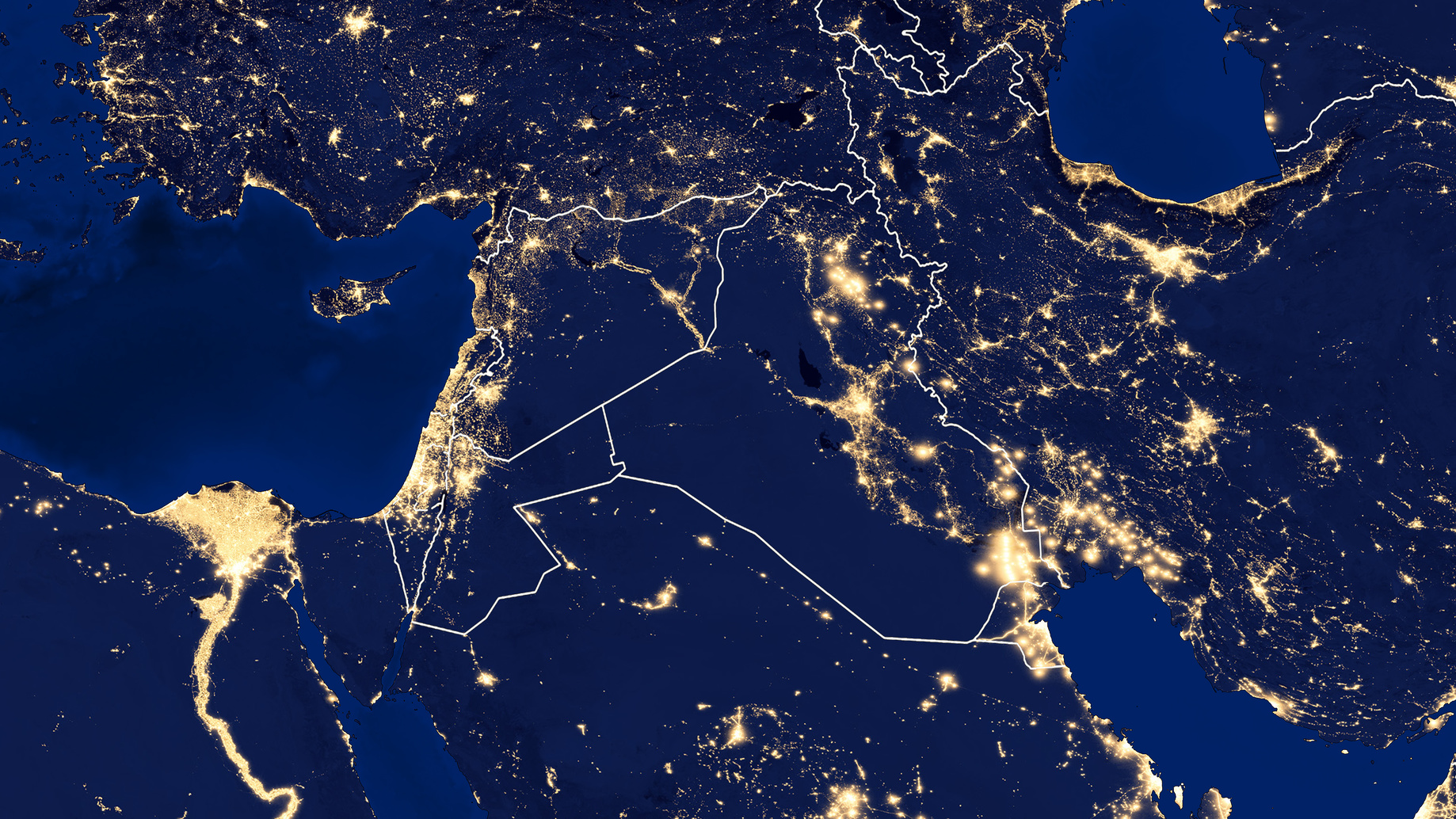
The reports began as a series of rhythmic thuds across the Alborz mountains, followed by the jagged orange glow of secondary explosions lighting up the Tehran skyline. Within hours, the geopolitical architecture of the Middle East was dismantled. The targeted killing of Iran’s Defense Minister and a top-tier Revolutionary Guards commander during a joint US-Israel operation represents more than a tactical success for Western intelligence. It is a fundamental shift in the rules of engagement that have governed this shadow war for forty years. By striking the absolute nerve center of Iran’s military industrial complex, the coalition has moved past the era of proxy skirmishes and entered a period of direct, high-stakes decapitation.
For decades, the "gray zone" served as a safety net. Both sides understood that while scientists might be targeted or tankers seized, the top political and military brass remained largely off-limits to avoid a total regional conflagration. That net is gone. The precision of these strikes suggests a level of intelligence penetration within the Islamic Revolutionary Guard Corps (IRGC) that should terrify every official in the Iranian hierarchy. This was not a random barrage; it was a surgical removal of the men responsible for the very "Axis of Resistance" that has been the cornerstone of Iranian foreign policy. For a more detailed analysis into similar topics, we recommend: this related article.
A Failure of Deterrence and Hardware
The technical reality of these attacks exposes a massive hole in Iran’s domestic defense narrative. For years, Tehran has boasted about its "Bavar-373" and "Khordad-15" air defense systems, claiming they could rival the Russian S-400 or the American Patriot. The events of this week proved otherwise. When the most significant military figures in the country are killed in a coordinated strike on what should be the most secure facilities in the nation, the hardware has failed.
This wasn't just about stealth aircraft. It was about an integrated electronic warfare campaign that likely blinded Iranian radar arrays before the first missile even entered the airspace. To pull this off, the US and Israel had to synchronize satellite data, long-range drone surveillance, and human intelligence on the ground. The timing was too perfect to be anything else. The targets were exactly where the intelligence said they would be, likely tracked by their own encrypted communication devices that were not nearly as secure as they believed. For additional information on this topic, in-depth analysis can also be found at BBC News.
The Power Vacuum Inside the IRGC
Losing a Defense Minister is a blow to the state, but losing a senior Revolutionary Guards commander is a blow to the regime's soul. The IRGC is not a traditional military; it is a parallel power structure that controls the economy, the borders, and the loyalty of the militias in Lebanon, Iraq, and Yemen. When a figure of this magnitude is removed, the immediate concern is not just who takes his place, but who is left to trust.
The internal fallout will be swift and paranoid. We can expect a wave of purges within the Iranian security apparatus as they scramble to find the "moles" who provided the coordinates. This internal friction often does more damage to a military's readiness than the actual bombs. Officers begin to prioritize survival over strategy. Information sharing stops. The chain of command becomes a series of suspicious whispers. This paralysis is exactly what the US and Israeli planners were banking on.
Why the Proxy Strategy Backfired
Iran’s greatest strength has always been its ability to fight at a distance. By using Hezbollah, the Houthis, and various Iraqi factions, Tehran kept the fire away from its own house. However, the intensity of recent proxy attacks—specifically those disrupting global shipping and hitting high-value Western targets—finally forced a change in the Western calculus. The decision was made to stop swatting the hornets and instead go for the nest.
The "strategic patience" often cited by Western capitals has clearly expired. By choosing to eliminate the architects of the proxy network, the US and Israel are gambling that the remaining leadership will be too preoccupied with their own security to coordinate a massive retaliation. It is a high-stakes bet. If the militias feel abandoned or leaderless, they may act out of desperation, leading to the very regional war everyone claims to want to avoid. But from a purely military standpoint, the message sent to Tehran is clear: your proxies no longer provide you with immunity.
The Economic Aftershocks
Beyond the immediate body count, this operation strikes at Iran's ability to sustain its military economy. The Defense Ministry is the clearinghouse for the drone exports and missile technology that Iran uses as currency. With the leadership in shambles, the contracts, the supply chains, and the clandestine procurement networks are all thrown into chaos.
International markets are already reacting, not just with a spike in oil prices, but with a total re-evaluation of risk in the Persian Gulf. Any hope of a return to the negotiating table regarding nuclear enrichment or sanctions relief is buried under the rubble of the IRGC headquarters. The Iranian Rial, already battered by years of isolation, will likely crater further as the population braces for whatever comes next.
The Question of Retaliation
Tehran is now backed into a corner of its own making. If they do not respond, they look weak to their own hardliners and their regional allies. If they respond too forcefully, they risk a full-scale invasion or the destruction of their energy infrastructure. The traditional "symbolic" response—firing a few dozen missiles at an empty base—will not suffice this time. The loss of such high-ranking officials demands a price that the regime might not be able to afford to pay.
The most likely path is an escalation in the cyber realm or a desperate attempt at an asymmetric strike against a high-profile Western target abroad. But even those options are fraught with danger. The coalition has shown that its intelligence is deep and its will is firm. Any move Iran makes now will be met with a response that is already programmed into a computer at CENTCOM or the Kirya.
The Intelligence Breach Nobody is Talking About
How do you find a man who spends his life moving between bunkers and safe houses? You don't just use a satellite. You use his own people. The depth of the intelligence breach required for this operation suggests that the dissatisfaction within the Iranian ranks has reached the upper echelons. It isn't just about technical superiority; it's about the erosion of loyalty within a regime that is increasingly seen as a liability by its own protectors.
This is the hidden crisis for the Supreme Leader. It is one thing to lose a general to a missile; it is quite another to realize that the general’s location was sold for a suitcase of cash or a foreign passport. The paranoia that will now seep through the halls of power in Tehran will be more corrosive than any physical weapon. Every phone call, every meeting, and every subordinate is now a potential threat.
The era of the shadow war has ended, replaced by a glaring, televised reality where no one is untouchable. The redlines have been redrawn in the dust of Tehran, and the old assumptions about Middle Eastern stability are as dead as the men who were targeted. The coming weeks will reveal if this was a masterstroke of deterrence or the opening salvo of a conflict that will redefine the century.